How did the Stepped Reckoner's multiplication method differ from the Pascaline's iterative approach?
Single operation per digit (Direct)
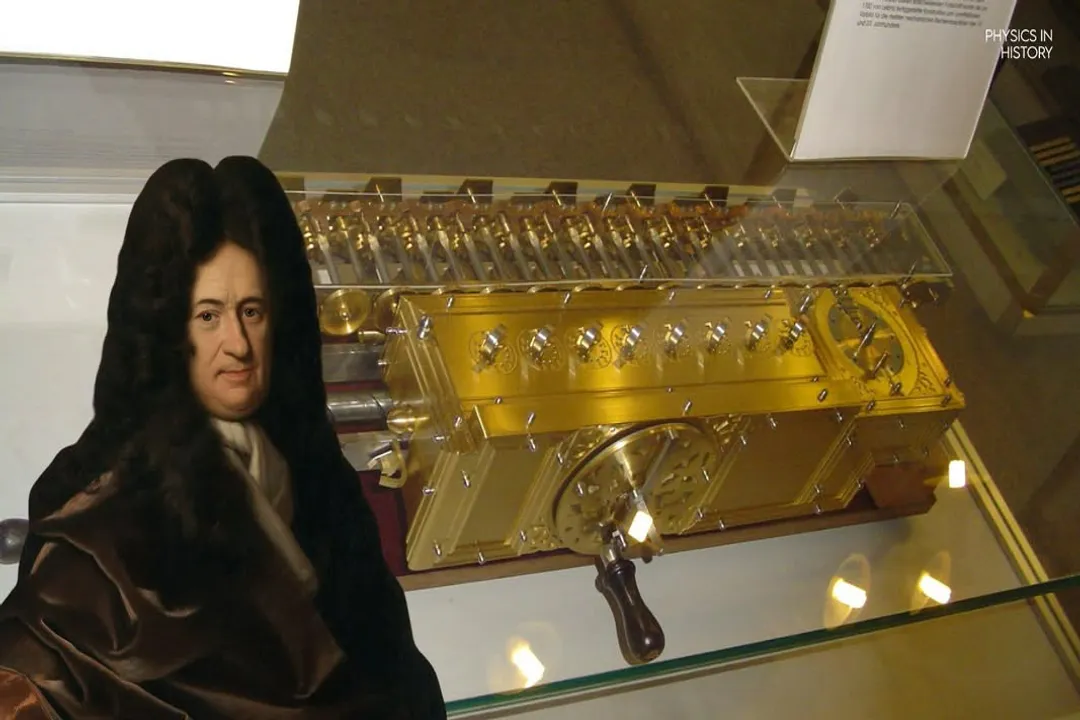
The primary limitation of Blaise Pascal's Pascaline was that multiplication required the user to manually perform repeated addition corresponding to the multiplier digit. If one needed to calculate $123 imes 4$, this involved four separate addition sequences for each place value. Leibniz's Stepped Reckoner, utilizing the stepped drum, overcame this by implementing multiplication as a direct operation per digit. Engaging the step corresponding to the digit, such as '4', caused the mechanism to register the correct amount in one mechanical movement for that digit's contribution to the result, vastly reducing the required physical actions compared to iterative addition.
#Videos
Gottfried Wilhelm Leibniz, 1672, demonstration video - YouTube