Who invented the Leibniz multiplier?
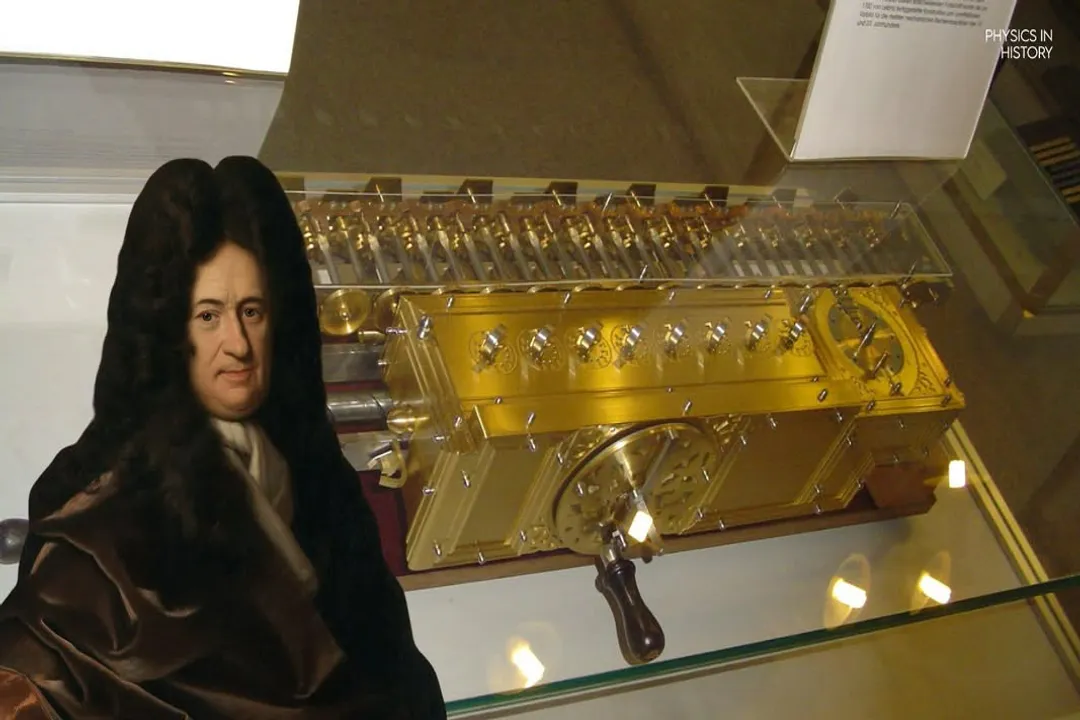
The development of mechanical aids for arithmetic has a fascinating history, and central to that narrative is the name Gottfried Wilhelm Leibniz, the brilliant German polymath who co-invented calculus. [6] When discussing mechanical calculation, particularly multiplication, the term "Leibniz multiplier" refers not to a separate component, but to the core capability of his groundbreaking calculating machine, the Stepped Reckoner. [1] This device represented a significant advancement over earlier designs, primarily because it incorporated an elegant mechanical solution for performing multiplication and division directly, rather than requiring repeated addition or subtraction, which was the limitation of its immediate predecessor. [2][8] Leibniz conceived of this mechanism in the mid-1670s, aiming to create a machine that could mechanize complex mathematical thought itself. [9]
# Contextual Predecessor
The context for Leibniz’s invention is crucial to understanding why his machine, often called the Leibniz Calculator, was so revolutionary. [2] Before Leibniz turned his attention to calculation in the 1670s, the most advanced mechanical calculator was the one developed by Blaise Pascal in the 1640s. [2][8] Pascal’s machine, the Pascaline, was brilliant for its time, handling addition and subtraction with relative ease through intricate arrangements of gears and carry mechanisms. [1] However, performing multiplication on the Pascaline required the user to manually repeat the addition operation as many times as indicated by the multiplier digits—a process tedious and prone to error if the numbers were large. [8] Leibniz recognized this fundamental constraint. His vision extended beyond simple arithmetic; he dreamed of a machine that could calculate complex ideas mechanistically. [9]
# Stepped Drum Ingenuity
The key innovation that granted the Leibniz machine its superior multiplicative ability was the stepped drum or stepped cylinder. [1][5] This component is the mechanical heart of what earned the designation "Leibniz multiplier." Unlike the simple notched wheels used in Pascal’s design, Leibniz’s stepped drum featured a series of teeth of varying lengths corresponding to the numbers one through nine. [5]
When the operator turned a crank, the engagement of a particular position on this stepped drum would cause a gear train to advance by the exact amount necessary for that digit. For example, to multiply by 5, the machine engaged the step corresponding to five, and a single turn of the crank moved the result register forward by five positions, regardless of the digit's place value. [1] This allowed for genuine multiplication through a single, albeit complex, mechanical operation, rather than iterative addition. [2][8] The machine was designed to handle addition, subtraction, multiplication, and division. [1][2] Division, in this architecture, was essentially performed as repeated subtraction facilitated by the same mechanism. [1]
A simple way to visualize the difference is to consider multiplying . On a Pascaline derivative, this might require three sets of operations: $(123+123+123+123)$ for the ones digit, then $ (120+120+120+120)$ for the tens digit shifted over, and so on. With the stepped drum, the mechanism engages the '4' step for each of the multiplicand's digits simultaneously or sequentially in a structured manner that achieves the result in far fewer physical actions, directly implementing the distributive property of multiplication mechanically. [5]
# Development Hurdles
While the concept was sound, bringing the Stepped Reckoner into physical reality proved incredibly challenging for 17th-century engineering. [9] Leibniz began work on the design shortly after 1672. [2] He successfully created a prototype that could perform addition and subtraction reliably. [3] However, the mechanism needed for reliable multiplication and division—specifically, the precise manufacturing and meshing of the stepped drums—was beyond the capabilities of the clockmakers and instrument makers available to him at the time. [8]
The issues centered on accuracy. The teeth on the stepped drum needed absolute precision. If the steps were misaligned or the machining left burrs, the machine would skip digits or lock up when the carry mechanism engaged. [1] Leibniz secured funding and worked diligently, but it wasn't until around 1694 that a working model capable of multiplication was finally constructed, albeit with some recognized flaws. [2][8] Even after this point, perfecting the machine to be a truly reliable, commercial product took years more, finally resulting in the first complete, robust machine being built around 1706. [3] This historical timeline illustrates that the invention of the multiplier concept precedes its successful realization by more than two decades, a common occurrence in pioneering engineering endeavors. [2][8]
# Functional Comparison
To fully appreciate the "multiplier" aspect, comparing it directly with its predecessor illuminates the qualitative leap in calculation technology. [1]
| Feature | Pascaline (Predecessor) | Stepped Reckoner (Leibniz) |
|---|---|---|
| Core Mechanism | Notched Wheels with mechanical carry | Stepped Cylinders (Drums) |
| Addition/Subtraction | Direct, efficient | Direct, efficient |
| Multiplication Method | Repeated Addition (Iterative) | Single operation per digit (Direct) |
| Division Method | Repeated Subtraction | Repeated Subtraction (Facilitated by steps) |
| Complexity | High for the four functions | Very High, especially manufacturing the drums |
| Inventor | Blaise Pascal | Gottfried Wilhelm Leibniz |
The inherent advantage of the stepped drum is that it reduces the operational complexity required for multiplication by a factor equal to the multiplier digit, meaning multiplication by '9' requires only one major mechanical intervention rather than nine additions. [5] This efficiency is why historians often focus on the multiplication capability when discussing Leibniz’s contribution to calculation technology. [8]
# Lasting Impact
While Leibniz’s calculator was an engineering marvel—and certainly a conceptual triumph—it did not become a mass-market success in his lifetime. [3] The precision required for the stepped drums meant they were expensive and difficult to maintain, limiting its widespread adoption compared to simpler adding machines that followed later. [1][9] Nevertheless, the machine established the foundation for subsequent mechanical calculation efforts. The principle of the stepped drum proved vital, influencing the design of early commercial calculating machines well into the 19th century, such as those developed by Thomas de Colmar (the Arithmometer). [2][8]
The invention of the "Leibniz multiplier" was less about discovering a new mathematical principle and more about realizing an existing one—the distributive property of multiplication—in physical hardware. [5] It showcased Leibniz’s profound ability to bridge abstract mathematical logic with tangible mechanical solutions. [6]
Considering the engineering limitations of the late 17th century, the sheer ambition of designing a mechanism with interchangeable, precisely cut cylinders that also incorporated a reliable carry mechanism for addition and subtraction is staggering. [9] It requires one to appreciate the sheer mental modeling skill involved in designing the gearing tolerances necessary to ensure that the '9' step on one drum did not improperly interfere with the adjacent '1' step on the next (for the tens place), all while ensuring the primary summation gears turned smoothly. This level of integrated mechanical design expertise, even in a prototype, speaks to a level of mechanical intuition that was perhaps only rivaled centuries later by the advent of digital logic design. [3][8]
The work on the Stepped Reckoner cemented Leibniz’s place as a pioneer in computing, complementing his foundational work in calculus. [6] Even if the physical machine was slow to materialize and ultimately superseded by later, less mechanically complex designs, the idea of a direct mechanical multiplier—the essence of the Leibniz multiplier—was proven conceptually possible by his ingenious stepped drum design. [1][2]
#Videos
Gottfried Wilhelm Leibniz, 1672, demonstration video - YouTube
Related Questions
#Citations
Stepped reckoner - Wikipedia
Leibniz Invents the Stepped Drum Gear Calculator
Leibniz's Calculating Machine - Leibnitiana
the transmission history of the Leibniz calculator - PubMed
What is Leibniz calculator? - GeeksforGeeks
Did you know that Gottfried Wilhelm Leibniz, co - Facebook
Gottfried Wilhelm Leibniz, 1672, demonstration video - YouTube
Gottfried Wilhelm Von Leibniz - Computer Pioneers
In the 17th Century, Leibniz Dreamed of a Machine That Could ...