Where did George and László Biro invent the ballpoint pen?
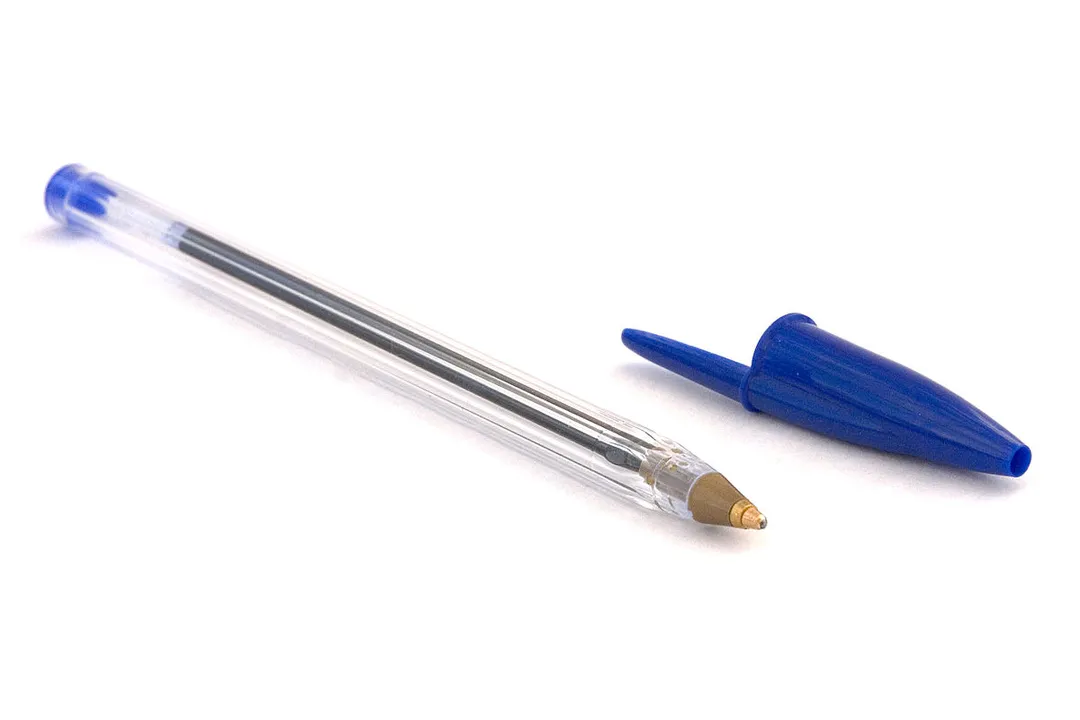
The story of the ballpoint pen involves not just a single stroke of genius but a transatlantic quest driven by the simple frustration of a messy inkwell and a constantly skipping nib. The device that now writes effortlessly across most surfaces owes its existence to two Hungarian brothers, László Bíró and George Bíró (also referred to as György). [1][3][6] While László is often credited as the primary inventor, his brother George was an essential partner in the endeavor. [1] Pinpointing the exact geographical moment of invention requires tracing their steps from Central Europe to South America, a move necessitated by the political climate of the mid-20th century. [3][9] The reality is that the concept may have begun in one place, but the realization—the moment it became a commercially viable product—happened far from their homeland. [4]
# Hungarian Frustration
László Bíró was a journalist in Hungary during the 1930s. [3][5][9] His daily work involved constantly dealing with the temperamental nature of fountain pens. These pens, while elegant, often smudged the ink before it could dry, leading to messy documents, and they required frequent refilling. [3][4] Furthermore, the thin ink used in fountain pens would bleed through the cheap, absorbent paper often supplied to newspaper offices. [4]
Bíró noticed that the ink used in printing presses dried quickly and didn't smudge, yet it was far too viscous to flow through a standard fountain pen nib. [4] This observation planted the seed for a new writing instrument. He recognized that the problem wasn't the ink itself, but the delivery system. [4] He began experimenting, seeking a way to use that superior, fast-drying ink successfully. [3]
The challenge, however, was significant: standard ball-and-socket mechanisms were too loose, letting the thick ink glob out, or too tight, preventing any flow at all. [4] The initial attempts at solving this delivery issue in Hungary proved difficult, partly due to the limitations of the available technology and perhaps the sheer novelty of the required precision. [9]
# The Partnership
László Bíró was supported in his inventive pursuits by his brother, George (György). [1] George Bíró was a chemist, and this complementary skillset—a journalist's practical need combined with a chemist's formulation knowledge—was critical. [4] While László focused on the mechanical delivery system, George likely worked on ensuring the ink had the right chemical properties to adhere to the ball while also maintaining the necessary viscosity for stable flow. [4]
The brothers needed both vision and practical engineering, suggesting that the invention was truly a collaborative effort, not the work of a lone genius. [1][6] This partnership, formed under the pressures of European events, became the engine that pushed the idea from concept toward reality. [3]
# Exile's Landscape
The escalating political situation in Europe forced the brothers to leave Hungary. [3][9] They relocated to Argentina. [1][3][9] It was in this new environment that their invention would finally take tangible form. Many inventors find that moving to a new country, especially one with different economic priorities or less bureaucratic red tape in certain sectors, can unlock progress that was stalled at home. [4][9] For the Bíró brothers, Argentina provided the space and opportunity needed to refine their prototype. [3]
It is in Argentina that the pivotal development and eventual patenting of the modern ballpoint pen occurred. [1][3] They established a company there, Bíró Pens of Argentina, and began the serious business of manufacturing. [4]
# Argentine Realization
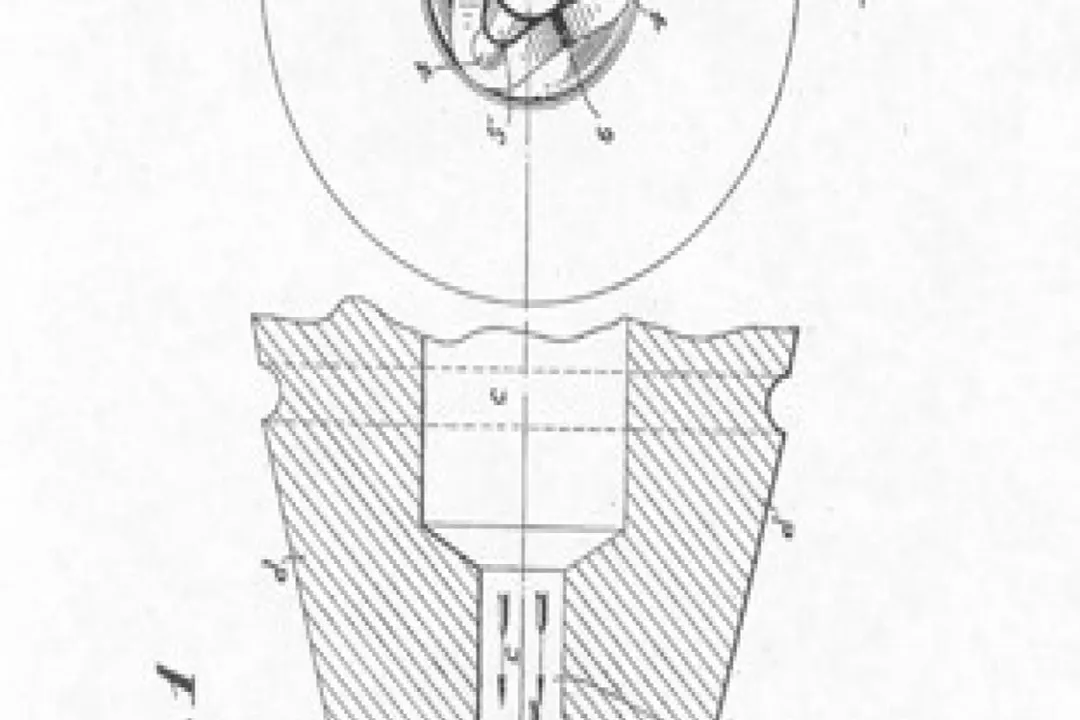
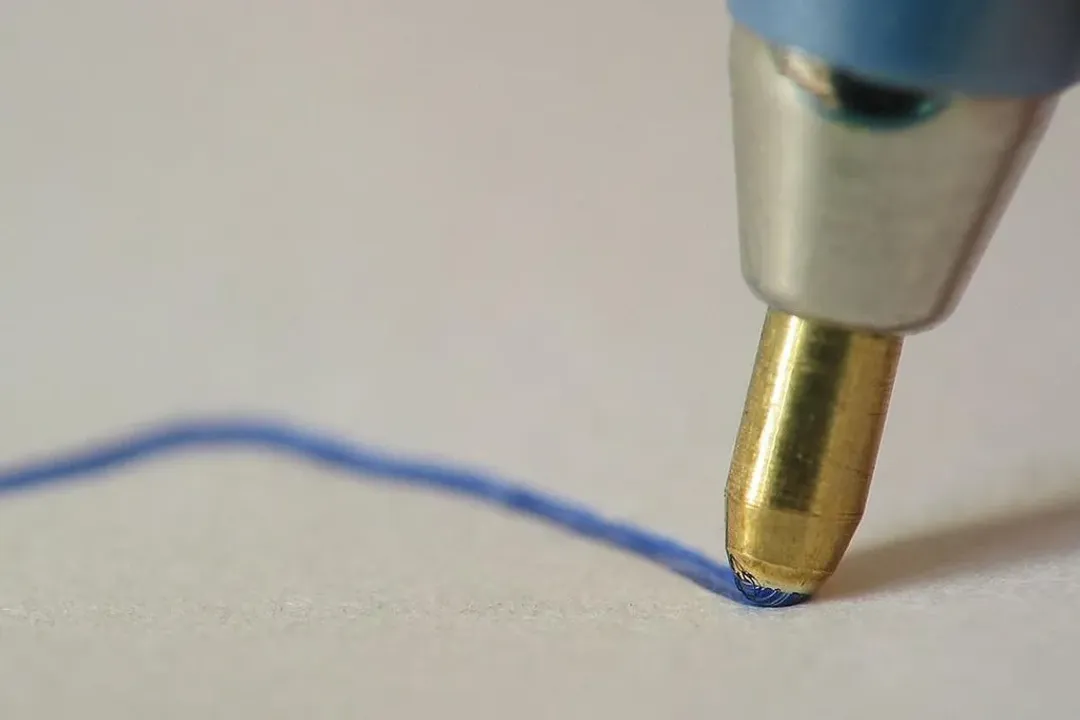
The crucial period for the ballpoint pen's realization appears centered around their time in Buenos Aires. By 1943, the brothers were living and working in Argentina. [1] It was here they perfected the mechanism: a tiny, precisely fitted metal ball nestled in a socket. [4] When rolled across the paper, this ball rotates, picking up ink from a reservoir and transferring it to the writing surface. [2][4] The fit was so tight that surface tension prevented the ink from leaking out when not in use. [4]
The patent for the ballpoint pen was granted in Argentina in 1943. [3][9] This date strongly marks Argentina as the primary location where the working invention was officially documented and brought to life as a practical tool, even if the initial spark ignited in Hungary. [1][9]
It is interesting to consider the unique manufacturing advantage Argentina offered at the time. During World War II, many countries faced severe shortages. However, the specific precision required for the ball and socket, combined with the need for an ink that worked reliably at different altitudes (a detail that became important later), meant that the environment needed to support high-precision metalworking, which Argentina possessed. [5] The move from Budapest to Buenos Aires transformed the idea from an academic problem into an industrial solution. One might observe that while the initial motivation was European (newspaper smudge), the execution was fundamentally South American, adapted to wartime production realities and available industrial capability. [5] This geographical shift wasn't just about safety; it was about finding a place where the engineering could catch up with the concept.
# Military Adoption
The true test and early success of the Bíró pen came through military adoption, which further cemented its practicality. [5] The British Royal Air Force (RAF) became an early adopter of the pen. [5] Pilots needed a writing instrument that would not leak inside the cockpit due to changes in air pressure at high altitudes—a significant flaw in standard fountain pens. [5] The Biro pen, with its sealed ball mechanism, performed flawlessly under these conditions. [5] This military approval provided crucial validation for the invention's reliability and paved the way for broader commercial acceptance once the war concluded. [5]
# Technical Precision
The invention’s success hinged entirely on the minute dimensions of the ball mechanism. [2][4] The ball typically has a diameter of about 0.5 to 1.2 millimeters. [2] The key is the extremely tight tolerance between the ball and the metal tip housing it. [4] If this gap is too large, the ink floods the page; if too small, the pen won't write. [4]
The ink formulation, which George Bíró helped develop, was equally important. [4] It needed to be thick enough to resist leaking due to gravity or pressure changes, yet fluid enough to be drawn by the rotation of the ball onto the paper. [4] This required a chemical composition that was far removed from the water-based dyes of older ink systems. [4]
# Global Dissemination
While the invention was patented and developed in Argentina by the Bíró brothers, the pen's global dissemination involved further international movement. [3][7] After World War II, the technology began to spread. László Bíró eventually moved to France and later to Argentina again, while the rights for the pen moved into other hands. [3]
In 1945, the manufacturing rights for the pen were acquired for distribution in the United States by Milton Reynolds, who launched the Reynolds Rocket pen, though this version sometimes faced quality control issues that tarnished the brand initially. [3] Another significant figure was Marcel Bich, who adapted and refined the design for mass production in France, famously founding the BIC company. [3] It is worth noting that while the original invention site is tied to the Bíró brothers' time in Argentina (1943 patent), [1][9] the subsequent success and ubiquity of the style of pen were built upon refinements and manufacturing scale achieved by others in the US and Europe. [3]
Therefore, if one is asking where the idea was born, the answer points toward Hungary and László Bíró’s journalistic desk. [4] If the question seeks the location where the working, patented technology was finalized and established, the historical record firmly points to Argentina. [1][9] The pen’s true heritage is layered, representing an initial European problem solved by emigrant Hungarian ingenuity in a South American industrial setting, later popularized globally. [3][5]
# Defining Invention Location
For technical innovations, determining a single "place of invention" can be misleading, especially when political upheaval is involved. It’s less a fixed point and more a developmental arc. The arc for the ballpoint pen spans at least three nations before it became a staple. [3][9]
| Phase | Primary Location | Key Activity | Inventor Focus |
|---|---|---|---|
| Conception | Hungary | Recognizing the fountain pen's flaws | László Bíró (Journalist) |
| Realization/Patent | Argentina | Developing the precise mechanism and ink | László & George Bíró |
| Commercialization | UK / USA / France | Mass production and market entry | Successors/Licensees |
This layered history suggests a vital lesson for innovators: the environment where an idea is conceived might not be the environment where it can be executed successfully. [9] The challenges László faced in getting the right precision in 1930s Hungary were overcome in the different industrial and economic landscape of 1940s Argentina. [5] The success of the ballpoint pen, therefore, isn't just a testament to László's vision but also to George’s chemical expertise and their ability to adapt their skills to a new continent when their homeland became untenable. [1][6] It remains a prime example of how global migration drives technological progress by relocating talent to fertile ground. The legacy of the Bíró brothers endures not just in the simple click of a pen, but in the complex international story of how a writing tool survived a world war in transit to revolutionize how we put ink to paper. [7]
Related Questions
#Citations
ON THIS DAY | In 1943, Hungarians László and Georg Bíró, while ...
Ballpoint pen - DPMA
Ballpoint pen - Wikipedia
The Inventor Behind the Modern Ballpoint Pen
If You Like Ballpoint Pens, Thank the R.A.F.
The Battle of the Ballpoint Pens - Ladislo Biro - The Inventors
NIHF Inductee Laszlo Biro, Who Invented the Ballpoint Pen
The Hungarian-Argentinian brothers, Laszlo and George Biro ...
Who Invented the Ballpoint Pen: History's Unsung Hero