What else did Eli Whitney invent?
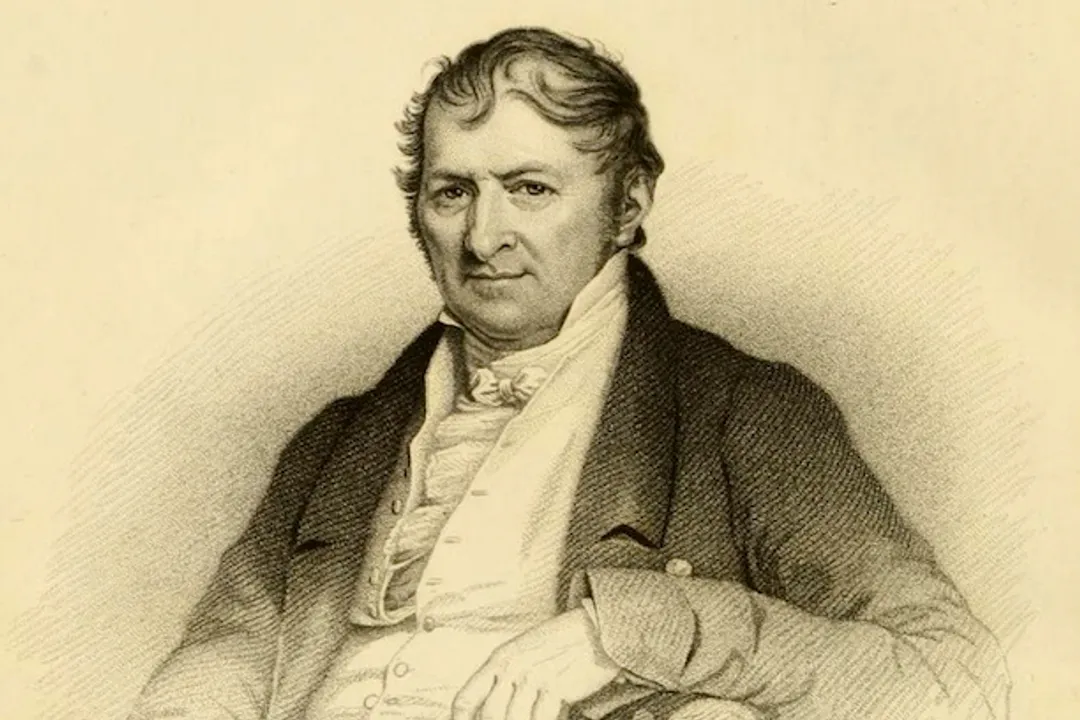
Eli Whitney’s name is almost universally tethered to the cotton gin, an invention that irrevocably altered the economy and society of the American South. [1][2][3] However, focusing solely on the device that separated cotton fibers from seeds overlooks a second, arguably more enduring contribution that shaped American industry for centuries to come: the development and implementation of interchangeable parts. [1][4] While the gin brought him immediate fame and fortune (however fleeting due to legal issues), it was his later work, primarily centered around government contracts for firearms, that established the basis for modern manufacturing processes. [5][6]
# Parts System
The concept of creating identical components that could be swapped out between different finished products—the bedrock of mass production—was not entirely new, but Whitney was instrumental in forcing its practical realization on a grand scale in the United States. [1][4] Before this system took hold, manufacturing anything mechanical, from clocks to muskets, relied on the skill of the individual artisan. [4] Every piece was custom-fitted; a broken lock on a specific rifle required a gunsmith to painstakingly file down a replacement part until it fit that exact firearm. [4] This process was slow, expensive, and required specialized knowledge for every repair. [4]
Whitney’s vision, often summarized as making the components of a product so uniform that any piece would fit any corresponding piece of the same model, represented a fundamental break from this tradition. [1] This uniformity, once achieved, meant that a machine could be assembled relatively quickly and, critically, maintained and repaired by less-skilled workers using readily available replacements. [4] Though historians debate whether Whitney was the absolute originator of the idea—other inventors were certainly exploring similar concepts around the same time—his success in applying it to the production of firearms provides the most concrete early American evidence of its industrial application. [1]
# Arms Contract
The immediate impetus for developing this system came not from a desire to revolutionize industry, but from a direct appeal to national security and economic necessity. [5] In the 1790s, the young American government sought to establish domestic production capabilities for weaponry. [5] Following the Alien and Sedition Acts and anxieties over European conflict, Congress authorized the production of 10,000 muskets. [5] Whitney secured a contract in 1798 to supply this order. [5][7]
This contract was momentous because Whitney promised to achieve this large volume through standardization, rather than relying on traditional, slow methods. [5][7] To fulfill his promise, he had to invent not just the standard parts, but the machinery necessary to create those perfectly standardized parts repeatedly. [5][6] He moved to Hamden, Connecticut, establishing what would become known as the Whitney Armory. [5]
The core challenge was precision. A musket, for example, has about 10 main parts, and each needed to be manufactured identically across all 10,000 units. [7] Whitney and his team focused heavily on creating specialized jigs, gauges, and machine tools—the devices that held the metal blanks while they were shaped or filed—to ensure that every component met the same exact dimensions. [4][5] This focus on the tooling rather than just the final product marks a significant evolution in manufacturing thinking. [5]
An interesting comparison can be made between Whitney’s governmental focus and earlier European experimentation. While the French military was also exploring similar standardization efforts in the 1780s and 1790s, Whitney’s American system, driven by the need to quickly equip a new nation’s military with limited skilled labor resources, often gets credit for successfully demonstrating the economic viability of the high-precision, mass-production approach over the long term. [1]
# Machine Design
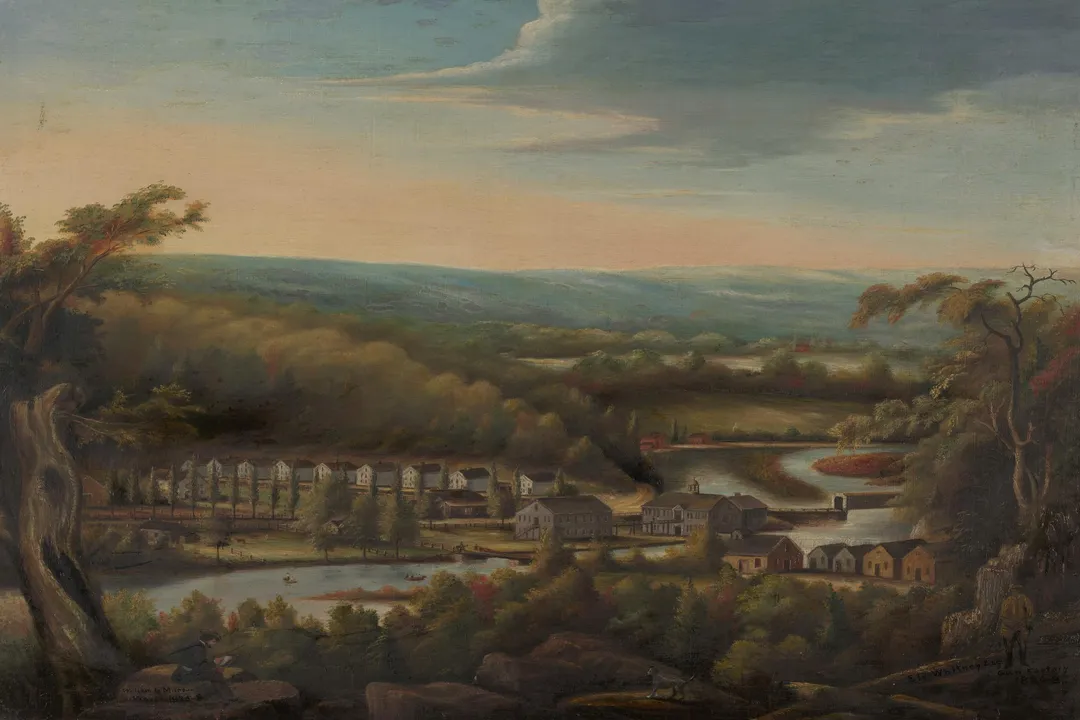
Whitney’s efforts were less about inventing a new type of machine and more about inventing a new way to use machines—a precursor to assembly line thinking. [5] The actual manufacturing process at the Armory involved a sequence of steps, with specialized apparatuses introduced at each stage to cut, drill, or shape components to precise specifications. [5]
For instance, if one part required a specific, repeatable contour, Whitney would design a machine where the metal blank was held firmly, and a cutting tool moved along a fixed path, ensuring the resulting shape was identical to the last one produced. [4] This required deep expertise in mechanical engineering and tooling fabrication. [4] The process was so innovative that it drew attention not just from manufacturers, but also from government officials interested in technological superiority. [5] In 1802, President Thomas Jefferson visited the Armory to observe this emerging system in action. [5]
The machinery itself, designed for repetition and accuracy, became a secondary invention stream. While the sources often celebrate the result (the interchangeable part), it’s crucial to recognize that the means—the precision tooling required to achieve that result—was a massive technical hurdle that Whitney’s workshop overcame. [5][6] It’s the difference between having a blueprint and inventing the specialized factory required to reliably execute that blueprint at scale.
# Patent Fights

Despite the importance of the system developed for the military, Whitney’s later years were plagued by legal disputes, much of it circling back to his original blockbuster invention: the cotton gin. [1][3] Although the gin was patented in 1794, imitators quickly emerged, especially in the South. [1][3] Because cotton production exploded so rapidly, the incentive for theft was enormous, and local courts often proved reluctant to enforce federal patent law against influential planters. [3]
Whitney spent considerable time and money defending his patent rights for the gin, traveling and engaging in litigation across various states. [1][3] This constant defense drained resources that might have otherwise been directed toward further refining or commercializing his manufacturing innovations. [3]
Interestingly, the legal battles surrounding the gin highlight a major weakness in early American intellectual property protection, which ultimately affected the inventor's ability to profit from all his creations, including the manufacturing concepts that underpinned the Armory. [3] The enforcement of patents was not yet settled law, creating an uncertain environment for inventors. [3]

# Further Development
While the cotton gin and the interchangeable parts system for muskets are his primary legacies, Whitney was also involved in other mechanical endeavors, though these often remained secondary in scope or were less commercially transformative. [1] Sources indicate he worked on improving the manufacturing process for pistols as well, applying the same principles of standardization developed for the larger muskets to smaller arms. [7]
He also designed and patented an early version of the staircase machine, a specialized device for cutting wooden stair stringers. [1] This suggests that once the principles of precision tooling were internalized, Whitney applied that mechanical mindset to other areas requiring repeatable, accurate construction, even if they did not reach the industrial scale of the armory. [1] However, compared to the revolutionary scope of standardized firearms production, these ancillary inventions often fade into historical footnotes.
The impact of the interchangeable parts concept cannot be overstated when viewed through an industrial lens. For example, consider the difference in repair cost and downtime. In a traditional system, replacing a broken musket might cost a quarter of the original price and take weeks of a skilled artisan’s time. [4] Under Whitney’s emerging system, a replacement part might cost pennies and be installed in minutes by an apprentice. [4]
Analyzing the transition from the gin’s impact to the armory’s impact reveals a significant shift in American economic focus. The gin spurred the massive capital accumulation in the agricultural sector, embedding slavery deeper into the economy. [2][6] Conversely, the armory system was the seed for the industrial North—a move toward capital investment in machinery and skilled mechanics, directly setting the stage for the later development of centralized factories producing everything from sewing machines to bicycles decades later. [5] Whitney essentially left the nation with two powerful, yet contradictory, economic inheritances: one built on rapid, intensive labor and the other on standardized machine output.
# Lasting Influence
Eli Whitney died in 1825. [1] By the time of his death, the concept of interchangeable parts, though perhaps not perfectly executed across his entire 10,000-gun order initially, had proven its essential worth to the US government. [5] The system he installed was so significant that it influenced subsequent government arsenals and private arms manufacturers. [5]
The true genius of Whitney’s later career wasn't simply inventing a machine, but inventing the factory model that could reliably and economically create any machine using standardized components. [5] This manufacturing infrastructure became essential for America’s rise as an industrial power in the nineteenth century. [6] It provided the blueprint for large-scale production that would later be adopted by industries far removed from weaponry, proving that his most profound invention was not a physical object one could hold, but a system of industrial organization that allowed for the efficient, democratic distribution of complex mechanical goods. [1][4]
Related Questions
#Citations
Eli Whitney - Wikipedia
Eli Whitney | Biography, Inventions, Cotton Gin, Interchangeable ...
Eli Whitney - National Inventors Hall of Fame®
Eli Whitney by Charles Bird King | National Portrait Gallery
Eli Whitney and the Whitney Armory | Eli Whitney Museum & Workshop
How Eli Whitney Single-handedly Started the Civil War . . . and Why ...
Eli Whitney | Research Starters - EBSCO
The cotton gin: A game-changing social and economic invention
Eli Whitney | Biography, Inventions & Facts - Video - Study.com
Eli Whitney: A Key Player in the Development of Early Lean ...