What machine did Gottfried Leibniz invent?
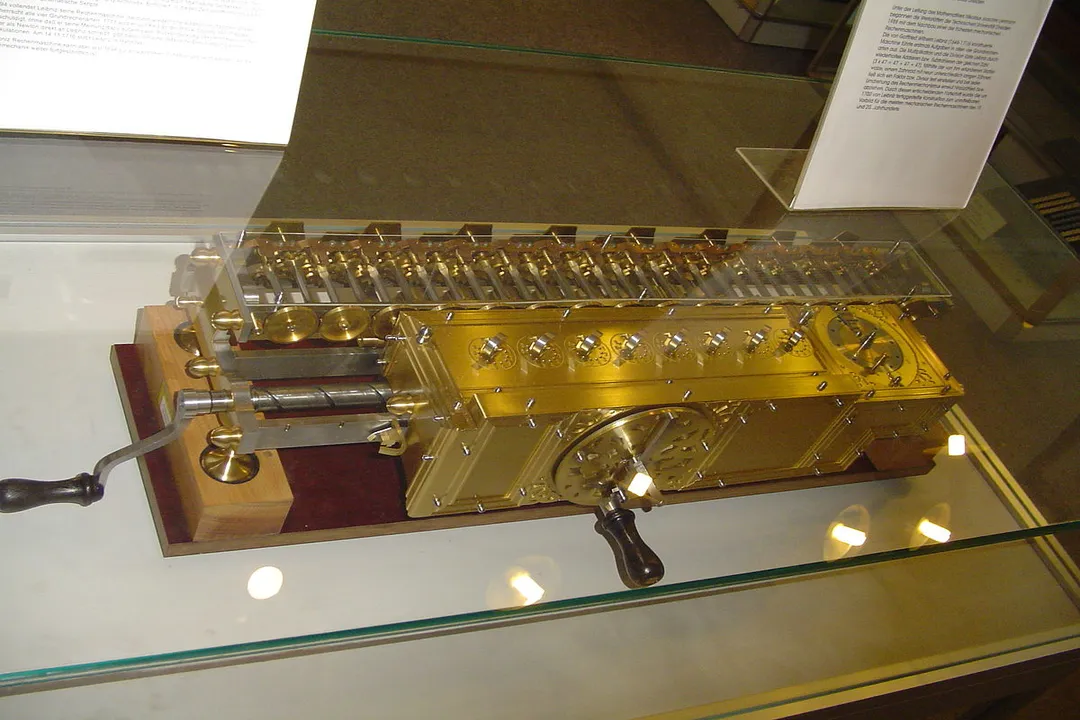
Gottfried Wilhelm Leibniz, a towering figure of the Enlightenment whose contributions spanned philosophy, law, and science, also left an indelible mark on the very foundation of automated computation. While his name is often linked to calculus, his tangible mechanical invention—the Stepped Reckoner—represents a monumental leap in the quest to mechanize arithmetic. This device, conceived and constructed in the latter half of the seventeenth century, was not merely an incremental improvement on earlier counting aids; it was a sophisticated piece of engineering designed to solve mathematical problems with physical gears and cranks.
# Four Function Machine
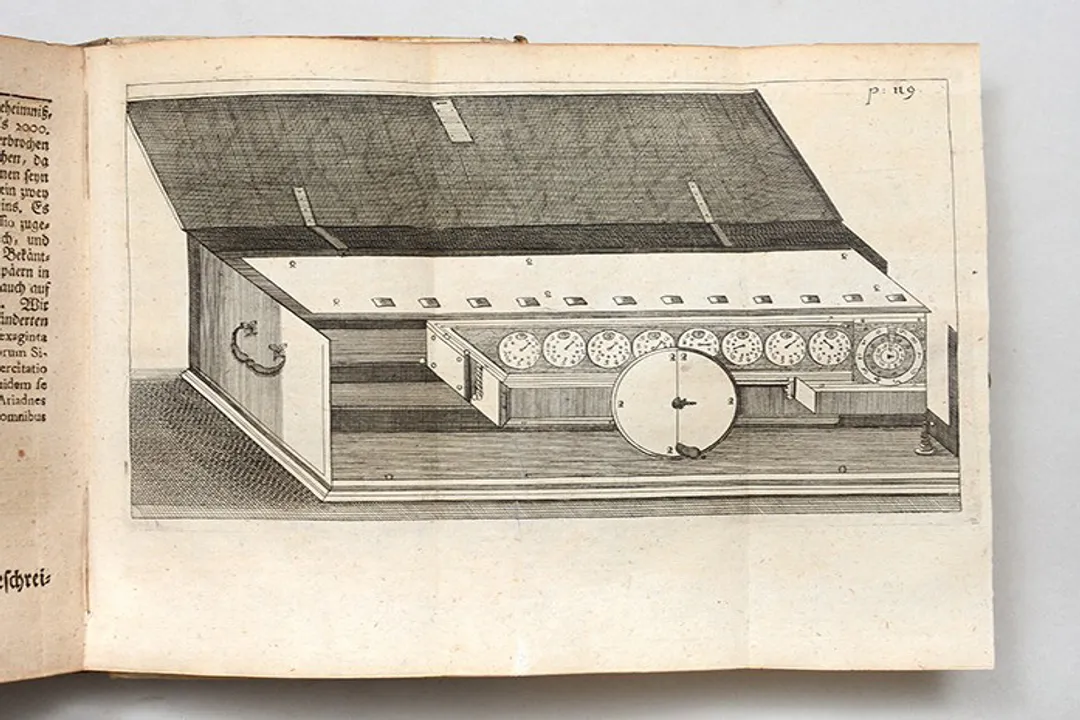
The primary achievement of Leibniz in the realm of mechanical calculation was the creation of a machine capable of performing all four fundamental arithmetic operations: addition, subtraction, multiplication, and division. This distinction is critical, as earlier significant mechanical aids, such as the machine developed by Blaise Pascal, were primarily limited to addition and subtraction. Leibniz aimed higher, seeking a device that could handle the full spectrum of everyday calculation needs of his era. His finished machine, which he presented to the French Academy of Sciences in 1673, was the result of years of development starting around 1672.
The machine was impressive in its complexity for the time. It incorporated input mechanisms, usually in the form of dials or setting wheels, where the numbers to be calculated were entered. The results of the calculations were then displayed in a separate register, often involving several stacked drums or wheels to show the output digits. The very structure of the device represented a significant advancement over previous attempts at automated calculation, cementing its place as one of history's earliest general-purpose calculating machines.
# Key Mechanism
The innovation that allowed the Stepped Reckoner to perform multiplication and division effectively was a specialized gear known as the Leibniz Wheel or the stepped drum. This component was the heart of the machine's novelty. Unlike simpler ratchet wheels or gears used in earlier calculators, the stepped drum had teeth of varying lengths corresponding to the numbers one through nine.
When the input wheel was turned, the stepped drum engaged with the main drive mechanism. If you wanted to add the number 3, the drum would rotate in such a way that only three teeth on the step engaged the drive, moving the result wheel by three positions. For the number 8, eight teeth would engage. This clever design allowed a single mechanical movement to represent any digit input directly. The precision required to manufacture these stepped drums with the accuracy necessary for reliable calculation was immense, requiring skilled craftsmanship that was perhaps the greatest hurdle to mass production or widespread adoption at the time.

# Operation Limits
While the Stepped Reckoner could execute the four basic functions, the way it handled multiplication and division reveals the fundamental challenges of mechanical computation that persisted for centuries. Multiplication was not performed in a single, complex operation but rather through repeated addition. If a user wished to calculate , the machine would mechanically add the number 5 to itself four times, using the stepped drum mechanism to govern how many times the addition occurred. Similarly, division was achieved through repeated subtraction.
This reliance on iteration meant that calculations involving large numbers or many digits could become very slow, requiring numerous manual or crank-driven steps. Furthermore, the machine’s ability to handle the "carry" operation—when the sum of a column exceeds nine and one must be transferred to the next higher-value column—was also mechanically complex and prone to error or jamming if not perfectly engineered.
When considering the complexity of managing a multi-digit carry in the Stepped Reckoner, it is insightful to compare it to modern digital logic. In a contemporary Central Processing Unit (CPU), carrying is handled almost instantaneously through specialized circuitry often employing carry-lookahead logic to speed up addition across multiple bits. Leibniz’s machine, relying solely on the physical constraint of gear engagement, had an inherent physical bottleneck where the time taken for a carry to propagate was dependent on the mechanics themselves, effectively creating a physical equivalent of a slow ripple-carry adder.
# Idea Calculation
Perhaps the most fascinating aspect of Leibniz’s work is the contrast between his tangible, physical machine and his abstract, theoretical ambitions for computation. The Stepped Reckoner was designed to process numbers; however, Leibniz envisioned something far grander: a machine that could process ideas.
He dreamed of what he called the Characteristica Universalis (Universal Characteristic), a symbolic language capable of representing all human knowledge and concepts precisely. Linked to this was the Calculus Ratiocinator (the Reasoning Calculus), a method that would allow this universal language to be manipulated logically and algorithmically, essentially automating reasoning itself.
The connection between the two projects is profound. The mechanical calculator, capable of rapid arithmetic, was a proof of concept—a demonstration that complex symbolic manipulation could be automated through machinery. While the Stepped Reckoner handled digits, it served as the physical embodiment of the principle that logic, even complex logic, could be reduced to mechanical rules. This philosophical drive to reduce reasoning to calculation informed his entire scientific approach, making the creation of the hardware an extension of his metaphysical views on the nature of truth and knowledge.

# Historical Precursor
The Stepped Reckoner stands as a crucial precursor in the lineage of automatic computation, bridging the gap between rudimentary counting aids and the electronic computers of the 20th century. It was recognized as the first mechanical calculator capable of performing all four basic arithmetic functions reliably, a title it holds even when considering its near-contemporary rivals.
While it never achieved the widespread adoption or commercial success that later calculating machines would find, its design principles persisted. The use of the stepped drum was influential, appearing in later mechanical calculators for decades. More importantly, Leibniz’s successful demonstration that mechanical means could reliably perform complex sequential operations—even if only arithmetic—laid critical groundwork for later thinkers, including Charles Babbage, who drew inspiration from the concept of automating mathematical procedures.
In summarizing the key functions and historical context, one can use a simple comparative overview:
| Feature | Pascaline (Pascal) | Stepped Reckoner (Leibniz) | Significance |
|---|---|---|---|
| Basic Addition/Subtraction | Yes | Yes | Foundation of calculation |
| Multiplication/Division | No (only repeated addition/subtraction via manual input) | Yes (via stepped drum mechanism) | First automated four-function capability |
| Key Mechanism | Simple gear train | Stepped Drum (Leibniz Wheel) | Enabled direct digit-based mechanical operation |
| Theoretical Scope | Arithmetic Automation | Arithmetic Automation + Automation of Logic/Reasoning | Demonstrated possibility of any symbolic manipulation |
The enduring value of Leibniz’s invention lies not just in the gears and wheels he fashioned, but in the intellectual rigor he applied to the problem. He didn't just build a better abacus; he built a machine that proved a fundamental theorem: that sophisticated logical processes could, in principle, be realized in physical machinery, provided the underlying concepts could be formalized into precise, step-by-step instructions. This foundational step—moving computation from manual aid to mechanical automation—is his most direct and lasting engineering legacy.
#Videos
Gottfried Wilhelm Leibniz, 1672, demonstration video - YouTube
Related Questions
#Citations
Stepped reckoner - Wikipedia
Leibniz Invents the Stepped Drum Gear Calculator
Leibniz's Calculating Machine - Leibnitiana
Gottfried Wilhelm Leibniz, 1672, demonstration video - YouTube
the transmission history of the Leibniz calculator - PubMed
What is Leibniz calculator? - GeeksforGeeks
Gottfried Wilhelm Leibniz – the best of all possible computers
17th Century: Leibniz Dreamed of a Machine That Calculated Ideas
The four-species calculating machine by Gottfried Wilhelm Leibniz