How did conventional layer-type palletizers typically place product onto the pallet?
Answer
Placing entire layers of product onto the pallet at once.
The methodology employed by precursor systems, referred to as conventional or layer-type palletizers, involved mechanisms like belts or chains designed to manage product placement in bulk. These machines operated by assembling a complete layer of cases or bags separately and then depositing that entire layer onto the pallet in a single motion. While effective at eliminating heavy lifting for continuous, single-SKU runs, this mechanism fundamentally lacked the granularity required to build complex, interwoven patterns.
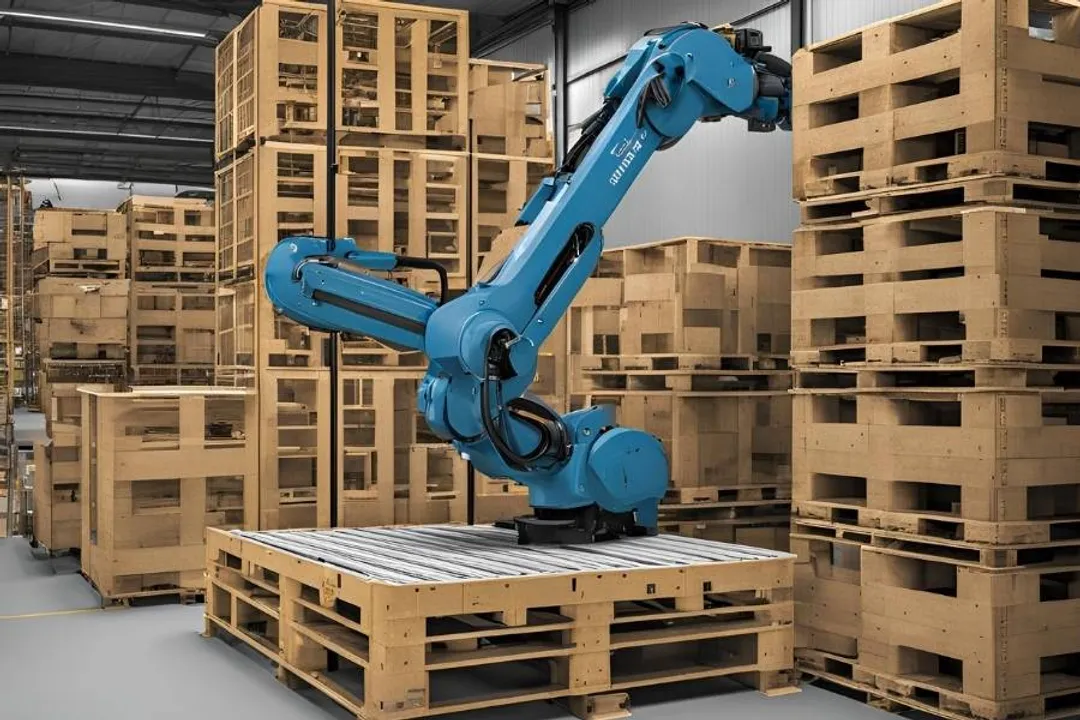
#Videos
Dual Robotic Palletizer by Bastian Solutions - YouTube
Universal Robots Palletizing Wizard Grady Turner - YouTube
Related Questions
What major drawback forced extensive retrofitting of conventional palletizers?What component defines the key difference between conventional and robotic palletizers?How does a six-axis robot improve over a four-axis robot in palletizing tasks?What was the initial programming method for early robotic palletizers?What capability do vision systems provide to guided robotic palletizers?What specific failures are penalized when calculating the Pallet Quality Consistency Index (PQCI)?How did conventional layer-type palletizers typically place product onto the pallet?Why are robotic systems preferred over conventional palletizers for handling softer food packaging?Besides eliminating arduous roles, what consistency benefit do robots provide over human labor?Which area is listed as a key future development trajectory for palletizing robots beyond mechanical action?