What component defines the key difference between conventional and robotic palletizers?
Answer
The versatility of the end effector.
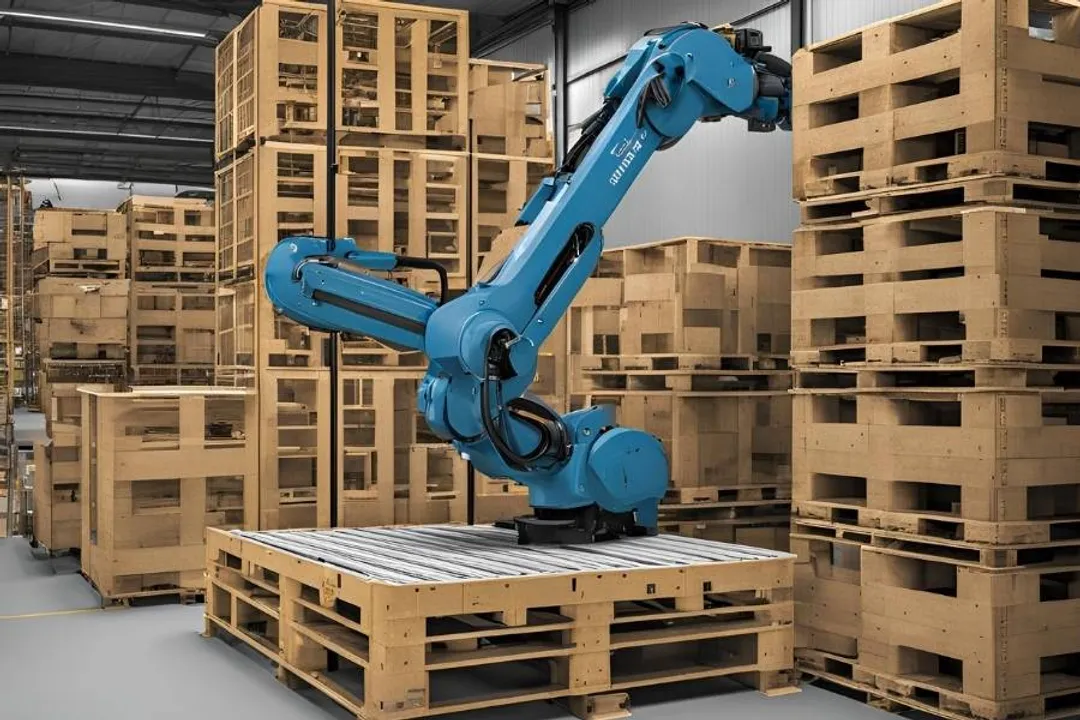
The fundamental distinction between a conventional palletizer and a robotic palletizer lies in the capability of the machine's end effector, which serves as the operational 'hand.' A conventional machine is restricted to manipulating entire layers simultaneously. In contrast, a robotic palletizer utilizes a versatile end effector that allows it to handle and place individual cases one at a time. This singular difference, enabled by the robot's multi-axis arm and computer control, permits the creation of complex, interlocking stacking patterns impossible for layer-type machines.
#Videos
Dual Robotic Palletizer by Bastian Solutions - YouTube
Universal Robots Palletizing Wizard Grady Turner - YouTube
Related Questions
What major drawback forced extensive retrofitting of conventional palletizers?What component defines the key difference between conventional and robotic palletizers?How does a six-axis robot improve over a four-axis robot in palletizing tasks?What was the initial programming method for early robotic palletizers?What capability do vision systems provide to guided robotic palletizers?What specific failures are penalized when calculating the Pallet Quality Consistency Index (PQCI)?How did conventional layer-type palletizers typically place product onto the pallet?Why are robotic systems preferred over conventional palletizers for handling softer food packaging?Besides eliminating arduous roles, what consistency benefit do robots provide over human labor?Which area is listed as a key future development trajectory for palletizing robots beyond mechanical action?