Who invented emergency supply robots?
The emergence of robots designed to assist during emergencies—whether bringing medical supplies, mapping disaster zones, or delivering vital aid—represents a critical advancement in modern preparedness. Pinpointing a single "inventor" for the category of emergency supply robots proves difficult, as this field is less about one singular breakthrough invention and more about the convergence of robotics, AI, and urgent logistical needs over many decades. What we see today are highly specialized machines developed by various teams tackling different facets of disaster response, from mobility challenges to power management.[4][5]
# Crisis Robotics
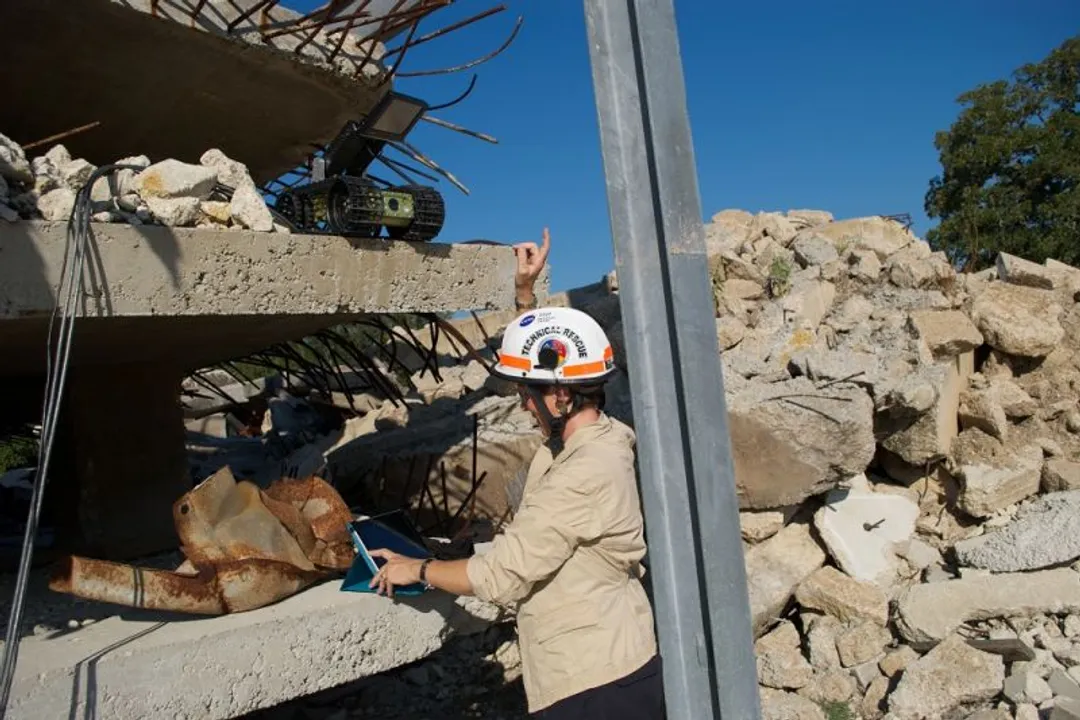
Robotics applications in disaster relief have long been an area of focus for research institutions and government agencies. The fundamental idea driving this research is getting crucial tools, information, or supplies into areas too dangerous or inaccessible for human responders. The National Science Foundation (NSF) has supported research aimed at developing robots capable of performing search and rescue tasks effectively in treacherous environments, laying the groundwork for systems that can carry supplies or clear debris.[5] Organizations like the American Society of Mechanical Engineers (ASME) recognize the broad potential of these machines, noting that rescue robots are increasingly being designed to tackle almost any disaster scenario, suggesting an evolutionary path from simple remote inspection to complex logistics handling.[4]
# Transforming Robots
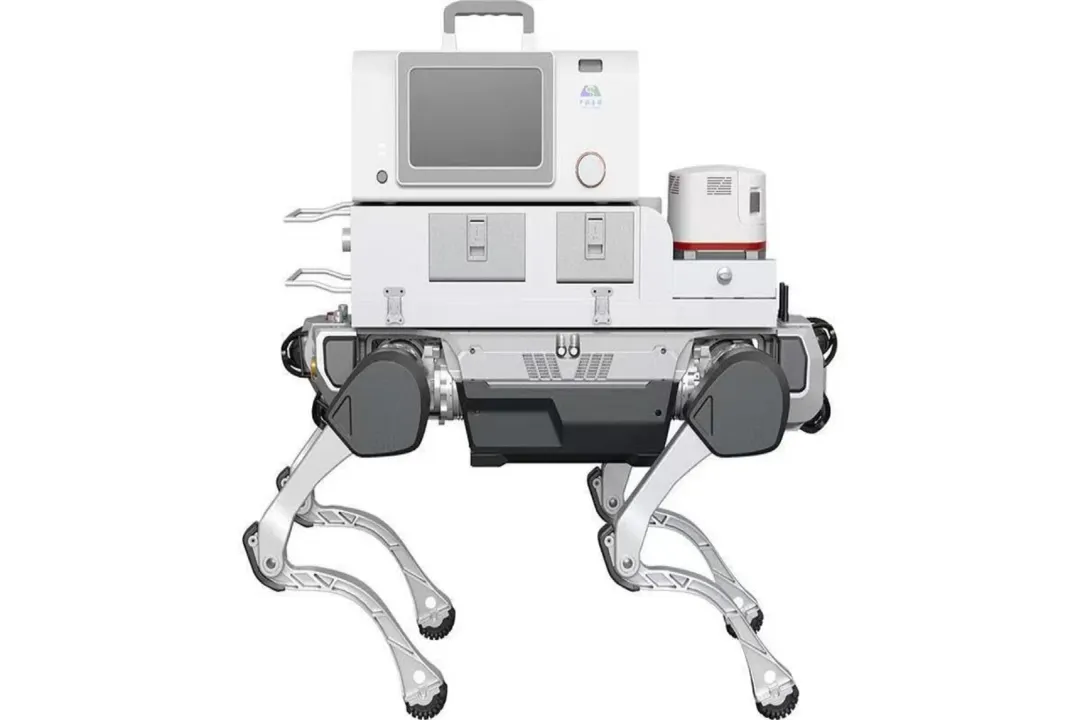
One striking recent development is the unveiling of a sophisticated rescue robot by China, which showcases extreme versatility in locomotion. This machine is noteworthy because it doesn't commit to a single mode of travel; instead, it can transform its movement style based on the terrain. It can operate on four legs (quadrupedal mode), on wheels for speed on flatter surfaces, or using tracks for maximum traction over rubble or soft ground.[3] Such adaptability is key for emergency work where the ground conditions can change drastically over a short distance. This specific platform was presented publicly in Hangzhou, drawing significant attention for its engineering complexity.[1][2] The design explicitly aims to improve response capabilities in complex disaster sites, potentially allowing it to carry critical supplies where other vehicles cannot tread.[3]
# Energy Demands
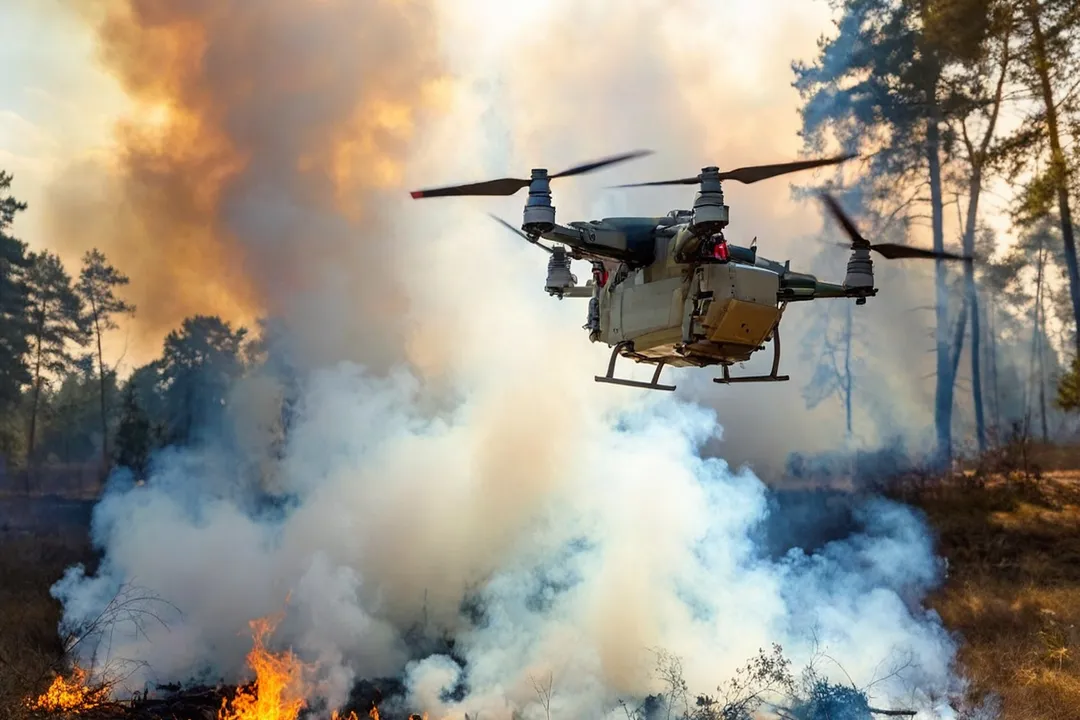
The capability of any emergency robot, especially those tasked with carrying supplies over distance or performing long-duration searches, is fundamentally tied to its power source. Advanced battery technology is a crucial enabler in this domain. For example, developments in high-energy-density batteries, such as those from Amprius, directly impact how long these robots can remain operational in the field without returning for recharging. Extended uptime means a greater chance of success in finding survivors or delivering aid before power runs out.[8] This technological progress in energy storage, independent of the robot's physical design, is an invisible but necessary component in the invention of truly effective emergency supply carriers.
# Team Deployment
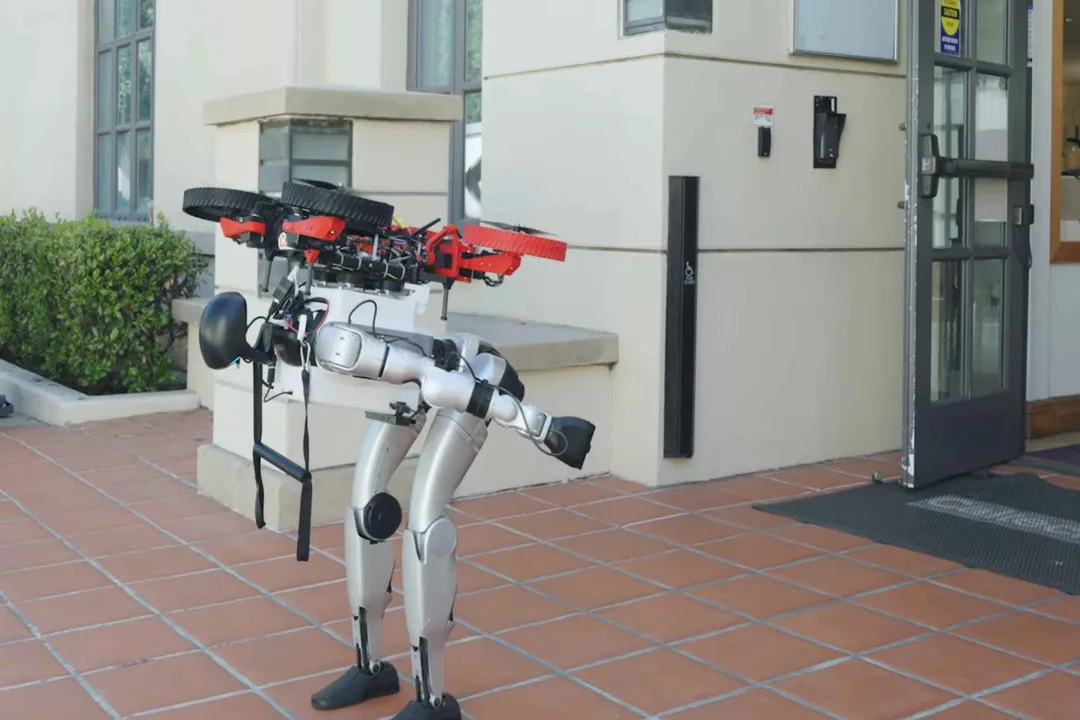
Beyond single, highly versatile robots, another current trend in emergency robotics involves coordinated multi-robot systems. An example of this is the X1 team, which integrates different types of machines to cover various operational needs simultaneously. This team features both humanoid robots and drones working in concert.[7] While the humanoid element might focus on fine manipulation or direct human interaction—perhaps handing over an essential supply item—the drone component can provide aerial reconnaissance or cover larger distances quickly. This specialization within a team structure suggests a future where logistics are handled by a combination of robotic specialists rather than relying on one machine to do everything perfectly.[7]

# Care Delivery
It is important to distinguish between robots operating in chaotic, acute disaster zones and those used for supply delivery in more structured, though still critical, environments like healthcare settings. In Texas, for instance, delivery and care robots have been launched to handle tasks within hospitals.[6] These robots typically move supplies, medications, or meals along predetermined, clean pathways. While they serve an emergency function by freeing up human staff during high-demand periods, their engineering priorities—such as maintaining strict hygiene protocols and navigating indoor environments—differ significantly from those required for crossing a collapsed building. Thinking about the needs of a hospital delivery robot versus a disaster zone robot reveals that "emergency supply" is an umbrella term covering distinct engineering challenges.[6]
# Deployment Complexity
The engineering marvels emerging from research labs highlight significant technological leaps, yet the practical deployment of these machines introduces layers of complexity that the inventor often doesn't face until the product leaves the lab. Consider the Chinese transforming robot: while its ability to switch between wheeled, tracked, and quadrupedal modes is impressive for navigating varied debris fields, such advanced features often require complex programming and high maintenance. In a genuine, fast-moving disaster where resources are scarce and responders are under intense pressure, maintaining three separate mechanical modes in the field can become an operational liability compared to a simpler, more rugged single-mode machine.[3] Conversely, the hospital delivery robots, while simpler mechanically, require integration with existing digital infrastructure and scheduling software, presenting a different set of hurdles for widespread adoption.[6] The true "invention" of an effective emergency supply system, therefore, is often the logistical protocol created around the hardware, ensuring that these capable machines can be rapidly deployed, understood by rescue teams, and effectively maintained when they are needed most.
The future of emergency supply involves more than just powerful batteries or adaptable legs; it requires creating reliable interfaces between these machines and the human command structure. If a robot can carry life-saving supplies but requires a specialized technician flown in to reset a stuck track mechanism, its value proposition diminishes rapidly in a remote crisis. The move toward multi-robot teams, like the X1, suggests designers are already recognizing this by spreading the operational load across platforms that specialize in transport, inspection, and manipulation, offering redundancy should one unit fail.[7] Ultimately, the inventor isn't just the person who engineers the hardware, but the team that figures out how to reliably integrate that hardware into the chaotic, high-stakes environment of a real-world emergency.
#Videos
After Disaster Strikes, Robots to the Rescue - YouTube
Related Questions
#Citations
Rescue robot with quadrupedal, wheeled, tracked modes debuts in ...
World's 1st emergency rescue robot, transport robot unveiled in ...
“An engineering marvel”: China's new rescue robot transforms with ...
These Rescue Robots Can Tackle Almost Any Disaster, Part 2 - ASME
Robots to the rescue | NSF - U.S. National Science Foundation
Delivery Care Robots Are Being Used to Alleviate Nursing Staff
Meet X1: First multi-robot team with humanoid and drone for rescue ...
All About Rescue Robots | Amprius Technologies
After Disaster Strikes, Robots to the Rescue - YouTube