Who invented warehouse robotics software?
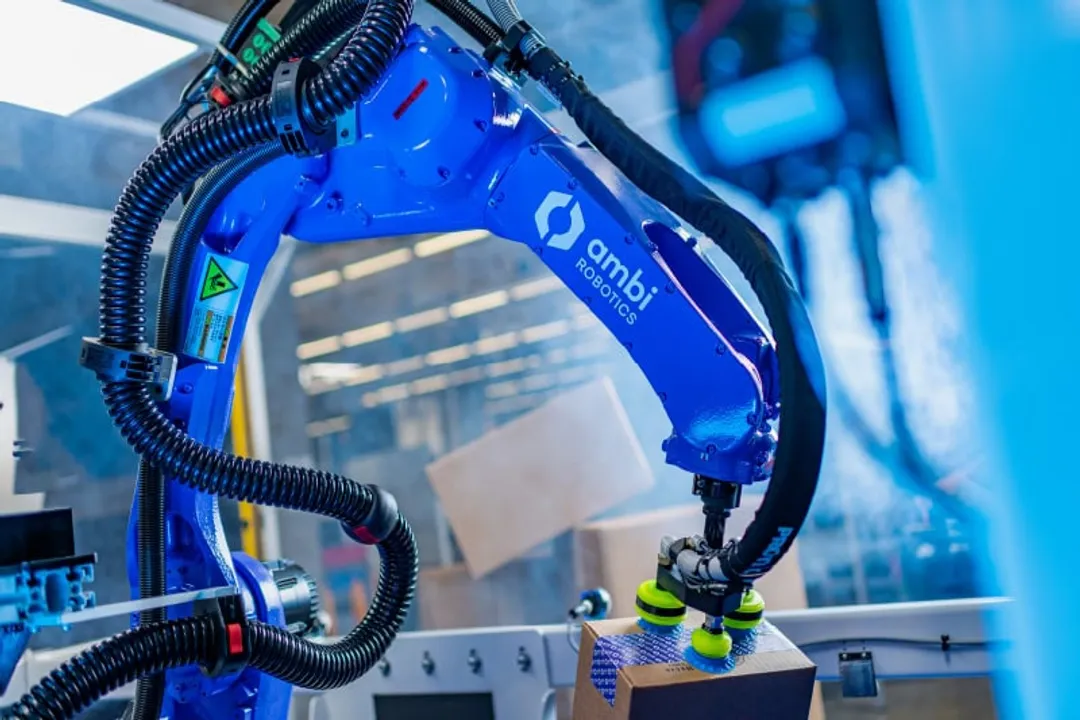
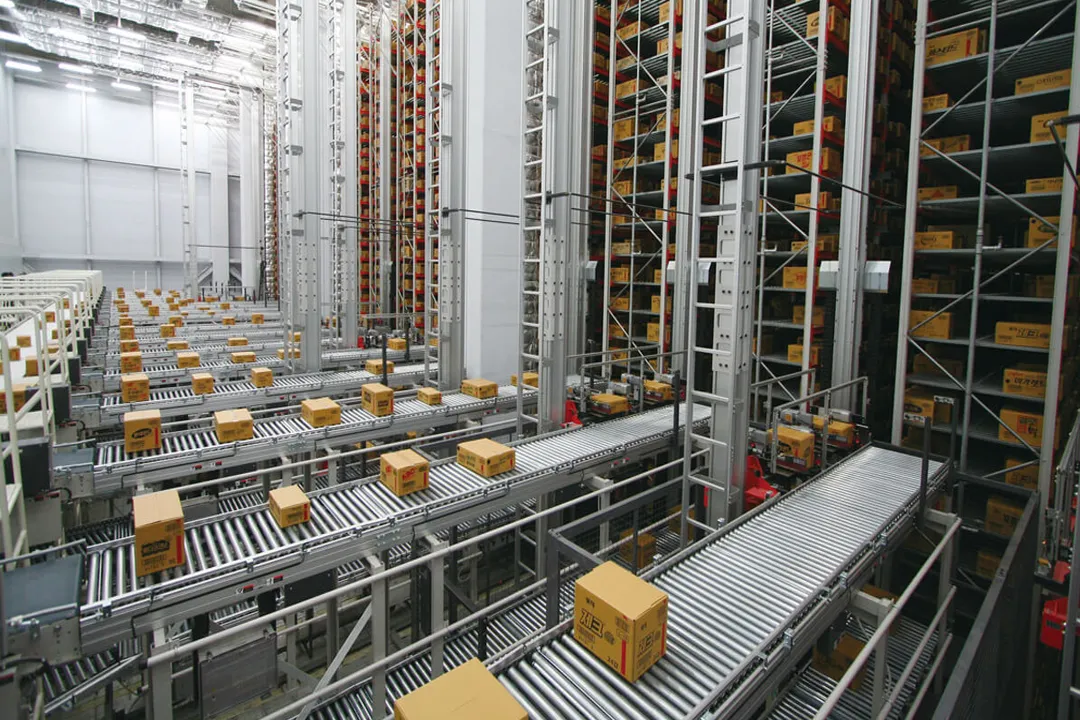
The quest to name a single inventor for warehouse robotics software is much like trying to pinpoint the first person to write a line of code—the answer is layered, evolving, and distributed across decades of engineering effort. Warehouse automation itself has deep roots, long preceding the arrival of intelligent mobile robots. Early attempts relied heavily on fixed automation, such as conveyor belts, sortation systems, and even early Automated Storage and Retrieval Systems (AS/RS). [1][5] These initial systems required a specific kind of programmed logic, but the modern concept of robotics software implies coordination, dynamic pathing, and fleet management, which arrived much later. [2]
# Early Foundations
To understand the software breakthrough, we must look at the hardware evolution. The concept of a robot assisting human workers has been around for a long time, with early industrial robotics emerging in the mid-20th century. [8] In the warehouse setting, however, true mobility and autonomy became the game-changer. Systems like AutoStore, for example, revolutionized storage density using an intricate system of bins, cranes, and robots operating within a defined grid. [1] While the mechanical design is brilliant, the software required to manage thousands of these automated cranes simultaneously, deciding which robot should retrieve which bin based on real-time order flow, represents a significant software achievement in optimization and task allocation. [1]
The transition from rigid, fixed automation to flexible automation is where specialized software truly took hold. Early automated guided vehicles (AGVs) followed fixed wires or magnetic strips embedded in the floor. Their "programming" was essentially following a set path defined by the infrastructure. This lacked the intelligence we now associate with contemporary warehouse robotics software, which must react to obstacles, re-route tasks, and communicate continuously with the overarching Warehouse Management System (WMS). [2][9]
# Mobile Autonomy Emerges
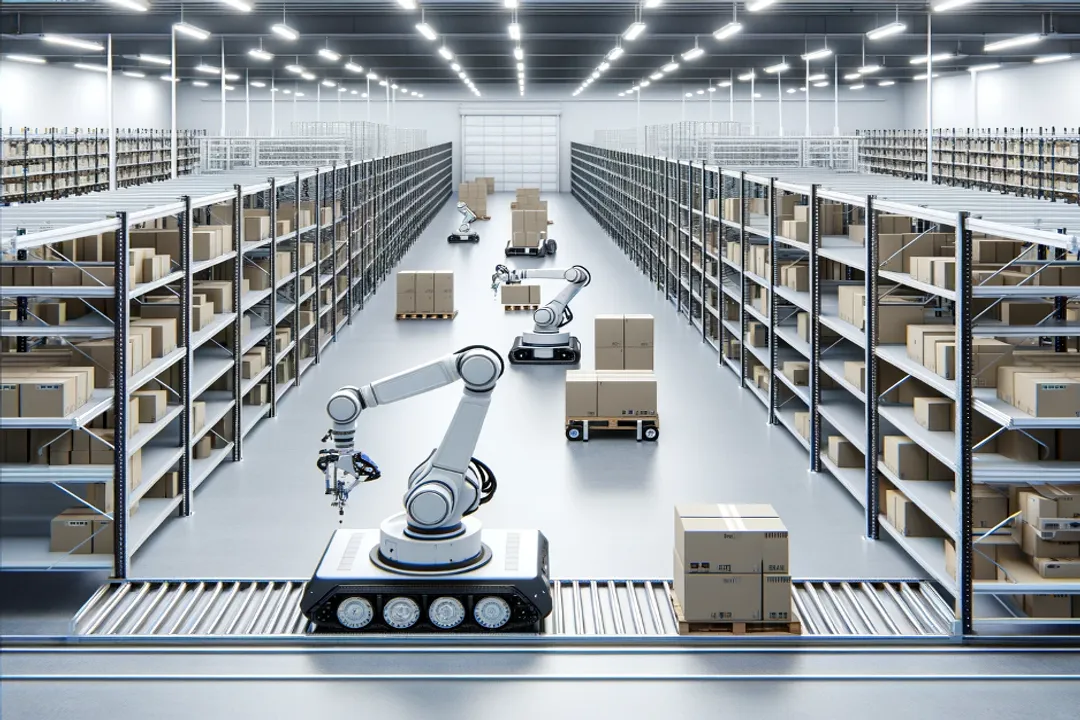
The real inflection point for software complexity came with the shift toward Autonomous Mobile Robots (AMRs), particularly those supporting "Goods-to-Person" picking strategies. [2] Companies like Locus Robotics focus on these collaborative AMR solutions, where the robots move inventory to stationary human pickers. [2] The software governing these AMRs needs to handle far more variables than simple conveyor logic. It must manage battery life, resolve potential traffic jams in dynamic aisles, assign orders based on robot location and current workload, and ensure safe interaction with human workers. [2][4]
This evolution suggests that the invention wasn't a single piece of code but rather the invention of layered control architecture. For instance, one prominent team working on scaling these systems highlighted the challenge of deploying hundreds of robots, emphasizing that the coordination logic—the centralized software orchestrating the fleet—was as critical as the hardware itself. [6] When dealing with fleets of this size, the software moves from simple command execution to complex swarm intelligence, often utilizing proprietary algorithms for path planning and task interleaving. [6]
# Defining the Software Layers
Pinpointing the "inventor" becomes even trickier because modern warehouse robotics software isn't a single entity; it's a stack. The fundamental inventory management logic often resides in the WMS (Warehouse Management System). However, the real-time decision-making for the robots sits lower down, typically in a WCS (Warehouse Control System) or, more recently, a WES (Warehouse Execution System). [9] The WES is the software layer that truly bridges the gap between the business logic of the WMS and the physical actions of the robots.
When we look at the software that directs the robots, we are observing the practical application of concepts developed in fields like artificial intelligence and distributed computing. The key innovation wasn't just writing the code; it was creating the communication protocols and optimization algorithms robust enough to handle the unpredictable nature of a busy warehouse floor while maintaining high throughput. [4]
An interesting analytical divergence in the industry stems from how these software layers interface. Traditional logistics operations often view the WMS as the brain. With the rise of sophisticated robotics, the WES often acts as the real-time scheduler, dynamically overriding or optimizing tasks dictated by the WMS to ensure robot efficiency. This separation of long-term planning (WMS) from immediate execution management (WES) is arguably a more significant structural software invention in logistics than any single algorithm, allowing for the flexibility needed to integrate diverse hardware from various vendors. [1][9]
# Algorithms and Optimization
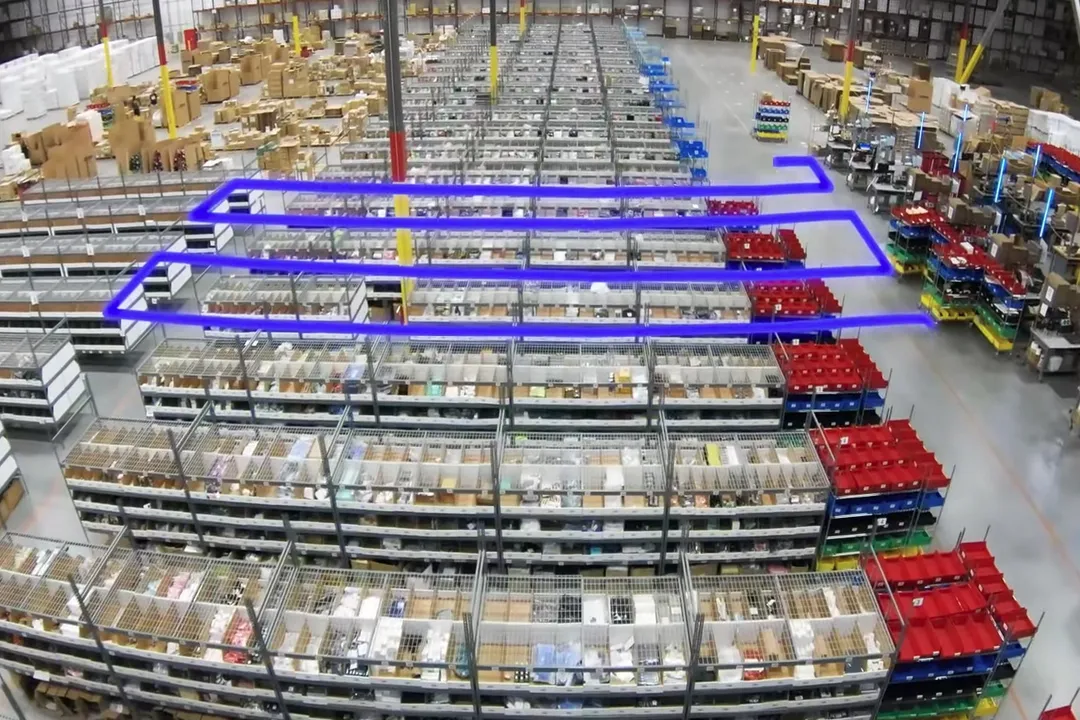
The real intellectual property often resides in the algorithms used for dynamic task allocation. Consider a Goods-to-Person system coordinating hundreds of tasks. The software must constantly solve a complex, changing version of the Traveling Salesperson Problem for every robot on the floor.
This requires advanced techniques, sometimes incorporating elements of machine learning, to predict bottlenecks before they occur. While early systems relied on simple queuing theory, modern solutions use predictive modeling based on historical data—data collected and processed by the very software being questioned. [4] This feedback loop, where operational data refines the execution software, solidifies the idea that software invention in this space is an ongoing, iterative process rather than a singular event tied to a patent filing.
# Vendor Focus Versus Open Standards
Because the market is dominated by specialized providers—some focusing on the hardware and the software (like AutoStore or Locus) and others focusing purely on the software orchestration layer—the credit for innovation gets split among many groups. Locus, for instance, emphasizes the collaborative nature and the software platform that allows their robots to work alongside people, suggesting their contribution is in creating an intuitive, scalable user experience wrapped around complex navigation. [2] AutoStore’s contribution is deeply rooted in the complex software required to manage the 3D cubic storage grid. [1]
In contrast to these integrated solutions, some of the deepest software expertise lies in the companies building the WES/WCS platforms that can manage fleets from different hardware manufacturers. These pure-play software developers are effectively inventing the universal translator and air traffic controller for robotics. Their foundational work in creating a hardware-agnostic control environment represents a major software milestone, even if they don't build the physical arms or wheels. This focus on abstraction—separating the robot's capability from the task requirement—is what allows warehouses to adopt new robot generations without scrapping their entire control logic.
To put this software complexity into perspective, imagine managing an orchestra where the instruments (robots) arrive daily with different instruction manuals (APIs), run out of fuel (battery) at random times, and occasionally break down. The warehouse robotics software inventor, in effect, is the creator of the conductor's score—a dynamic document that must instantly rewrite itself when a violin player needs a break or a cello suddenly gains the ability to play twice as fast. This necessity for real-time adaptation separates this domain from static factory programming.
# The Future of Software Control
The trajectory points toward increasingly intelligent software. Current research and development focus heavily on how software can optimize energy consumption, improve predictive maintenance schedules, and integrate more deeply with external enterprise systems beyond just the WMS. [4] The inventors of tomorrow's warehouse robotics software will likely be those who crack the code on truly unsupervised, self-optimizing fleet management, perhaps leaning heavily on reinforcement learning to teach robots optimal strategies rather than programming them directly.
While we cannot point to a singular "Thomas Edison of Warehouse Robotics Software," the invention is clearly a composite of several engineering achievements: the development of sophisticated AS/RS management algorithms, the creation of reliable AMR navigation stacks capable of human interaction, and the establishment of vendor-agnostic WES layers that allow for fleet scalability across diverse hardware solutions. [1][2][6][9] The true pioneer is the collective engineering group that successfully shifted warehouse control from fixed, deterministic instructions to dynamic, real-time optimization.
#Videos
Deus Robotics Delivering End-to-End Warehouse Automation
Related Questions
#Citations
Warehouse Robotics: A Complete Overview - AutoStore
A History of Robots in the Warehouse: From da Vinci to the Future
Everything You Need to Know About Warehouse Robotics Technology
Warehouse Robotics Unlock Efficiencies - Inbound Logistics
History of e-commerce: The rise of warehouse robotics and automation
Kiva Systems: Three Engineers, Hundreds of Robots, One Warehouse
The Evolution of Warehouse Automation - GreyOrange
13 Milestones in the History of Robotics - Aventine
History of warehouse automation - Accentis
Deus Robotics Delivering End-to-End Warehouse Automation