What major drawback forced extensive retrofitting of conventional palletizers?
Answer
Switching case size or adopting a new stacking pattern.
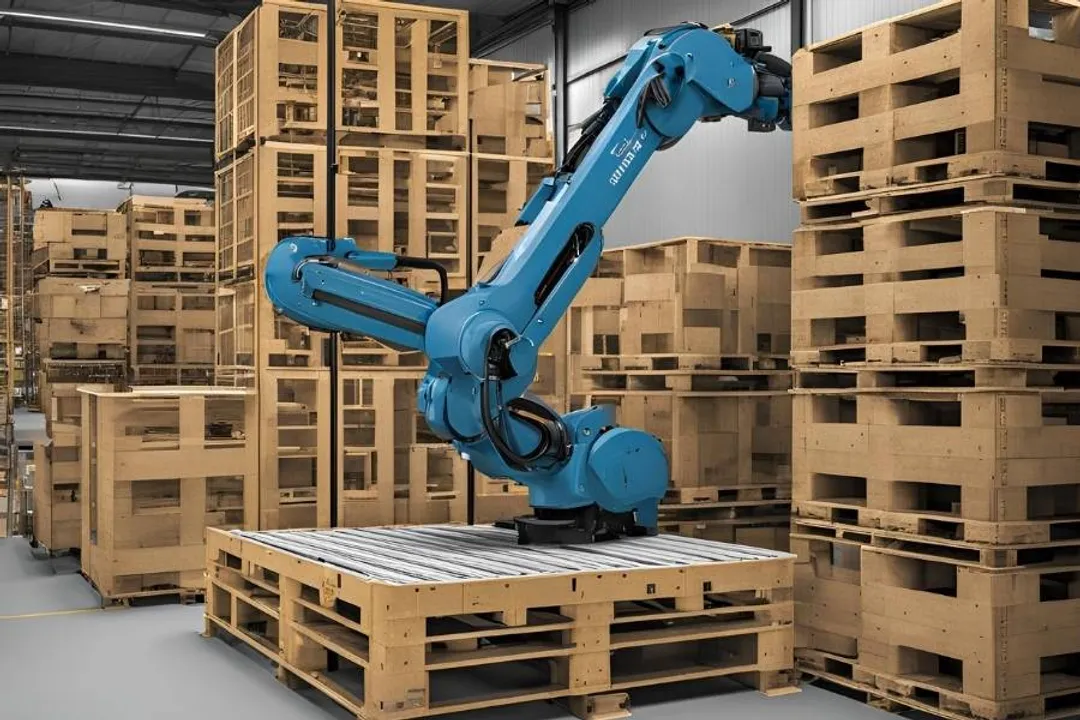
Conventional palletizers, also known as layer-type palletizers, were inherently inflexible because they were designed only for a specific product size and fixed stacking pattern. If a company needed to change production to a different case dimension or implement a new, potentially more space-efficient arrangement, the entire machine usually required costly, extensive retrofitting or complete replacement. This lack of adaptability made them unsuitable for environments with increasing product diversity, unlike later robotic solutions.
#Videos
Dual Robotic Palletizer by Bastian Solutions - YouTube
Universal Robots Palletizing Wizard Grady Turner - YouTube
Related Questions
What major drawback forced extensive retrofitting of conventional palletizers?What component defines the key difference between conventional and robotic palletizers?How does a six-axis robot improve over a four-axis robot in palletizing tasks?What was the initial programming method for early robotic palletizers?What capability do vision systems provide to guided robotic palletizers?What specific failures are penalized when calculating the Pallet Quality Consistency Index (PQCI)?How did conventional layer-type palletizers typically place product onto the pallet?Why are robotic systems preferred over conventional palletizers for handling softer food packaging?Besides eliminating arduous roles, what consistency benefit do robots provide over human labor?Which area is listed as a key future development trajectory for palletizing robots beyond mechanical action?