What locomotion modes does the Chinese transforming rescue robot utilize to navigate terrain?
Answer
Quadrupedal walking, wheels for speed, and tracks for traction
The Chinese rescue robot is engineered for extreme versatility by incorporating three distinct movement styles. By utilizing quadrupedal mode, the machine can traverse uneven or challenging surfaces on four legs. When speed is prioritized on flatter, more stable surfaces, it switches to a wheeled configuration. For navigating difficult terrains like rubble, loose debris, or soft ground where stability is paramount, it utilizes tracks. This combination allows the machine to adapt to rapidly changing ground conditions during emergency responses, ensuring it can reach locations that conventional vehicles might find impassable.
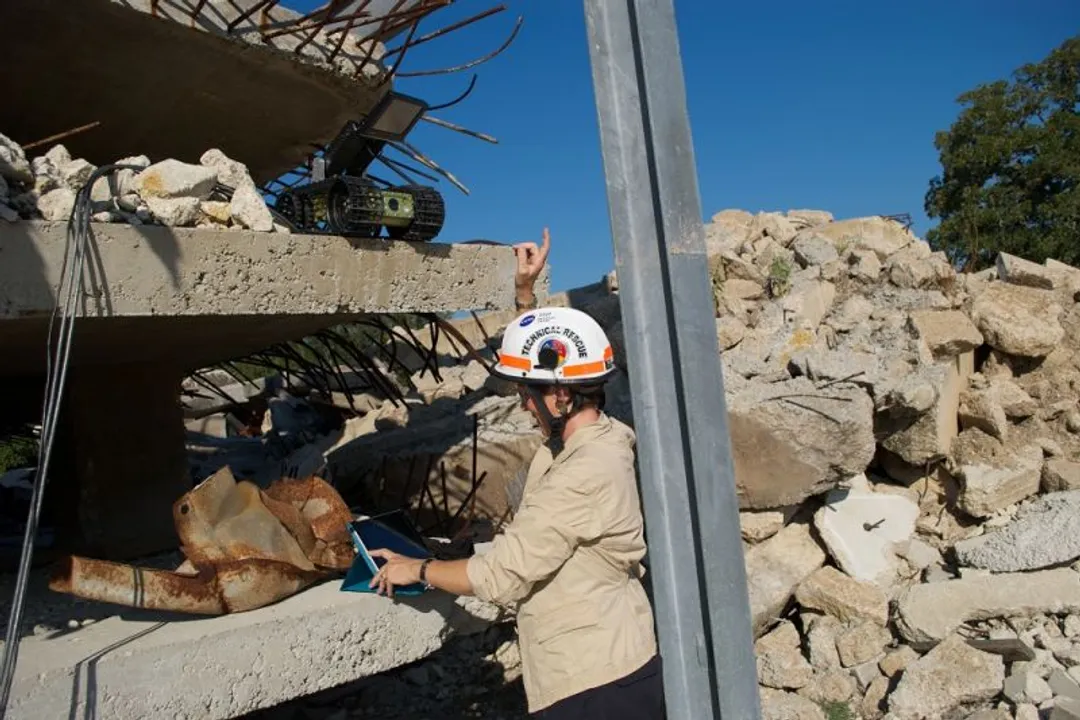
#Videos
After Disaster Strikes, Robots to the Rescue - YouTube
Related Questions
What locomotion modes does the Chinese transforming rescue robot utilize to navigate terrain?Why are high-energy-density batteries like those from Amprius significant for emergency robots?Which organization supports research aimed at enabling robots to clear debris and perform search and rescue tasks?What are the primary tasks performed by robots in Texas healthcare settings?What structural combination makes up the X1 multi-robot team?How does the American Society of Mechanical Engineers characterize the evolution of rescue robots?What primary engineering trade-off is associated with the Chinese transforming robot's mobility modes?What constitutes the true invention of an effective emergency supply system?In which city was the versatile Chinese rescue robot featuring multiple locomotion modes presented?What is the primary function of the humanoid component in the X1 robotic team?