What organizational structure was the culmination of the Water Frame, Jenny, Mule, and Power Loom innovations?
Answer
The factory system, which reorganized labor through task specialization under one roof.
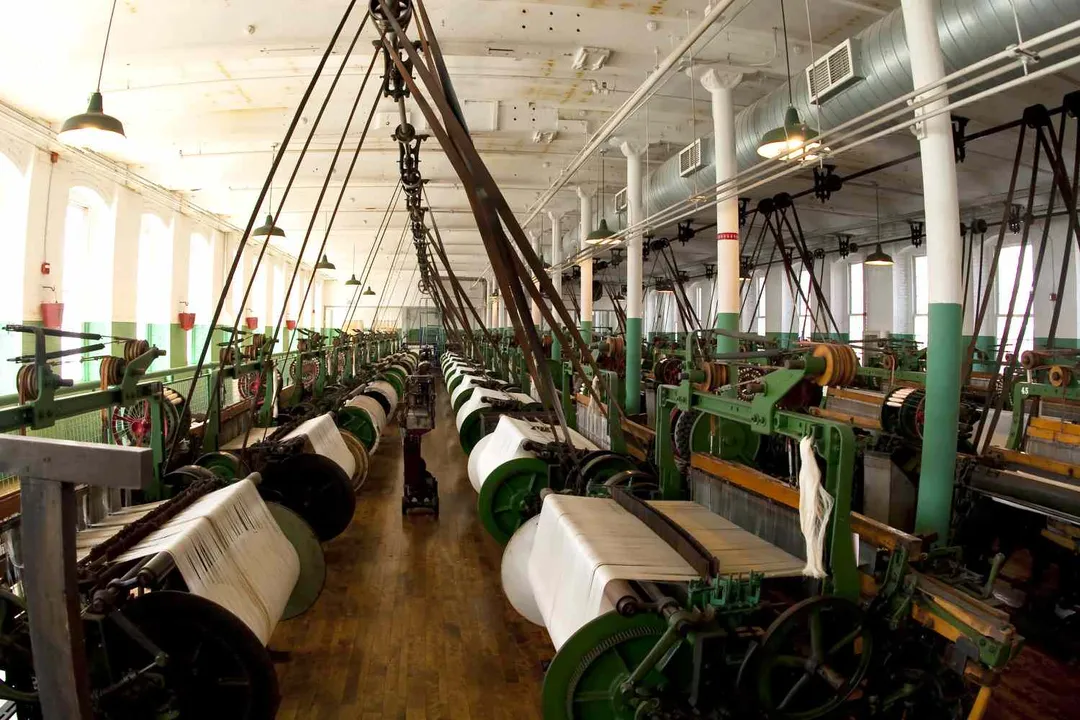
The factory system represents the organizational culmination resulting from the maturation of key spinning inventions like the Water Frame, Jenny, and Mule, combined with the weaving automation provided by the Power Loom. This system reorganized the labor structure by implementing a strict division of tasks, where workers specialized in only one stage of the automated process. These specialized workers were housed together under a single roof, which provided manufacturers with significant economies of scale. This restructuring ultimately made textiles significantly cheaper and more accessible to the general population for the first time in history.
Related Questions
What immediate problem followed John Kay’s 1733 Flying Shuttle invention?How did James Hargreaves' 1764 Spinning Jenny improve upon traditional spinning wheels?What innovation made Richard Arkwright's 1769 Water Frame the first powered textile machine?What defined Samuel Crompton's 1775 Spinning Mule as a hybrid solution?What was the primary bottleneck for production that Edmund Cartwright's 1785 Power Loom solved?How did the integration of steam engines change factory building locations?What impact did Eli Whitney's 1793 Cotton Gin have on British textile mills?What revolutionary concept did Joseph Marie Jacquard's 1804 loom introduce to weaving?What organizational structure was the culmination of the Water Frame, Jenny, Mule, and Power Loom innovations?Which later 19th-century invention mechanized the assembly of cut fabric into finished outfits?