inventionanswer.net
Home
/
Tags A-Z
/
P
/
Production
Production articles
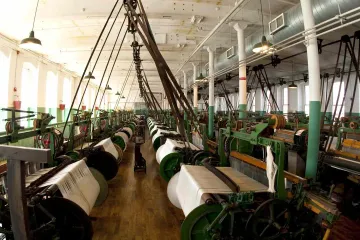
What inventions helped increase cloth production?
What invention led to mass production of clothing?
Why could Whitney's ideas about production be considered a revolution in manufacturing?
What immediate problem followed John Kay’s 1733 Flying Shuttle invention?
How did James Hargreaves' 1764 Spinning Jenny improve upon traditional spinning wheels?
What innovation made Richard Arkwright's 1769 Water Frame the first powered textile machine?
What defined Samuel Crompton's 1775 Spinning Mule as a hybrid solution?
What was the primary bottleneck for production that Edmund Cartwright's 1785 Power Loom solved?
How did the integration of steam engines change factory building locations?
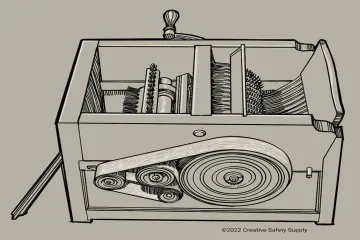
What impact did Eli Whitney's 1793 Cotton Gin have on British textile mills?
What revolutionary concept did Joseph Marie Jacquard's 1804 loom introduce to weaving?
What organizational structure was the culmination of the Water Frame, Jenny, Mule, and Power Loom innovations?
Which later 19th-century invention mechanized the assembly of cut fabric into finished outfits?
What constituted the assembly bottleneck before the sewing machine's breakthrough?
What key inventions dramatically sped up thread and cloth creation during the initial Industrial Revolution phase?
Where did the primary economic value of a garment shift after the widespread adoption of the sewing machine?
By what factor did the sewing machine increase stitch speed compared to a very fast hand sewer?
What organizational concept allowed efficiency to increase even beyond the speed of the sewing machine itself?
What necessity drove the development of comprehensive, standardized size charts for clothing production?
What stitch type, characterized by using a double thread, was characteristic of reliable, functional sewing machines?
Which early ready-to-wear goods were the initial focus after the sewing machine enabled mass production?
What fundamental skill requirement changed for clothing production workers post-1850s adoption of the machine?
What later 20th-century machine specializations further drove factory efficiency and quality control?
What concept represented Eli Whitney’s true contribution to the manufacturing revolution?
How did the idea of interchangeable parts fundamentally break from centuries of artisanal production?
What was the approximate daily output of cotton cleaning achieved by one worker using the cotton gin?
What specific government contract allowed Whitney to fully test his manufacturing theory regarding uniformity?
Why was the U.S. government primarily interested in Whitney's methodology for producing muskets?
What essential tools did Whitney need to invent to guarantee part uniformity during musket production?
What did Whitney's system change a repair job from, especially for military equipment?
What was the foundational division of labor unlocked by precision manufacturing under Whitney's system?
What is Whitney’s manufacturing philosophy sometimes referred to as?
Which industries adopted Whitney's standardized methodology after its success with muskets?
Besides minimizing filing time, what other form of waste did the adoption of precision tools address?