Why was the invention of the dishwasher important?

The rumble of the first successful, powered dishwashing machine represented more than just a new gadget for the kitchen; it signaled a profound, though initially slow, reshaping of domestic labor and standards of hygiene. Before this mechanical helper arrived, the act of cleaning dishes after a meal was a universally dreaded chore, consuming hours that could otherwise be spent on education, leisure, or other necessary household management tasks. [4][6] The importance of this invention lies not just in its function—washing plates—but in the time and physical strain it removed from daily life.
# China Protection

The immediate impetus for the creation of the automated dishwasher sprang from the desire to protect valuable possessions, not merely to save time. Josephine Garis Cochrane, the woman credited with inventing the first practical machine, was motivated by the frequent breakage of her fine china. [1][2][8] When servants were tasked with cleaning elaborate table settings, accidents were inevitable, leading to costly replacements of delicate, high-quality dishware. [2][8] Cochrane’s initial design focused on this problem: ensuring that plates and glasses were cleaned thoroughly yet gently. [1][2] Her early model used wire racks to hold dishes firmly in place while pressurized water jets sprayed them clean. [1][2] This was a direct engineering response to the problem of human error and the inherent risks associated with manual scrubbing and stacking of fragile materials.
# Labor Shift
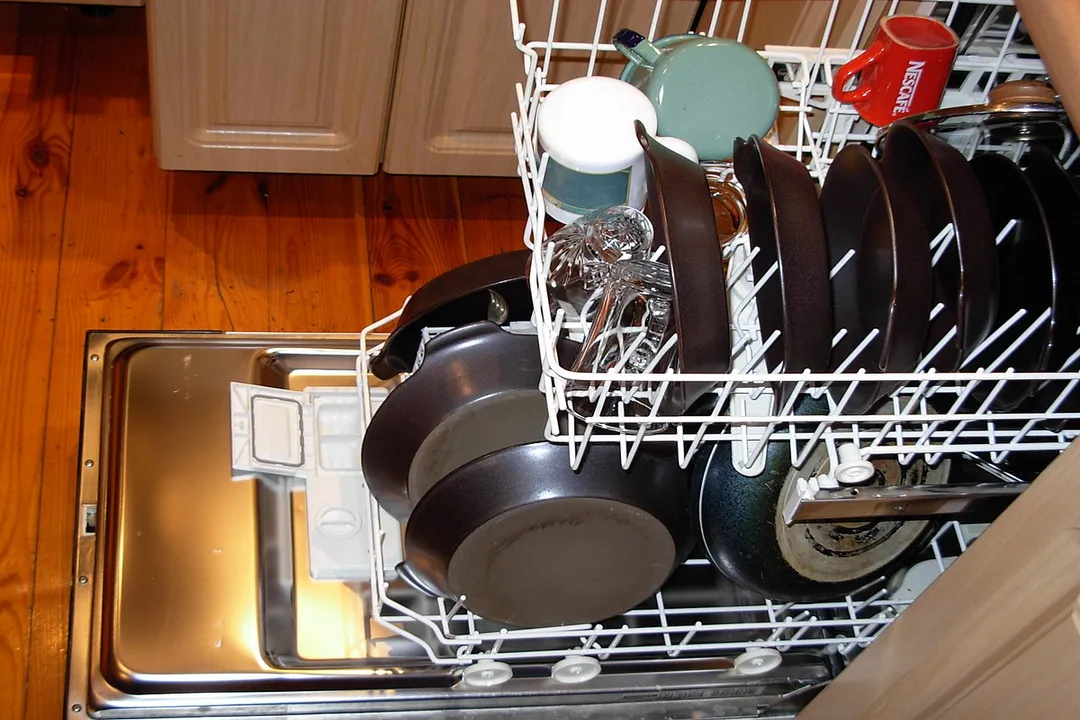
The real, long-term significance of the dishwasher, however, rested in its impact on household labor dynamics. For centuries, washing dishes was a physically taxing, time-consuming necessity, traditionally falling to kitchen staff or the mistress of the house herself. [4][6] In affluent homes, servants dedicated significant portions of their day to this repetitive task. In less wealthy households, the owner managed this duty, effectively tethering her schedule to the kitchen sink. [6]
The introduction of an appliance that could automate this process represented a major reallocation of human energy. If one considers that a substantial, pre-modern household might dedicate upwards of an hour and a half daily to washing, drying, and putting away dishes, the adoption of this machine offered back hundreds of hours annually. [4] This recaptured time began to be redirected toward other pursuits—perhaps managing complex household accounts, supervising children’s education, or, for those who could afford it, simply enjoying more personal time away from domestic drudgery. The dishwasher subtly began to redefine the boundary between necessary physical chores and intellectual or personal pursuits within the home environment.

# Sanitation Gains

Beyond breakage and brute labor, the machine also addressed underlying concerns about cleanliness. Handwashing, even when performed with diligent effort, often resulted in dishes that harbored residual food particles or bacteria. [4] In an era where understanding germ theory was becoming more widespread, the ability to clean items consistently using high-pressure jets of water offered a significant sanitary advantage. [4]
The design itself, with racks ensuring every surface was exposed to the cleaning action, contrasted sharply with the uneven results of manual scrubbing where the corners of bowls or the bases of glasses might be neglected. The machine provided a higher, more reliable baseline for hygiene, especially important in commercial settings like hotels and restaurants where the machine first found widespread acceptance before filtering down to the consumer market. [6]
# Invention Context
Josephine Cochrane secured a patent for her invention, marking the official start of the appliance category. [3] While others had tinkered with concepts before her, Cochrane’s design, showcased prominently at the 1893 World's Columbian Exposition in Chicago, proved practical and attracted commercial interest. [1][2][8] It is interesting to note that her machine relied on a hand-powered pump to create the necessary water pressure, showing that even this early iteration was complex and heavy-duty, far removed from today's plug-and-play models. [1][2]
The business she founded to manufacture these devices eventually evolved into a key component of what is now the KitchenAid brand. [1][8] This commercialization demonstrates that the importance of the invention was immediately recognized by industry—it wasn't just a novelty, but a viable product answering a universal need, even if that need was initially confined to those who could afford the high price tag associated with early automation. [6]
# Market Adoption
The initial adoption curve for the dishwasher was slow, reflecting its status as a luxury item. [6] Early models were costly and required significant kitchen modifications. Unlike today’s under-counter appliances designed to fit standardized cabinetry, early dishwashers demanded dedicated space and specialized plumbing connections that were not standard in most existing homes. [5] This meant that only the newly built, affluent residences were immediately candidates for installation, keeping the technology out of reach for the average family for decades. [6] It wasn't until technological maturation—leading to better insulation, quieter operation, more efficient water use, and reduced size—that the dishwasher transitioned from being a status symbol to a true household necessity. [5][4] This slow integration shows that for any revolutionary appliance to succeed, the supporting infrastructure (like standard plumbing and affordable pricing) must catch up to the core technology.
# Modern Efficiency
Today, the importance of the dishwasher is often measured in terms of resource conservation alongside convenience. While Cochrane’s primary goal was protecting china and saving human effort, modern appliances have shifted the conversation toward environmental impact. [4] A machine running on an efficient modern cycle often uses significantly less water than someone washing the same volume of dishes by hand, especially if the person washing by hand tends to let the water run continuously. [4] This resource optimization is a direct, though perhaps unintended, legacy of the initial quest for a superior cleaning method. The invention established the principle of mechanical dish sanitation, which engineers have spent the last century refining to meet contemporary ecological standards. The dishwasher, therefore, represents a continuous history of domestic engineering, evolving from a tool to prevent chipping to an apparatus designed for water stewardship and maximized free time.
Related Questions
#Citations
Who Invented the Dishwasher? - History.com
All About the Invention of the Dishwasher - Sanitary Plumbing
The Power of a Simple Idea - Robertson IP
The History of Dishwashers: From Handwashing to Modern ...
Dishwasher - Wikipedia
A Glance at the Past: How the Dishwasher Evolved and Changed ...
Invention of the Dishwasher by Josephine Cochrane in the Late 19th ...
Who Invented the Dishwasher & How Has It Changed Our World
Facts About the Dishwasher: A Comprehensive Guide