What major capability gap defines the next potential 'invention' phase for autonomous forklifts?
Answer
Unsupervised operation in complex, unstructured outdoor settings
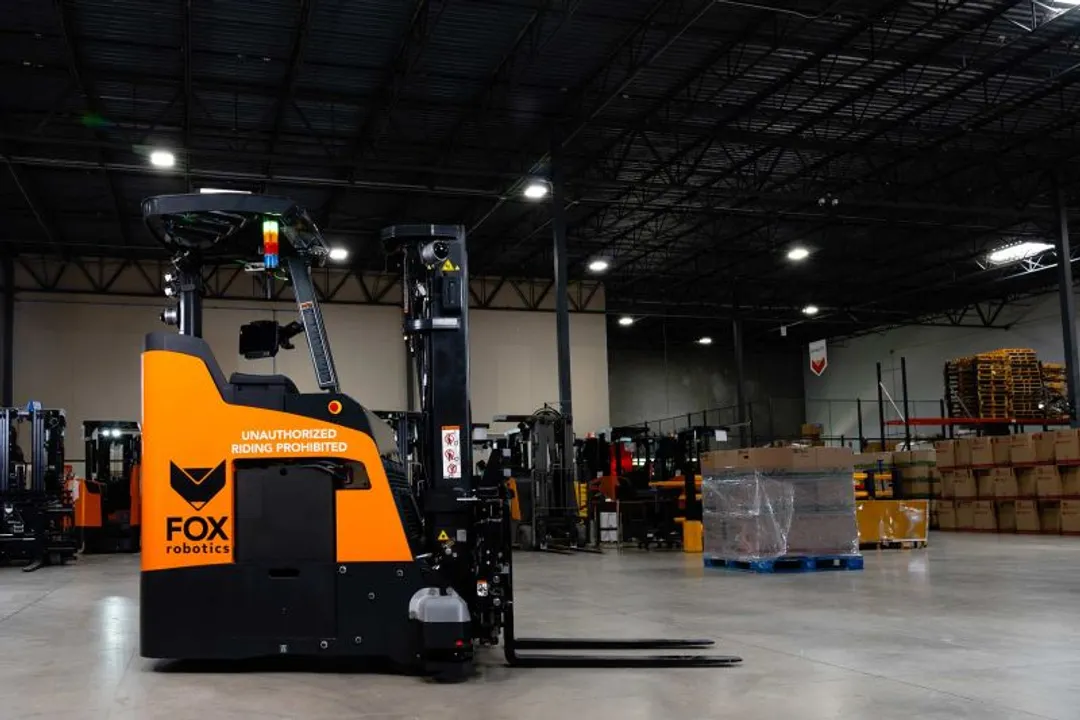
The current success of autonomous forklifts is heavily concentrated within the controlled conditions found inside a warehouse environment. The next significant inventive step involves expanding this functionality to handle environments with far greater variables. This next phase centers on achieving robust, unsupervised operation outside the warehouse, specifically in complex or unstructured outdoor settings, such as handling the variables presented by an outdoor loading dock, which includes dealing with uneven pavement, unpredictable weather conditions, and erratic semi-truck traffic.
#Videos
How Did Cyngn Develop Its Autonomous Forklift? - YouTube
Related Questions
What key characteristic defined the early Automated Guided Vehicle (AGV) era?Which set of sensors do Autonomous Mobile Robots (AMRs) utilize for dynamic perception?What distinguishes contemporary autonomous forklifts from earlier AGV systems?What function do Simultaneous Localization and Mapping (SLAM) algorithms perform?Which entities are historically credited for the original powered lift truck capability?How does an AMR adapt differently than an early AGV when a warehouse layout changes?To whom is the current era of fully autonomous forklift navigation best attributed?What evolution in safety systems was necessary for heavy load machines operating near people?What methods did early Automated Guided Vehicle (AGV) guidance systems use to stay on course?What major capability gap defines the next potential 'invention' phase for autonomous forklifts?