How does an AMR adapt differently than an early AGV when a warehouse layout changes?
Answer
The AMR recalibrates instantly, whereas the AGV requires path reprogramming.
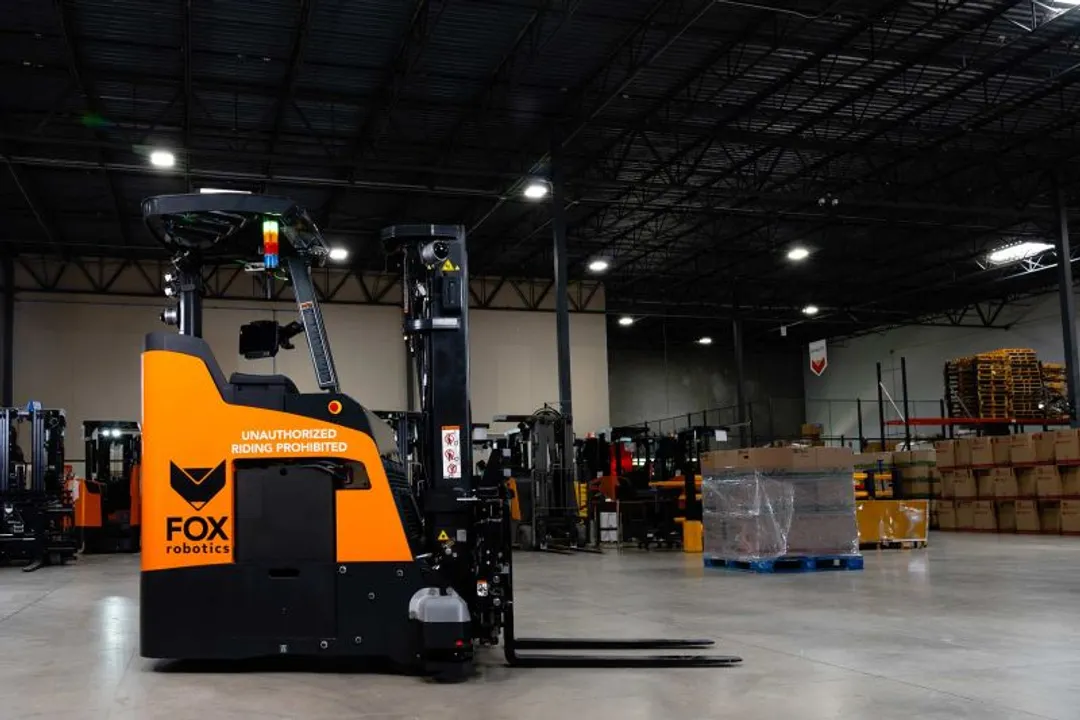
The key commercial advantage of the modern AMR lies in its flexibility regarding facility layout. Early AGVs were dependent on fixed infrastructure (wires, tapes); thus, if racking was moved or a temporary display was added, the entire path had to undergo costly and time-consuming reprogramming. In contrast, the adaptive AMR, utilizing its real-time mapping capabilities, can instantaneously recalibrate its path around these physical changes without requiring permanent infrastructure alteration or extensive system reprogramming, drastically lowering the barrier to adoption in existing logistics environments.
#Videos
How Did Cyngn Develop Its Autonomous Forklift? - YouTube
Related Questions
What key characteristic defined the early Automated Guided Vehicle (AGV) era?Which set of sensors do Autonomous Mobile Robots (AMRs) utilize for dynamic perception?What distinguishes contemporary autonomous forklifts from earlier AGV systems?What function do Simultaneous Localization and Mapping (SLAM) algorithms perform?Which entities are historically credited for the original powered lift truck capability?How does an AMR adapt differently than an early AGV when a warehouse layout changes?To whom is the current era of fully autonomous forklift navigation best attributed?What evolution in safety systems was necessary for heavy load machines operating near people?What methods did early Automated Guided Vehicle (AGV) guidance systems use to stay on course?What major capability gap defines the next potential 'invention' phase for autonomous forklifts?