Who invented autonomous forklifts?
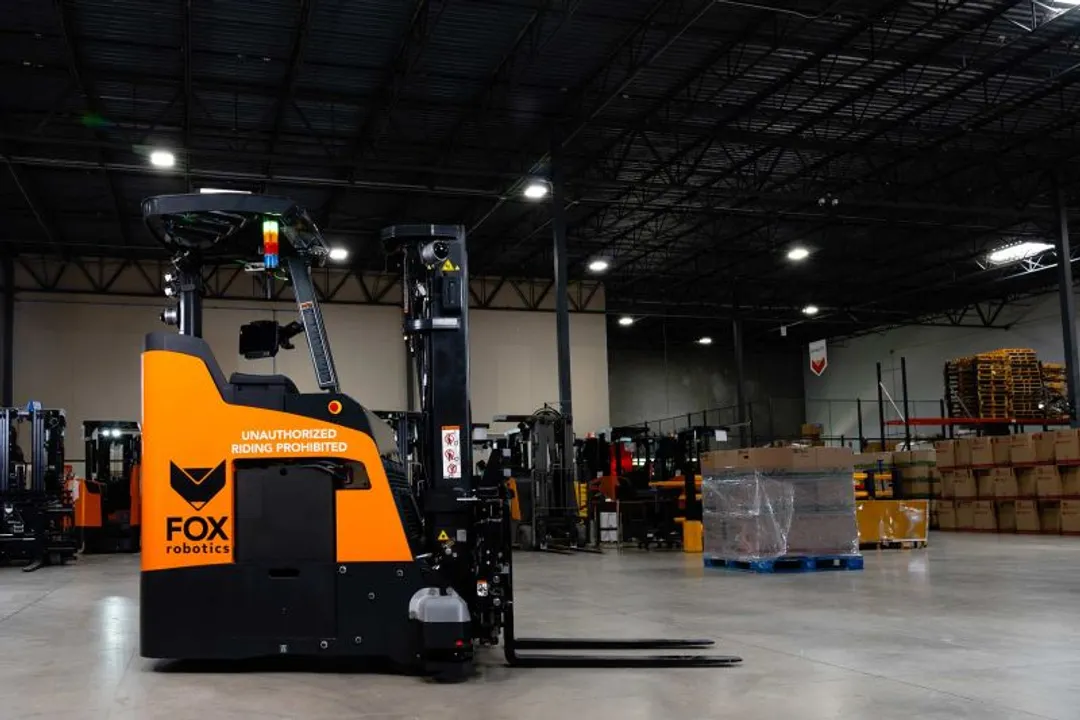
The genesis of the self-steering forklift is less a story of a singular flash of genius and more a gradual technological accretion built upon decades of material handling innovation. While pinpointing the exact moment someone first conceived of a driverless fork truck is difficult, the trajectory clearly moves from the invention of the basic machine to the introduction of automated guidance, and finally, to today's sophisticated, perception-driven autonomy. [2][3][4]
The foundational machine, the forklift itself, arrived in the early 20th century, driven by the need for quicker, more efficient lifting and stacking in an industrializing world. [3] Companies like Clark and Yale & Towne were instrumental in developing the first powered lift trucks. [2][3] This first step made vertical movement efficient, but the horizontal movement still required a trained human operator to navigate aisles and docks safely. [2] The journey toward autonomy began when engineers sought to remove that operator from the equation for repetitive transport tasks.
# Precursor Systems
The true ancestor of the autonomous forklift is the Automated Guided Vehicle (AGV). [9] These systems emerged long before modern AI and sensor fusion became common, relying on relatively simple, fixed methods of navigation. [9] Instead of perceiving their surroundings dynamically, AGVs were essentially programmed to follow a predefined path etched into the floor or environment. [9]
The guidance mechanisms for these early automated systems varied significantly. Some relied on physical contact, such as following a wire embedded in the floor, while others used magnetic tape or specialized paint strips to keep them on course. [9] This approach was effective for high-volume, predictable routes—moving raw materials from Point A to Point B in a manufacturing facility, for instance. [9] The key characteristic of the AGV era was rigidity: if an obstacle appeared or a path was blocked, the system typically stopped and waited for human intervention, lacking the ability to reroute or reason around the obstruction. [9][4]
It is during this AGV period that we start seeing the first patents and implementations of driverless material handling equipment, but naming a single inventor for this entire category of automation is as challenging as naming the inventor of the conveyor belt; it was an industry-wide evolution driven by the desire for 24/7 operation and reduced direct labor costs. [5]
# Defining Autonomy
To understand the leap from AGV to modern autonomous forklift, it helps to define the terms surrounding driverless warehouse technology. An automated forklift can generally fall into the category of an AGV or a more advanced Autonomous Mobile Robot (AMR). [4]
An AMR represents the significant technological jump. [4] Unlike the AGVs that followed floor markers, AMRs employ advanced onboard computing, mapping software, and sensor arrays—often including lidar, cameras, and sometimes radar—to perceive their environment dynamically. [4][5] They create and update maps of their operational space in real-time. [4]
This shift means that an AMR doesn't just follow a line; it sees the pallet dropped unexpectedly in the middle of the aisle, detects a pedestrian entering its zone, and calculates a safe path around both obstacles. [4][7] The invention of this adaptive intelligence, rather than just remote control or fixed-path movement, is what distinguishes contemporary autonomous forklifts. [5]
The path to this adaptive intelligence involved multiple industries converging, pulling from decades of research in self-driving cars and industrial robotics. [8] While companies developing passenger self-driving vehicles often garner more headlines, industrial autonomy, particularly in controlled environments like warehouses, achieved practical, large-scale deployment earlier because the operational constraints—speed limits, fewer variables (like pedestrians reacting unpredictably outside a crosswalk)—are more manageable. [8]

# Key Technology Shifts
The transition from early guided vehicles to truly autonomous systems required three major technological breakthroughs that moved the technology out of specialized R&D labs and into commercial use:
- Mapping and Localization: Moving beyond simple floor tape required robust Simultaneous Localization and Mapping (SLAM) algorithms. This allows the machine to know exactly where it is on a map while simultaneously building or updating that map. [5]
- Safety Systems: For a machine carrying heavy loads to operate near people, safety protocols had to evolve past simple emergency stops. Modern systems incorporate multi-layered safety standards, using sensors to create dynamic safety envelopes around the machine, adjusting speed based on proximity to people or shelving. [4]
- Battery and Power Management: Operating 24/7 without a driver meant power management had to become intelligent. Modern units often feature self-docking capabilities to recharge automatically when battery levels dip, minimizing human supervision. [5]
The companies driving today’s market, such as Foxbots or others specializing in warehouse automation, are not necessarily the inventors of the concept of automation, but they are the entities that successfully miniaturized, commercialized, and scaled the sophisticated software stacks necessary for reliable, dynamic operation in busy logistics environments. [1][4]
# Integrated Operations Insight
One useful way to evaluate the progress of autonomous forklift invention is not by looking at a single patent date, but by analyzing the maturity of system integration. An early AGV required significant, permanent infrastructure changes—tapes, wires, or magnetic strips—meaning the facility had to be designed around the vehicle. [9] The real breakthrough that many contemporary providers claim as their commercial invention moment is the opposite: the vehicle adapting to the existing, often chaotic, facility layout. [5] If a warehouse adds a new temporary display or moves racking, the adaptive AMR recalibrates instantly, whereas the older AGV system would require costly and time-consuming path reprogramming. This flexibility drastically lowers the barrier to entry for adoption.
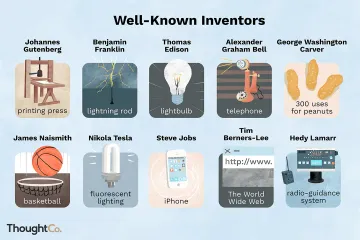
# Naming the Pioneers
While a single "inventor" remains elusive for the autonomous version, historical context credits companies and individuals for the machine's original capability. For the powered lift truck, history often points to early 20th-century innovators like Eugene Clark or efforts from the Yale & Towne Manufacturing Company. [2][3]
For the automated side, credit is diffuse across industrial robotics firms who developed the early AGV guidance systems in the mid-to-late 20th century. [9] The current era of fully autonomous forklifts—those that navigate without pre-set pathways and react to dynamic environments—is better attributed to the software engineers and AI specialists who created the perception and decision-making software layers that sit atop the existing hardware platform. [5] Companies today are essentially applying cutting-edge sensor fusion and machine learning—technologies borrowed from autonomous driving research—to established forklift hardware. [8]
# Future Challenges
The next phase of development, which might also be considered a new "invention" in terms of capability, centers on unsupervised operation in complex, multi-story environments or unstructured outdoor settings. [7] The current success stories, often highlighted in industry reports, focus heavily on the controlled conditions inside a warehouse. [1] Scaling this technology to handle the variables of an outdoor loading dock—uneven pavement, changing weather, and unpredictable semi-truck traffic—remains an ongoing challenge for which no single inventor has yet provided the definitive, universally accepted solution. [7] The transition from driver-assist to fully unsupervised operation is where the next major inventive step will occur.
For businesses considering this transition, understanding the difference between simple automation and true autonomy is critical for calculating return on investment. A basic AGV might save on operator wages for a fixed route but requires capital expenditure for infrastructure modification. Conversely, a modern AMR may have a higher initial unit cost but delivers savings through operational flexibility and reduced downtime associated with path blockage, allowing it to function effectively even in older, less optimized warehouse layouts. [5] The true inventor of the commercially successful autonomous forklift, therefore, might be the entity that optimizes this cost-benefit analysis for the general market, rather than the one who first made the machine move without hands. [1][4]
#Videos
How Did Cyngn Develop Its Autonomous Forklift? - YouTube
Related Questions
#Citations
The evolution of forklifts: from manual to autonomous - LinkedIn
Forklift - Wikipedia
Forklift History: Who invented the first forklift? - The Lilly Company
Automated Forklifts – Are Robotic Lift Trucks the Best Choice?
The Evolution of Forklift Technology From Inception to Today
How Did Cyngn Develop Its Autonomous Forklift? - YouTube
Who's Steering That Forklift? The Phantom Knows
Self-driving cars have yet to arrive, but autonomous forklifts are here
How “every day” AGV forklifts & fork trucks bring warehouse ...