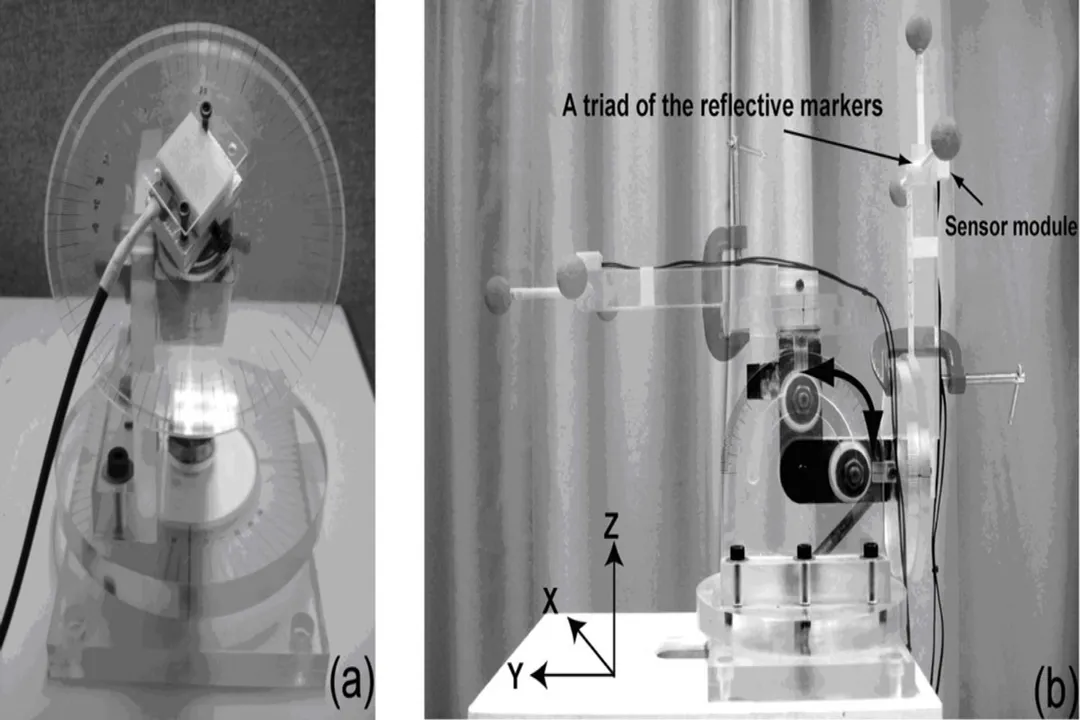
What functional advantage do gyroscopes offer over a device relying solely on an accelerometer for tracking trunk lean over time?
Gyroscopes measure angular velocity, allowing them to accurately track rotation independent of linear motion.
While accelerometers are fundamental, they measure linear acceleration and the pull of gravity, making them inherently susceptible to error when the user performs benign, non-postural movements, such as reaching for an object quickly. Gyroscopes solve this fidelity issue by measuring angular velocity—how fast the object is rotating around an axis. This capability means that the system can reliably distinguish between the actual rotational shift constituting poor posture (like a sustained trunk lean) and transient linear movements the user initiates. This independence from linear motion is crucial for high-precision, reliable tracking of subtle postural shifts over extended periods.