Who invented continuous health monitoring?
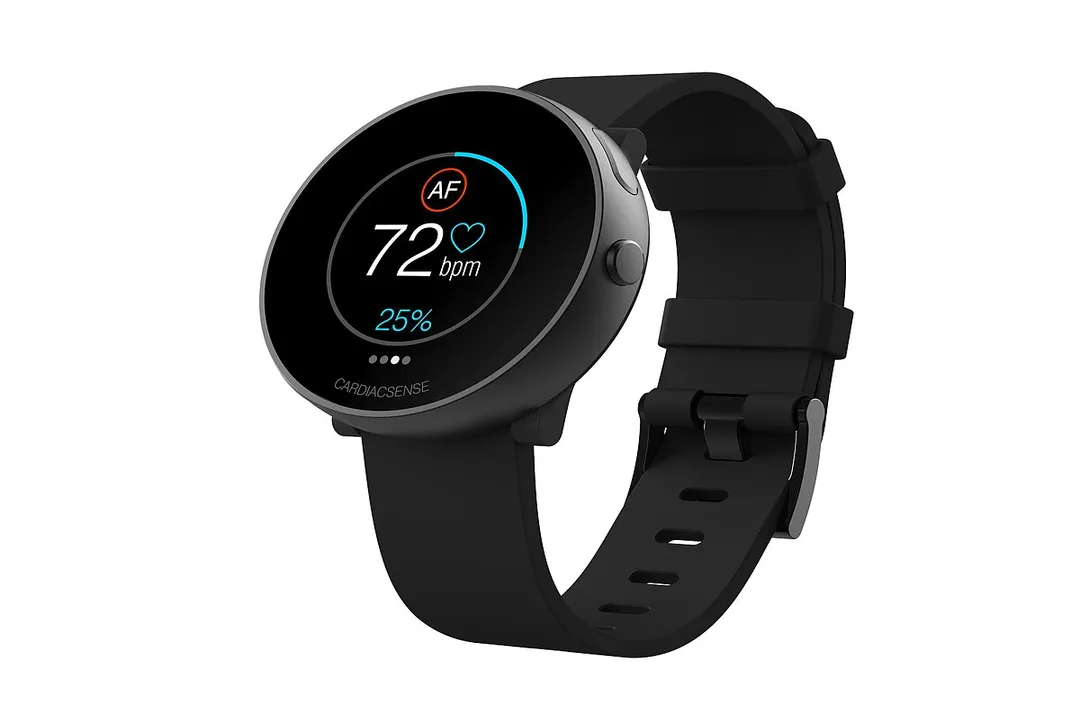
Tracing the origin of continuous health monitoring is less about finding a single inventor in a lab coat and more about chronicling a slow, steady technological march. It’s a concept that evolved as much from necessity—keeping tabs on patients safely away from the hospital—as it did from breakthroughs in electronics. The idea of gathering vital signs outside of a clinical setting, what we now commonly refer to as Remote Patient Monitoring (RPM), began taking shape decades ago, long before the sleek smartwatches we see today. [1][2] The real invention was not a single device, but the system that allowed data to traverse distance reliably, turning episodic checks into an ongoing stream. [8]
# Early Telemetry

The true genesis of this field can be traced back to the 1960s, when medical telemetry first entered the scene. [2][8] This era marked the beginning of bidirectional communication in patient monitoring, allowing data transmission between the patient and a remote location. [8] Imagine the sheer logistical challenge of the time: transmitting even basic physiological data required bulky equipment and dedicated infrastructure, a far cry from today's wireless capabilities. [1] These pioneering systems were primarily focused on critical situations, often involving remote monitoring of heart conditions, effectively establishing the proof of concept that remote, continuous oversight was possible. [8] This early work laid the foundational expectation that a patient's status could be observed in real-time without requiring them to be physically tethered to a bedside monitor in a hospital. [1]
# NASA Influence
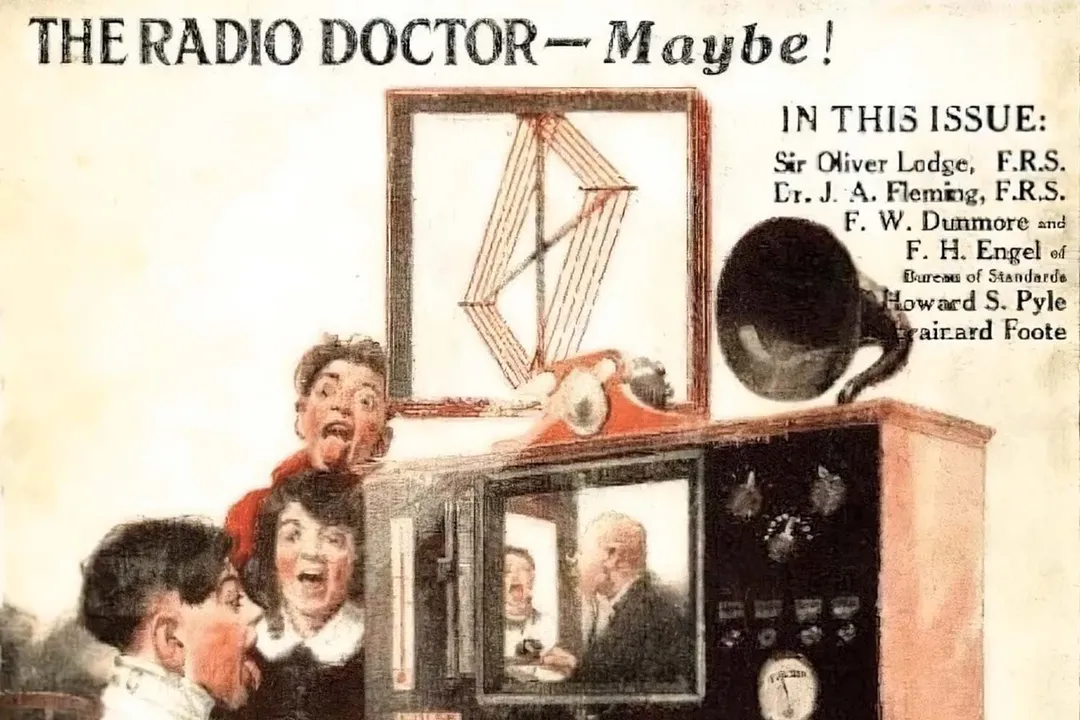
As technology matured, governmental and research agencies significantly pushed the boundaries, particularly NASA. The space agency’s need to monitor the health of astronauts during long missions naturally fed back into terrestrial applications. [6] NASA’s investment in developing technology for space exploration often resulted in 'spin-offs' applicable to home health monitoring. [6] These developments were crucial because they drove miniaturization and required sensors to function reliably in challenging, isolated environments—a perfect training ground for developing dependable home-based systems. [6] The transfer of this technology proved that sophisticated, reliable monitoring equipment could indeed operate outside of controlled hospital environments, setting the stage for broader commercial adoption of the continuous monitoring concept. [1][6]
# System Architecture
To understand who "invented" it, one must define what "it" is. Continuous monitoring isn't just a sensor; it’s an integrated health monitoring system. [10] These systems generally comprise three main elements: the monitoring device itself (the sensor), the transmission unit (the modem or gateway), and the receiving unit (the clinical hub or software interface). [10] While various engineers and researchers contributed to refining each piece over the years, the conceptualization of this three-part loop—sense, transmit, receive—is what defines the invention of the process. [3] The advancement wasn't linear; it was a simultaneous push across hardware design, communication protocols, and data interpretation algorithms. [10]
A look at patent history offers a glimpse into the formalization of the continuous idea. For instance, patent applications filed in the 2010s, such as one detailed for a remote patient monitoring system, focus heavily on the software and methodology of handling the data streams, showing that by that time, the hardware was becoming standardized enough for innovation to shift to data management. [9] This patent described a system designed to alert providers based on specific readings, confirming that the goal had shifted from merely collecting data to acting on continuously collected data. [9]
# Incremental Evolution of Data Capture
The continuous nature of monitoring is perhaps best understood by examining what has changed in how we power and wear the devices. Early RPM relied on fairly substantial hardware. However, recent innovations illustrate the drive toward making monitoring nearly invisible to the user, thus enhancing adherence and the continuity of data capture. One remarkable development came from the University of California, Irvine (UCI) researchers, who developed a battery-free wearable health monitor. [5] This is a significant departure from previous models because it eliminates the need for manual charging or battery replacement, a common failure point in long-term monitoring efforts. [5] The device uses radio frequency (RF) energy harvesting to operate, meaning it draws power from the ambient RF signals around it. [5] This addresses a core limitation of early continuous monitoring systems: the maintenance burden placed on the patient.
We can contrast the evolution of power and wearability across the decades of monitoring development:
| Era | Primary Focus | Typical Power Source | Data Frequency |
|---|---|---|---|
| 1960s Telemetry | Critical physiological signals | AC power or large, replaceable batteries | Intermittent/Event-driven |
| 1990s/Early 2000s RPM | Basic vital signs (BP, SpO2) | Standard alkaline or rechargeable batteries | Daily scheduled readings |
| 2020s Wearables | Activity, advanced biometrics | Internal lithium-ion, or RF energy harvesting | Continuous/Near Real-Time |
This shift shows that the invention of truly continuous monitoring—the kind that doesn't require daily patient interaction beyond wearing the device—is very recent. [5] The longevity provided by battery-free technology suggests a future where the monitoring system itself becomes background infrastructure, much like Wi-Fi, rather than a discrete piece of medical equipment demanding attention. [5]

# The New Frontier
Today, the field is often discussed in terms of its "new frontier," indicating that while the foundation is laid, the application is rapidly expanding. [7] Continuous health monitoring is moving beyond simple alerts for dangerous events to predicting issues before they become critical. A graduate from the University of Cincinnati discussed this new boundary, suggesting it involves smarter integration of data and more personalized algorithms. [7] The goal is no longer just transmission, but contextual interpretation. [3]
The underlying technology supporting this leap often comes from the intersection of data science and advanced sensing. For instance, health monitoring systems today incorporate complex algorithms to filter noise and identify subtle trends in continuous data streams, providing insights that a nurse checking a patient every four hours simply could not capture. [10] This ability to detect minor, creeping deviations—such as gradual changes in sleep patterns or slight fluctuations in resting heart rate variability—is what separates modern continuous monitoring from its telemetry predecessors. [3]
It is interesting to observe how the initial focus on transmission in the 1960s has now given way to a focus on latency reduction and data density. Early RPM might have sent a blood pressure reading once per day. [8] Modern continuous monitoring aims to capture fluctuations throughout the day, allowing clinicians to see the effect of eating, walking, or stress on a patient’s physiology. [3] The true value gain here is the temporal resolution—we moved from seeing a single snapshot to watching a high-speed film of the patient’s health.
# Decentralizing Care
The historical arc confirms that the invention wasn't about a single Eureka moment but rather the gradual refinement of connectivity and power independence. The ability to decentralize care, moving it from centralized hospitals to the patient’s home, is the key outcome. Continuous monitoring transforms patient management by providing clinicians with an unbroken chain of observations. [1] This sustained data flow, central to RPM and modern continuous monitoring, is vital because physiological stability is often defined by the absence of rapid change, something only continuous tracking can confirm. [2]
The move toward home monitoring, heavily influenced by early RPM programs, fundamentally changed patient expectations and provider capabilities. [1][8] When a patient can be safely discharged earlier because their condition can still be supervised remotely, the entire healthcare economic model shifts. This decentralized model requires a high degree of trust in the technology—trust that the system will function without the immediate availability of in-person support, a trust built over decades of incremental improvements originating from projects like those undertaken by NASA and university researchers. [5][6]
The current generation of wearable technology, which often integrates seamlessly into daily life, fulfills the long-sought goal of making monitoring passive rather than active for the user. [5] The inventor of continuous health monitoring, therefore, isn't a person, but the cumulative effort across aerospace engineering, electrical engineering, and software development that collectively solved the problems of power, transmission, and interpretation over fifty years. From the first blinking lights on a telemetry monitor in the sixties to the RF-powered sensor on a wrist today, the thread is the persistent desire to know what is happening right now, without demanding the patient come to the machine. [1][8] This persistent, evolving drive is the true inventor.
#Videos
How We Measure Ourselves: The History of Wearable Tech - YouTube
Related Questions
#Citations
The History of Telehealth and Remote Patient Monitoring - Tenovi
Remote patient monitoring - Wikipedia
Evolution of Wearable Devices with Real-Time Disease Monitoring ...
How We Measure Ourselves: The History of Wearable Tech - YouTube
UCI Researchers Invent a Health Monitoring Wearable That ...
NASA Tech Developed for Home Health Monitoring
UC graduate explains new frontier of continuous health monitoring
History of Remote Patient Monitoring: How It Began & Where It's Going
Sensor and method for continuous health monitoring - Google Patents
Health Monitoring System - an overview | ScienceDirect Topics