Who invented remote diagnostics devices?
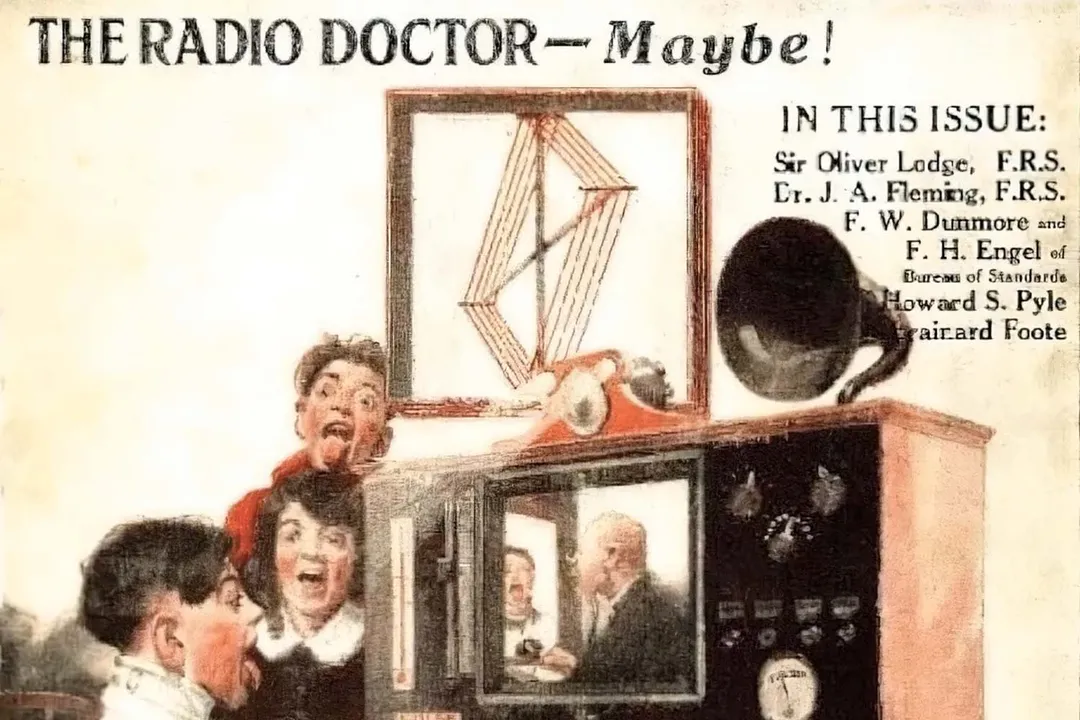
The notion of a doctor examining a patient without being physically present in the same room isn't a modern invention born from necessity during a global health crisis. Rather, the concept of remote diagnostics and what we now term telemedicine has roots stretching back almost a century, long before reliable internet connections or pocket-sized computers existed. The journey to today's sophisticated Remote Patient Monitoring (RPM) devices is a story of scientific aspiration colliding with technological capability, punctuated by significant leaps in fields as diverse as aerospace and telephony. [2][3]
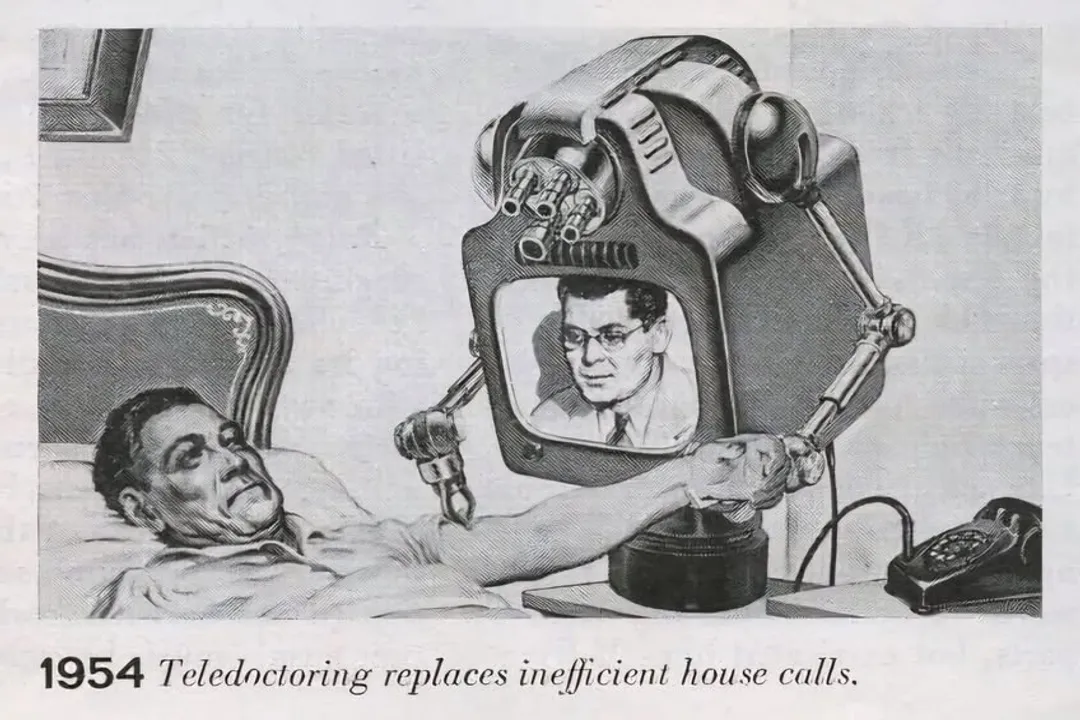
The very idea of communicating medical status across distances was being actively discussed in the early 1920s. Publications from that era were not just musing; they were actively predicting a future where medical consultations happened remotely. A striking example of this foresight appeared in the magazine Science and Invention in 1925, which featured illustrations depicting what the magazine called "teledoctoring," showing doctors examining patients via television screens. [3][7] This vision, published nearly a hundred years ago, clearly outlined the basic premise of video consultation—the remote visual assessment—that remains fundamental to virtual care today. [7] This early speculation laid a vital, if purely theoretical, foundation, suggesting that the desire for distance healthcare preceded the technological means to deliver it reliably. [2]
# Telemetry Foundations
While the 1920s offered the visual concept, the practical ability to transmit actual diagnostic data—the real core of remote diagnostics—depended on advancements in biotelemetry. This area, which involves transmitting physiological data wirelessly, gained significant momentum not from general medicine, but from the intense demands of the space race. [9] Monitoring the health of astronauts in orbit required sending vital signs like heart rate and respiration across vast distances back to mission control, essentially functioning as the earliest, most high-stakes form of remote monitoring. [1][2][8]
The technology underpinning this early space monitoring was telemetry. [9] It wasn't about viewing a video feed; it was about converting a biological signal—an electrical impulse from a heart monitor, for instance—into a radio frequency signal that could travel through the air and be reassembled into readable data miles away. [9] This forced innovation in miniaturizing sensors and ensuring signal integrity under extreme conditions provided the necessary engineering groundwork for future medical devices. [1]
It is interesting to note how necessity shapes invention. The immediate, life-or-death requirements of aerospace engineering—where failure meant catastrophic loss—pushed sensor technology and reliable long-distance transmission far faster than the slower, more incremental demands of established terrestrial healthcare systems might have otherwise allowed. [1][9]
# Early Ground Applications
The principles refined for space exploration were eventually adapted for use on the ground, marking a critical transition point for remote diagnostics devices. By the mid-1960s, researchers began translating this aerospace telemetry into practical medical applications, often focusing on conditions where continuous monitoring was beneficial, such as cardiac care. [2]
One notable early application cited involves a program in 1967, funded in part by NASA, which focused on monitoring heart patients in their own homes. [1] This initiative, sometimes associated with the University of Minnesota, represented a tangible effort to apply remote monitoring outside of controlled, highly specialized environments. [2] Devices were being developed that could capture key physiological parameters—like electrocardiograms (ECG)—and transmit them wirelessly to a central monitoring station. [9] This moves the story past mere prediction and into the realm of device deployment, even if rudimentary by today's standards. [1][4]
Remote Patient Monitoring (RPM), as defined by contemporary standards, centers on collecting health data from a patient in one location and securely transmitting it to a provider elsewhere for analysis. [4][10] These early systems, while primitive, established the fundamental pipeline: Sensor Transmitter Receiver Clinician Interpretation. [9]
# Formalizing Remote Care Management
The evolution continued, moving from specialized, one-off monitoring programs to more formalized systems for ongoing care management. [6] As the technology matured, the term Remote Patient Monitoring became more formally adopted, referring specifically to the transmission of clinical data from the patient’s home to a healthcare facility. [1][4]
While pinpointing a single "inventor" for the remote diagnostic device itself is difficult—as it was a convergence of electrical engineering, radio frequency communication, and medical sensors—the systematic application and systematization of this technology into a reproducible care model began taking shape during the latter half of the 20th century. [2][6] Devices evolved from bulky radio transmitters to more integrated systems that could track things like blood pressure, glucose levels, and oxygen saturation. [1][6]
It’s helpful to consider the two necessary components that had to mature simultaneously for remote diagnostics to become truly viable: the sensor and the network. Early on, sensors might have been adequate but the network (telephony, early data lines) was too slow or unreliable to transmit the data effectively. Later, as network speeds increased—even before the ubiquitous high-speed internet—the miniaturization and power efficiency of the sensors became the bottleneck. The breakthrough wasn't inventing the stethoscope or the ECG; it was successfully shrinking the recording apparatus and making it battery-powered enough to operate outside a hospital setting for extended periods. [9]
# The Digital Acceleration
The true acceleration toward the devices we recognize today required the digitization of data and the widespread availability of telecommunications infrastructure. The shift from analog radio transmission to digital data packets allowed for more complex algorithms to process incoming data and for stricter security protocols necessary for patient privacy. [9]
In the United States, various historical contexts pushed this forward. For instance, providing care to rural populations or connecting remote military outposts always served as a recurring impetus for improving remote care mechanisms. [5] Early programs and studies, often mentioned alongside RPM’s history, involved technologies like early telephone lines or facsimile (fax) machines to send simple data like blood pressure readings or even images, showcasing an early integration into existing, non-specialized communication methods. [5][8]
For instance, if a clinician needed to monitor a patient with congestive heart failure at home, the early system might involve a dedicated device transmitting weight and blood pressure over a dedicated phone line. This was a stark departure from the earlier radio-frequency-only transmission used for astronauts, bringing the technology closer to consumer-grade telecommunications infrastructure. [2]
# Types of Monitoring
The history reveals that remote diagnostics evolved to address specific needs, leading to different types of devices. Remote Patient Monitoring (RPM) generally focuses on chronic disease management and preventative care by tracking vital signs and other health metrics outside of traditional clinical settings. [4][8] This stands in contrast to general telehealth, which often encompasses live video visits or store-and-forward methods that don't rely on continuous or scheduled data capture from a device. [8]
The essential diagnostic devices fall into a few categories based on their historical development:
| Device Function | Early Technological Dependency | Modern Equivalent |
|---|---|---|
| Physiological Monitoring (e.g., ECG) | Radio telemetry, dedicated lines [9] | Wearable patches, continuous glucose monitors (CGM) [1] |
| Basic Vitals (e.g., BP, Weight) | Analog modems, facsimile [5] | Bluetooth-enabled cuff, smart scale transmitting via cellular or Wi-Fi [4] |
| Data Aggregation/Transmission | Dedicated home units | Smartphone apps integrated with cloud services [6] |
This progression shows that the "invention" wasn't a single gadget but the creation of an interconnected system capable of reliable data translation and secure transfer. [9]
When examining the transition from the 1960s monitoring systems to the 1990s and 2000s, one critical factor was the convergence of the internet and smaller electronics. This allowed data aggregation to become smarter. Instead of simply sending a raw ECG strip across a wire, the remote device itself could potentially flag an anomaly, send an alert, and then transmit the data package, moving the diagnostic power closer to the patient. [6]
# The Inventors of the Modern Ecosystem
Since no single person invented the modern remote diagnostic device, it is more accurate to credit the groups that took the foundational telemetry science and successfully integrated it into scalable medical platforms. The development required expertise from multiple domains: biomedical engineers who designed the non-invasive sensors, software developers who created the secure transmission protocols, and clinicians who defined what data points were clinically actionable. [4][10]
For example, early pioneers might include the engineers at NASA who solved the initial telemetry challenges, the cardiology departments who tested the first home-based cardiac monitors in the 60s and 70s, and later, the telecommunications companies that adapted their emerging digital networks to carry protected health information. [1][2][5] The invention, therefore, is distributed across a timeline of incremental improvements rather than a single Eureka moment.
This distributed nature of invention means that the lineage of a modern blood pressure cuff designed for RPM might trace back to early radio transmitters, while the software that analyzes its data might trace back to early computer science applications in hospitals. The overall system only becomes functional when these independent lines of development successfully intersect and interoperate within regulatory guidelines. [10]
If we were to look for a modern benchmark, the proliferation of sophisticated, FDA-cleared diagnostic devices that communicate wirelessly—like wearable ECG monitors or continuous blood glucose meters that transmit data directly to a doctor's portal—represents the full realization of those early 1920s predictions, finally made practical by the maturity of microprocessors and wireless standards like Bluetooth and cellular connectivity. [4][6] The key shift here is from monitoring (recording data) to diagnostics (providing actionable, often automated, clinical insights remotely). [6]
The persistence of the concept, evidenced by that 1925 article, shows that the need for distant care is ancient, but the invention of the device is a product of engineering maturity—specifically, the moment when sensors became small, power sources became adequate, and digital networks became secure enough to handle sensitive health records. [3][10] The real inventor is arguably the entire chain of engineers and medical professionals who solved the transmission puzzle repeatedly, moving from radio waves in orbit to the secure, encrypted signals coming from a patient's living room today. [9]
Related Questions
#Citations
a brief history on the remote patient monitoring system - Neoteryx
History of Remote Patient Monitoring: How It Began & Where It's Going
Telemedicine Predicted in 1925 - Smithsonian Magazine
Remote patient monitoring - Wikipedia
History of Telemedicine in America | Rex MD - Stacker
The Evolution of Remote Care Management - HealthSnap
The concept of teledoctoring published in Science and Invention in ...
The History of Telehealth and Remote Patient Monitoring - Tenovi
The History of Remote Monitoring, Telemedicine Technology
Evolution and Current Applications of Telemedicine - NCBI - NIH