Did teens invent device to remove microplastics?
Young Innovation Wins
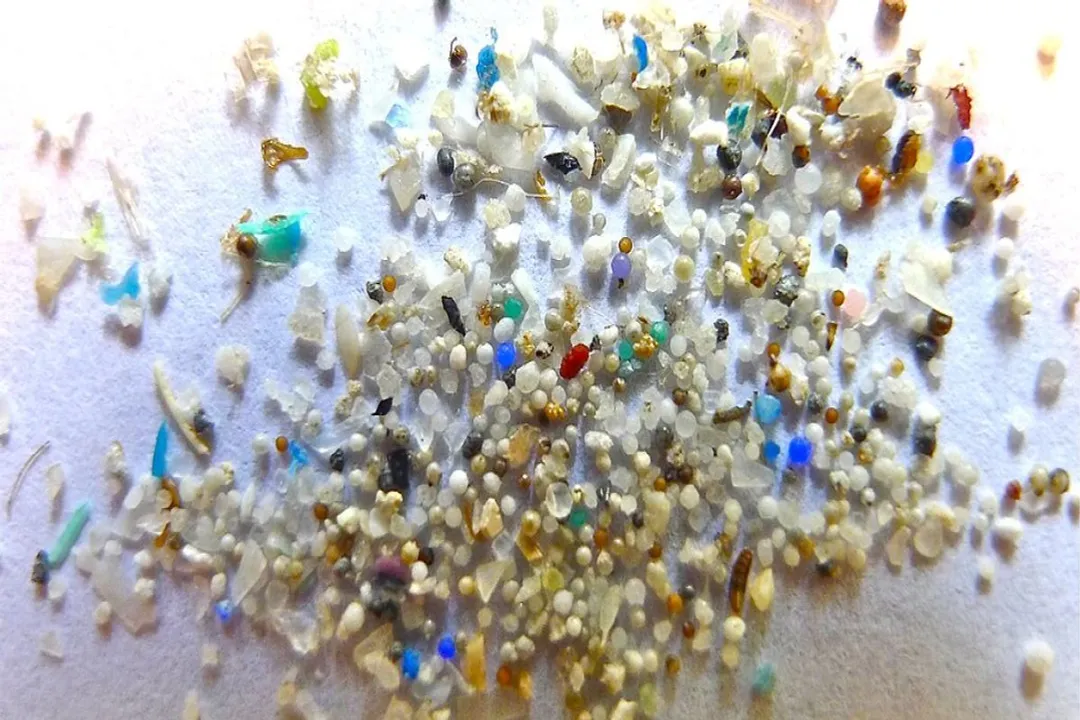
The conversation around the global microplastics crisis often feels overwhelming, characterized by reports of pollution reaching the highest mountains and the deepest oceans. However, for two high schoolers from The Woodlands, Texas—Justin Huang and Victoria Ou—the problem crystallized into an engineering challenge, resulting in a novel solution that has garnered significant national recognition. These young inventors designed an innovative water filtration device that harnesses the power of sound to actively capture these pervasive, tiny plastic particles, a feat that earned them the prestigious $50,000 Gordon E. Moore Award for Positive Outcomes for Future Generations at the Regeneron International Science and Engineering Fair (ISEF). Their success also included securing first place in the ISEF category for Earth and Environmental Sciences, sponsored by Google.
The immediate implication of their win is the validation of a new approach to a stubborn problem. Microplastics, defined as plastic particles smaller than five millimeters, are notorious for slipping through conventional filtration barriers. The recognition comes with a monetary reward, which the teens explicitly intend to put toward refining and scaling their technology, moving from home-based testing to more professional laboratory environments.
# Water Crisis Realization
The impetus for this invention came from direct experience and observation. Huang and Ou were inspired to tackle microplastic contamination after touring a local water treatment plant. During this visit, they encountered a surprising reality: the facility had no specific regulations or cost-effective means in place to filter out microplastics. This observation highlights a critical gap in current municipal infrastructure, further emphasized by the fact that the United States Environmental Protection Agency (EPA) currently lacks regulations specifically addressing microplastic contaminants in water.
The sheer scale of plastic contamination makes this gap alarming. Microplastics are not just litter; once ingested by organisms, including humans, they have been found infiltrating every organ examined so far. When thinking about managing this pollution, many immediately picture large, complex filtration systems requiring massive capital investment or chemical processes that introduce secondary environmental concerns. The challenge is addressing a contaminant that is minuscule and ubiquitous without crippling existing treatment budgets. The scope of the problem, as revealed to the teens, was not one of impossibility, but one of missing appropriate technology. The global volume of wastewater treated daily means that even a small percentage improvement in filtration efficiency, when scaled across thousands of plants, translates into massive reductions in environmental loading. If a standard treatment plant processes millions of gallons daily, even filtering 90% of remaining microplastics would prevent tons of material from entering the water cycle annually, a significant gain over zero removal efficiency.
# Device Mechanics
The core of Huang and Ou's innovation lies in its use of ultrasonic sound waves. Their system functions by generating an acoustic force—a wall of high-frequency sound moving through the water—which physically pushes the microplastic particles away from the water’s outflow area. This process utilizes piezoelectric transducers set within steel tubes to effectively create and direct this sonic barrier.
This is crucial because it separates the particles without relying on physical sieves fine enough to catch them or chemical reactions that could be hazardous or expensive. In their laboratory tests, which involved filtering water samples, the device achieved remarkable results in a single pass, capturing between 84% and 94% of the suspended microplastics. Another assessment notes a capture rate between 84–96% for some types of microplastics. The efficiency in a single run is a hallmark of a potentially scalable solution. Furthermore, early prototypes of the device were compact, reportedly no bigger than a pen, suggesting a design that could be integrated into various systems with minimal physical footprint.
# Prior Art Comparison
While the concept of using ultrasound is not entirely unprecedented in fluid dynamics studies, the successful application for complete filtration appears to be the novel aspect of this project. Victoria Ou noted that their research found only one prior study that attempted to use ultrasound to predict the flow of particles, but that attempt did not successfully filter them out. This distinction is important: predicting flow is an analytical step; achieving separation and capture is an applied, engineering solution.
This work stands alongside other young inventors tackling the issue, such as Fionn Ferreira, who won the Google Science Fair in 2019 for using a magnetic liquid, or ferrofluid, to attract and remove microplastics. While Ferreira’s magnetic approach is ingenious for certain particle types, the ultrasound method offers a different mechanical advantage, potentially being less reliant on the specific magnetic properties of the plastic contaminant and applicable directly to the large volumes of water flowing through treatment centers. The selection of ultrasound also sidesteps the need to introduce foreign substances, like ferrofluid, into the water stream for removal, keeping the process cleaner from a chemical standpoint.
# Scaling Potential
The next phase for Huang and Ou involves taking their promising lab results and translating them into real-world systems. They recognize that testing in a home setting is different from a professional facility, and they are aiming for large-scale manufacturing. The potential applications span the spectrum of water use and contamination sources.
One significant target area is the discharge from laundry machines. Synthetic fabrics shed an enormous quantity of microplastic fibers when washed. In fact, these textile particles are estimated to account for approximately 35 per cent of primary microplastic pollution. Integrating a device like theirs directly into the washing machine's drain line could halt this massive source of input before it even reaches the municipal sewer system. This upstream intervention is often the most effective way to manage environmental pollutants.
Beyond the home, the technology could be implemented in industrial textile plants or directly within existing wastewater treatment plants. For rural water sources or smaller facilities lacking high-end infrastructure, a modular, ultrasonic filtration unit presents an accessible path to cleaner output water, improving public health and ecological protection without demanding a complete overhaul of infrastructure. The ability of the device to handle large volumes in their project scope suggests it is already being considered with scale in mind, even if current testing was small-scale. This development offers a tangible example of how focused, youth-driven scientific inquiry can produce concrete, actionable steps toward mitigating one of the planet's most insidious pollution problems.
Related Questions
#Citations
Teenagers Design Ultrasound Device for Microplastic Filtration
Teens Invent Device that Removes Microplastics with Ultrasound ...
Young Inventors Filter Microplastics from Water - My Hero Project