Who invented sleep tracking devices?
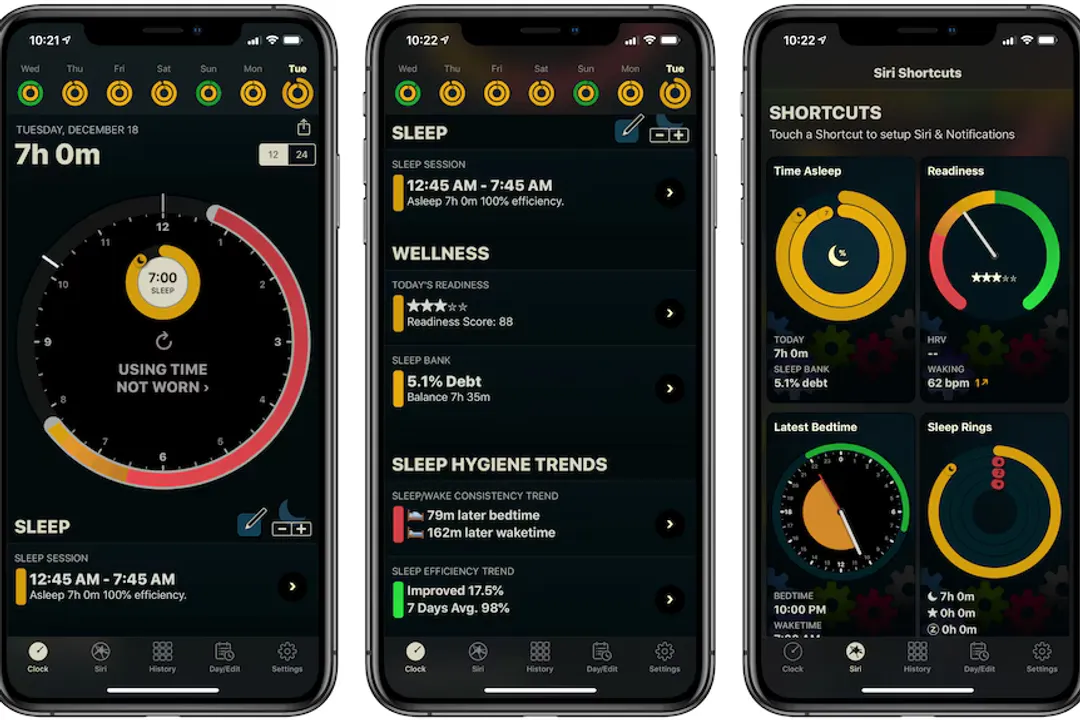
The quest to quantify human rest has evolved from clinical necessity to a ubiquitous personal gadget, making the singular title of "inventor" difficult to assign to any one person or moment. Instead of a sudden breakthrough, the story of sleep tracking devices is a long, drawn-out digital evolution, moving from specialized medical equipment to the wrist-worn monitors many use today. The foundation for this personal technology lies in decades of rigorous, hospital-based science, where understanding sleep was crucial for diagnosing disorders, not just optimizing performance.
# Clinical Basis

Before any wristband or smartphone application could estimate your time in deep sleep, there was Polysomnography (PSG). PSG remains the gold standard for sleep measurement in a laboratory setting. This process involves hooking patients up to extensive equipment to monitor brain waves (EEG), eye movements (EOG), muscle activity (EMG), breathing, and heart rate throughout the night. The data collected is complex and requires trained specialists to interpret the resulting hypnograms, providing unparalleled detail on sleep architecture. This medical necessity created the knowledge base that later consumer devices would attempt to simplify and replicate.
# Monitoring History

The path toward accessible tracking devices followed a clear technological progression, moving from invasive, fixed monitoring to non-invasive, portable sensing. One can trace the history of sleep monitoring technologies through distinct technological stages, beginning with the foundational electrophysiological recordings necessary for medical diagnosis. The very first dedicated devices were certainly large, complex apparatuses used exclusively in sleep labs, not homes. The transition point came when engineers and software developers looked at this detailed clinical data and asked: How much of this complexity can be safely and usefully abstracted for the average person?.
This abstraction required a significant leap in sensor technology and algorithmic interpretation. Where PSG requires direct electrical measurement of brain activity, consumer devices typically rely on proxy measurements, primarily motion (actigraphy) and heart rate variability. It is this successful algorithmic leap—translating movement and pulse into estimates of sleep stages—that marks the true invention of the consumer sleep tracker, a creation born from many small innovations rather than a single eureka moment.

# Digital Ascent

The concept of tracking personal biometrics digitally gained significant traction in the late 2000s and early 2010s, coinciding with the smartphone boom and the miniaturization of sensors. While specific early patents or prototypes from smaller research labs might predate this period, the consumer market truly took shape when software could reliably interface with easily accessible hardware.
A notable milestone in the consumer space is the emergence of dedicated mobile applications. For instance, the application Sleep Cycle, which measures sleep patterns using the smartphone’s microphone and accelerometer, celebrated ten years of operation by the mid-2010s, indicating its foundational presence around 2014 or 2015. This method, using the phone placed on the mattress, was an early form of non-wearable tracking that relied entirely on interpreting vibrations caused by movement. This showed the potential for ambient monitoring, contrasting with the later emphasis on wearable monitoring.
This era saw devices move beyond simple alarm functions—waking you during a light sleep phase—to offering daily sleep scores and trend analysis. This shift from a single-function tool to a data-gathering lifestyle companion defined the early market adoption.
# Wearable Adoption

The true game-changer for widespread adoption involved shifting the tracking mechanism from the bedside to the body. Wearable devices, such as wristbands and rings, became the dominant form factor. These gadgets utilize accelerometers to detect movement, which is the primary input for estimating sleep duration and restlessness. More sophisticated models integrate heart rate monitoring, often using optical sensors (photoplethysmography or PPG), to provide richer data about autonomic nervous system activity during sleep.
The design philosophy of these wearables is fundamentally different from lab equipment. While PSG prioritizes accuracy at the expense of comfort and convenience, wearables prioritize comfort and continuous usage over absolute clinical precision. This pragmatic trade-off is what allowed millions of people to gather nightly data for the first time, creating a dataset of human sleep behavior previously unavailable.
When comparing the accuracy of consumer trackers to PSG, research consistently shows that consumer devices are quite good at determining Total Sleep Time and Wake After Sleep Onset—the basic metrics of duration and fragmentation. They are less accurate, though improving, at reliably distinguishing between the distinct stages of Non-REM and REM sleep based solely on actigraphy and heart rate.
Here is a quick comparison of the technologies that have driven sleep tracking:
| Technology Generation | Primary Sensor Input | Typical Location | Key Advantage | Citation Basis |
|---|---|---|---|---|
| Clinical (PSG) | EEG, EMG, EOG, Respiration | Fixed Lab Bed | High Accuracy/Detail | |
| Early Digital | Accelerometer (Vibration) | Mattress/Bedside | Non-contact monitoring | |
| Wearables (Standard) | Accelerometer, PPG (Heart Rate) | Wrist/Finger | Portability, Daily Use | |
| Advanced Wearables | Advanced Biosensors, EEG (limited) | Headband/Ring | Higher Stage Resolution |
If you are comparing your nightly reading from a wrist-worn device against a study that relied on a sleep lab, remember that your wearable is likely overestimating your time spent in light sleep and underestimating your time in deep sleep because it cannot read your specific brainwave patterns. Thinking of your consumer device as an excellent sleep duration and efficiency meter—rather than a full PSG replacement—is the most constructive way to interpret the data it provides.

# Innovation in Sensing
The pursuit of lab-grade accuracy in a consumer format continues to drive invention. Developers are moving beyond simple wrist-based motion detection toward technologies that offer more insight into neurological activity, mirroring the gold standard more closely. One significant area of development involves brain monitoring headbands. These devices aim to incorporate rudimentary electroencephalography (EEG) capabilities, placing small sensors directly on the scalp to capture electrical activity related to different sleep stages.
Devices integrating EEG promise a significant jump in validity for stage identification, bridging the gap between consumer convenience and clinical measurement. While early iterations may still lack the full array of electrodes used in a formal PSG setup, they represent a serious attempt to measure the actual quality of sleep stages, not just the quantity of movement during sleep. This is where the inventor landscape shifts again, moving from software and basic sensor integration to specialized hardware engineering focused on non-invasive, high-fidelity biosignal capture.
# The Context of Data Ownership
As these tracking technologies became more prevalent, a new layer of complexity arose concerning the data itself. Early adopters were primarily interested in personal feedback, but as the sheer volume of collected sleep data grew, the conversation shifted toward data privacy and utility. Who owns this intimate, nightly record of your biological state?
This is an area where the 'inventors' are not just hardware engineers but also the legal and ethical thinkers who shape how this information is stored and shared. For instance, a study involving thousands of users might use aggregated, anonymized data to find population-level trends, but an individual user must grapple with the implications of that data being stored on a commercial server. This aspect—the data ecosystem surrounding the device—is as much a part of the modern tracking invention as the sensors themselves.
For someone just starting, consider this: before you connect your new tracker to a third-party app, think about the least amount of data you need to share to get the most actionable feedback. Often, relying only on the manufacturer’s native app for a few weeks before granting access elsewhere provides a baseline understanding before external interpretations cloud the results.
# Evolutionary Pioneers
Pinpointing the first commercial entity is challenging because sleep monitoring existed long before the term "sleep tracker" was common. However, examining the evolution from rudimentary wrist-worn actigraphs—used clinically to estimate activity patterns—to the integrated software/hardware packages that define the modern market highlights key pioneers.
The foundational work enabling consumer tech wasn't about inventing sleep itself, but inventing the algorithm that could process raw sensor data (like vibration) into recognizable sleep stages, and then building a device around that algorithm that a person would actually wear every night. The success of devices often hinged on creating a compelling user experience around the data, turning dry numbers into personalized recommendations.
If we consider the modern definition—a consumer device providing sleep stage analysis—the landscape is filled with small companies iterating rapidly, rather than one single inventor like Edison with the lightbulb. One of the key characteristics that defines the pioneers in this space is the successful integration of software and hardware into a compelling personal health narrative. They took the expertise from sleep medicine and made it accessible, often by simplifying the output until it was intuitive, even if it meant sacrificing some clinical depth.
The story is less about who made the first sensor, and more about who first successfully packaged the ability to passively monitor rest into an everyday object that people trusted to be accurate enough for self-improvement.
# Future Directions
The trajectory suggests a future where tracking becomes even less intrusive, perhaps moving into the mattress itself or using radar to sense minute bodily changes from a distance, though current cutting-edge developments still favor wearables like headbands for higher fidelity. The common thread among all innovators, from the PSG technicians to the app developers, remains the desire to observe the hidden processes of the night. The inventors of today's sleep tracking devices are those who successfully turned a clinical staple into a personal habit, constantly pushing the boundaries of what non-invasive sensing can reveal about our nocturnal lives. The ongoing challenge is ensuring that as the technology becomes smarter—using AI and refined algorithms—it remains trustworthy.
The fact that we can now have a conversation about the history of these devices, tracing them from lab behemoths to smartphone functions, underscores how quickly an idea can transition from the realm of specialized medical expertise into common knowledge, even if the underlying science demands constant re-validation. The true inventor, therefore, might be the collective group of engineers, physicians, and software designers who continually refine the trade-off between precision and practicality.
#Videos
How We Discovered REM Sleep & The Truth About Sleep Trackers
Related Questions
#Citations
Sleep tracking - Wikipedia
How We Discovered REM Sleep & The Truth About Sleep Trackers
The Digital Evolution Of Sleep Tracking - The Medical Futurist
The Sad Truth About Sleep-Tracking Devices and Apps
Past, Present, and Future of Multisensory Wearable Technology to ...
History of sleep monitoring technologies - ResearchGate
Sleep Cycle celebrates 10 years of groundbreaking sleep-tracking ...
Brain-monitoring headbands could track your sleep as well as a ...
Sleep-tracking devices are wiring the world for the study of sleep ...
World Sleep Society recommendations for the use of wearable ...