Who invented elder care monitoring?
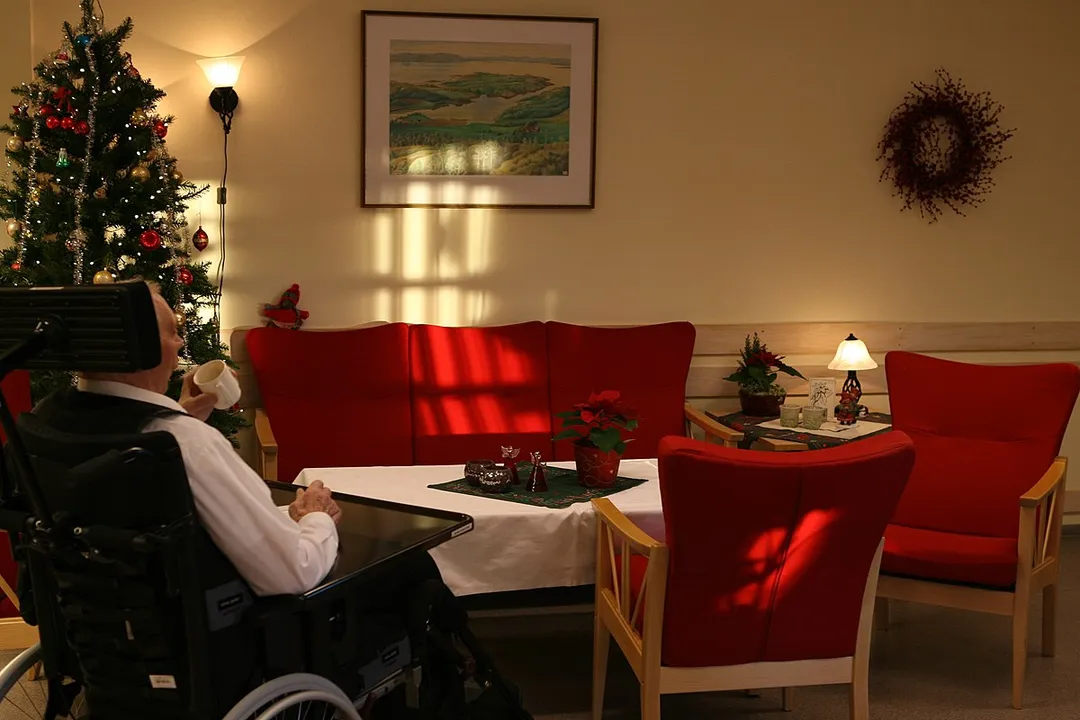
The concept of elder care monitoring did not spring from a single inventor’s workshop on a specific date; rather, it emerged as a gradual technological and philosophical response to the growing societal need to keep older adults safe and independent in their homes for as long as possible. [2][3] Tracing its origins requires looking not just at circuit boards and sensors, but at the fundamental evolution of how society supports its aging population.
# Care Evolution
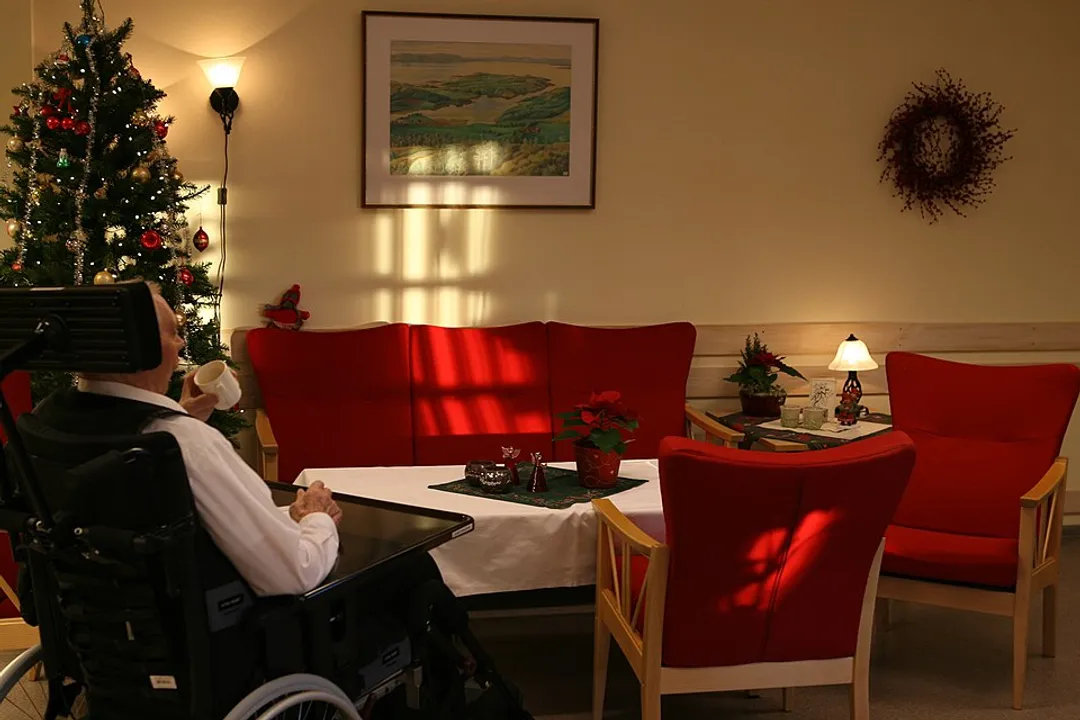
Historically, care for the elderly was primarily a family or community responsibility, often evolving as the individual aged and their needs increased. [7] In Britain, for instance, the transition from medieval poor relief systems to more organized institutional care set the stage for formalizing support structures centuries ago. [7] The advent of professionalized geriatric care, marked by the establishment of specific medical understanding and standards, provided the necessary foundation for later remote support systems. [7] The British Geriatrics Society offers a view of this history, showing a clear path toward recognizing the unique physical and social requirements of older people. [7]
Elderly care, in its broadest sense, encompasses everything from social support to medical intervention. [2] The monitoring we discuss today is merely the newest, most technologically sophisticated layer added to this long-standing tradition. [3] Without the established need for continuous support, the impetus for developing sophisticated monitoring technology would have been far weaker.
# Early Alerts

The first real steps toward technological monitoring often fall under the umbrella of Telecare or Personal Emergency Response Systems (PERS). [1] These early iterations focused heavily on a reactive model: the individual would have an incident—a fall or a sudden illness—and activate a device, usually worn as a pendant or bracelet, to summon help. [1] The history project focusing on telecare documents this progression, highlighting the move from simple alarm buttons to systems incorporating automatic detection features over time. [1]
These early PERS units, which became more common in the latter half of the 20th century, relied on basic radio frequency signals or simple landline connections to connect the user with a monitoring center. [1] While revolutionary for their time, these systems were fundamentally limited; they only provided assistance after an emergency had already occurred, meaning they offered little in the way of proactive safety or wellness tracking. [1]
It is challenging to assign a single inventor to the PERS concept because the development involved incremental improvements across multiple engineering disciplines and service providers. [1] Instead of a single moment of invention, there was a steady integration of communication technology into personal safety devices designed specifically for the elderly demographic. [3]

# Patenting the Concept
Looking at patent records reveals a more modern timeline of specific technological implementation, showing that engineers and researchers have continuously sought ways to formalize and secure novel monitoring methods. [9] For example, patent filings, such as a Chinese application for a remote health monitoring system for the elderly, demonstrate focused efforts to design integrated solutions combining various sensors and data transmission methods for remote supervision. [9] These patents often detail the how—the specific combination of hardware and software intended to make monitoring more effective or affordable. [9]
What the patent landscape confirms is that by the early 21st century, the focus had shifted significantly from simple emergency buttons to complex data acquisition systems designed to capture subtle changes in behavior or physiological status. [9]
# Intelligence in Observation
The significant leap in elder care monitoring occurred when technology moved from being merely responsive to being aware. This transition is well-documented in academic and research circles, where pioneering work began exploring ambient intelligence to observe daily life without being intrusive. [5]
In the early 2000s, researchers were actively testing advanced concepts, such as using smart cameras to monitor elderly individuals living alone. [5] The goal, as highlighted in reports from institutions like Yale in 2009, was to develop systems that could passively learn an individual's normal routines—when they usually got out of bed, used the kitchen, or went to the bathroom—and flag only the deviations from that established norm. [5] This approach moves monitoring from "Did they press the button?" to "Is their usual pattern of life being disrupted?". [5]
Research in journals dedicated to aging technology further details this refinement, showing how sophisticated algorithms are applied to sensor data to identify patterns indicative of decline or risk. [8] For instance, a decrease in movement frequency over several weeks, even if subtle enough to go unnoticed by a visiting caregiver, could be flagged by a pattern-recognition system. [8] This academic work forms the bridge between the clunky, single-function emergency devices and the modern, data-driven platforms now available. [8]

# Modern Trends and Integration
Today, elder care monitoring is less about a single gadget and more about an interconnected ecosystem, reflecting ongoing trends in caregiving technology. [10] The technological landscape involves integrating various data streams: wearables collecting vital signs, environmental sensors detecting occupancy or door openings, and sophisticated AI processing this input. [10]
Companies specializing in this space, such as those developing live visual monitoring solutions, aim to provide remote oversight using camera technology, balancing the need for safety checks with privacy considerations. [4] The evolution here shows an increasing sophistication in how data is collected and presented to caregivers or family members, moving toward continuous, ambient surveillance rather than periodic check-ins. [4][10]
If we were to map the progression of elder monitoring technology, it resembles a funnel, starting with broad, reactive solutions and narrowing into highly specific, proactive data analytics:
| Era | Primary Goal | Core Technology | Limitation |
|---|---|---|---|
| Pre-1990s | Immediate Crisis Response | Simple Wearable Button/Pendant | Reactive only; dependence on user action [1] |
| 1990s–2000s | Early Remote Notification | Enhanced PERS, Basic Sensors | Still primarily reactive to defined alerts [1] |
| 2000s–2010s | Ambient Awareness | Smart Cameras, Environmental Sensors | High potential for false alarms; privacy concerns [5] |
| 2010s–Present | Predictive Analytics | AI, Wearables, Integrated Platforms | Requires significant data setup and interpretation skill [8][10] |
Understanding this progression helps clarify why there isn't one "inventor." The invention is iterative. For example, a family might ask what constitutes a good system today. A practical consideration is how well a system can differentiate between a person sleeping in late and a person who has genuinely fallen and is unable to move. Early systems could not; modern systems aim to do so by cross-referencing time-of-day data with ambient activity levels detected by motion sensors or pressure mats. [10]
# Analyzing the Shift in Focus
The most significant insight into the "invention" of elder care monitoring lies in the philosophical shift it represents: moving from episodic care to continuous presence. Traditional care models, whether provided by family or visiting nurses, are inherently episodic—they occur during scheduled visits or when a known issue arises. [7] Technology introduces the possibility of continuous, non-judgmental observation of a person’s baseline functioning. This shift allows for predictive intervention rather than post-event response. [8] The true breakthrough, therefore, might not be any single piece of hardware, but the application of computing power to establish and monitor "normal" for an individual elder.
One tangible benefit stemming from this shift, which is worth noting for anyone researching options, is the concept of Digital Presence Proxies. When a family member lives far away, they often worry most about the silence or lack of communication. Modern monitoring systems, even without full video feeds, create a digital proxy of activity—a green light indicating motion in the kitchen, a notification that the front door was opened—which can be more reassuring than a phone call where a tired or frail senior might mask their true condition. This digital proxy offers peace of mind based on objective data, not subjective conversational performance.
Furthermore, the technology’s success hinges on user acceptance, a factor that profoundly shapes its practical "invention." Research consistently shows that for any monitoring system to be effective, the older adult must be willing to live with it, which often means prioritizing non-intrusiveness. [8] This societal feedback loop—what seniors will tolerate—dictates which technological pathways succeed and which fail in the real world, sometimes favoring simpler solutions over highly complex ones simply because they are less noticeable. [8]
# Looking Ahead
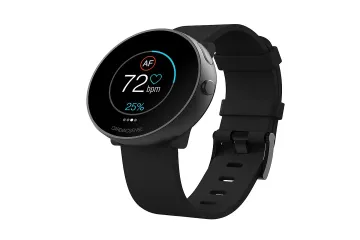
The pathway of elder care monitoring, as documented across various technical and historical sources, points toward increasingly subtle and integrated technology. [10] The goal is to make the monitoring apparatus effectively disappear into the background of the home environment. [5][10] While we can trace elements back to early emergency call systems and academic investigations into smart homes, the complete, functioning system of modern elder care monitoring is a collaborative creation, an ongoing process involving hardware engineers, software developers, gerontologists, and the elders themselves. [3][7]
The definitive inventor is not an individual, but rather the collective efforts across decades to apply emerging communication and computing capabilities to the enduring human challenge of providing dignified and safe support for aging individuals living independently. [1][3]
Related Questions
#Citations
Who, What, When? The History Project - Telecare Aware
Elderly care - Wikipedia
Understanding the History and Evolution of Elder Care | Yodda
About | EyeWatch LIVE™
Researchers are pioneering the use of 'smart cameras' to help ...
A health monitoring system for elderly people living alone - PubMed
A Brief History of the Care of the Elderly | British Geriatrics Society
Innovative Assisted Living Tools, Remote Monitoring ... - JMIR Aging
CN103876838A - Intellisensive elderly assistant care system
[PDF] 2010–2020: Early Developments in Caregiving Technology (Past)