What device did Galileo invent?
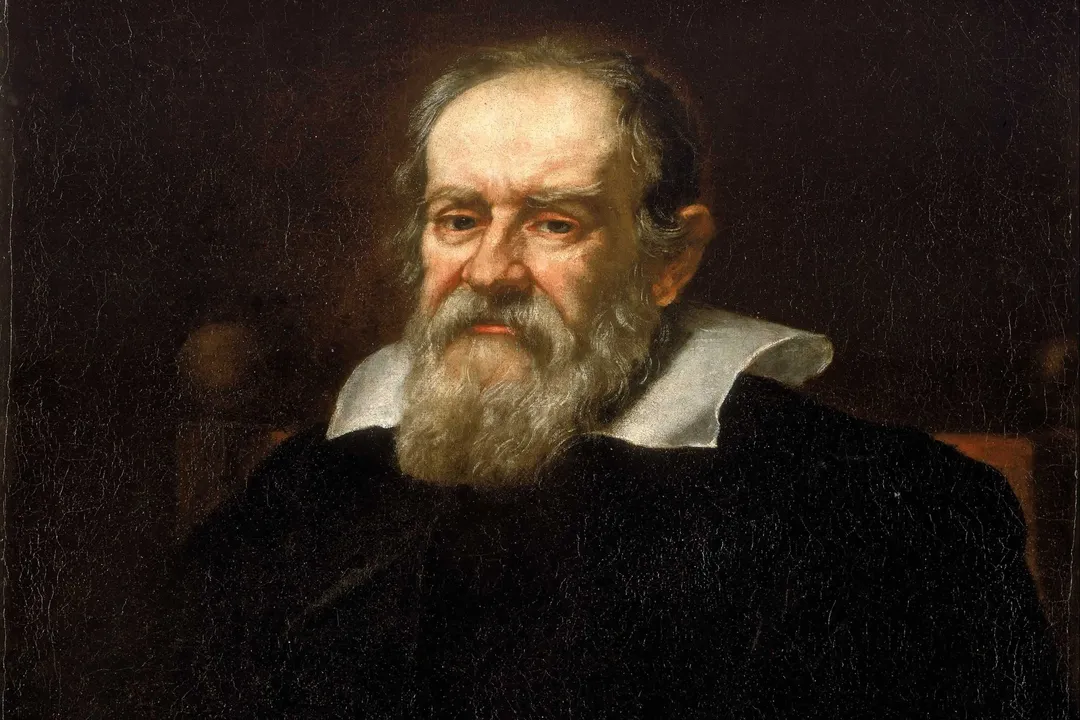
The devices credited to Galileo Galilei often center around one magnificent instrument that forever changed humanity's view of the cosmos, yet his contributions to invention were broader, encompassing tools for terrestrial measurement and mechanical demonstration. To ask what device Galileo invented requires distinguishing between true origination and the critical, transformative improvement of existing technology. While the popular imagination fastens almost entirely on the telescope, his workshop produced several key items that aided his experimental science, many of which were sophisticated refinements of earlier concepts, demonstrating a keen eye for practicality and precision.
# Instrument Refinement
Galileo’s genius often lay not in staring at a blank slate, but in taking a functional, yet flawed, existing concept and perfecting it through superior optics or mechanical design. He was a master of engineering application married to physical theory. This iterative approach is a hallmark of real-world scientific progress, where an incremental adjustment can yield revolutionary results. For instance, while others had produced optical tubes, Galileo turned the blurry, low-power Dutch "spyglass" into a powerful scientific instrument capable of magnifying distant objects up to thirty times. He reportedly heard about the initial concept in the summer of 1609 and, within a short time, had constructed his own version, which he demonstrated to the Venetian Senate.
# The Telescope Story
The true story of Galileo and the telescope is one of swift mastery rather than initial conception. When the initial reports of a Dutch optical device that made distant objects appear closer reached him, Galileo, already knowledgeable in grinding lenses, immediately set about recreating and improving it. His initial device achieved three times magnification, quickly followed by one reaching nine times magnification, and soon after, the instrument reached its practical limit of about twenty times or thirty times magnification. The speed with which he advanced the technology is remarkable, transforming a novelty into an apparatus fit for serious celestial scrutiny.
# Lens Arrangement
What made Galileo’s application of the telescope so distinct from earlier iterations was his specific arrangement of the lenses. Early spyglasses often produced an image that was inverted, making them more suitable for terrestrial viewing, though often distorted. Galileo’s successful arrangement involved placing a convex objective lens at the front of the tube and a concave eyepiece lens inside the viewing end. This particular configuration had the advantage of producing an upright image, a feature highly desirable for military and naval observation—a key selling point when he presented it to the Venetian Senate hoping for patronage.
However, when Galileo turned this upright-image instrument toward the heavens, he quickly discovered that all telescopes, regardless of the specific lens arrangement, inverted the image when used for astronomical purposes. It is this astronomical telescope, the one yielding the inverted image, that brought him lasting fame through his groundbreaking observations. Had he only perfected the terrestrial, upright version, his astronomical impact would have been severely delayed or negated. This subtle technical choice—the convex-concave pairing—is the technical detail that allowed him to capture the visual evidence for a heliocentric model of the universe.
# Astronomical Sightings
The observations made possible by this superior instrument fundamentally altered the accepted cosmology of the time. Galileo used his telescope to see mountains and valleys on the Moon, demonstrating that celestial bodies were not perfect, unblemished spheres as mandated by Aristotelian physics. Perhaps his most damaging evidence against the old system came from his observation of Jupiter, where he identified four satellites orbiting it—the Medicean Stars—clearly proving that not everything revolved around the Earth. Furthermore, he cataloged the phases of Venus, an occurrence only possible if Venus orbited the Sun, and he observed sunspots, suggesting the Sun itself was not pristine. These findings, meticulously recorded, formed the empirical bedrock for his later advocacy of the Copernican system.
# Mechanical Inventions
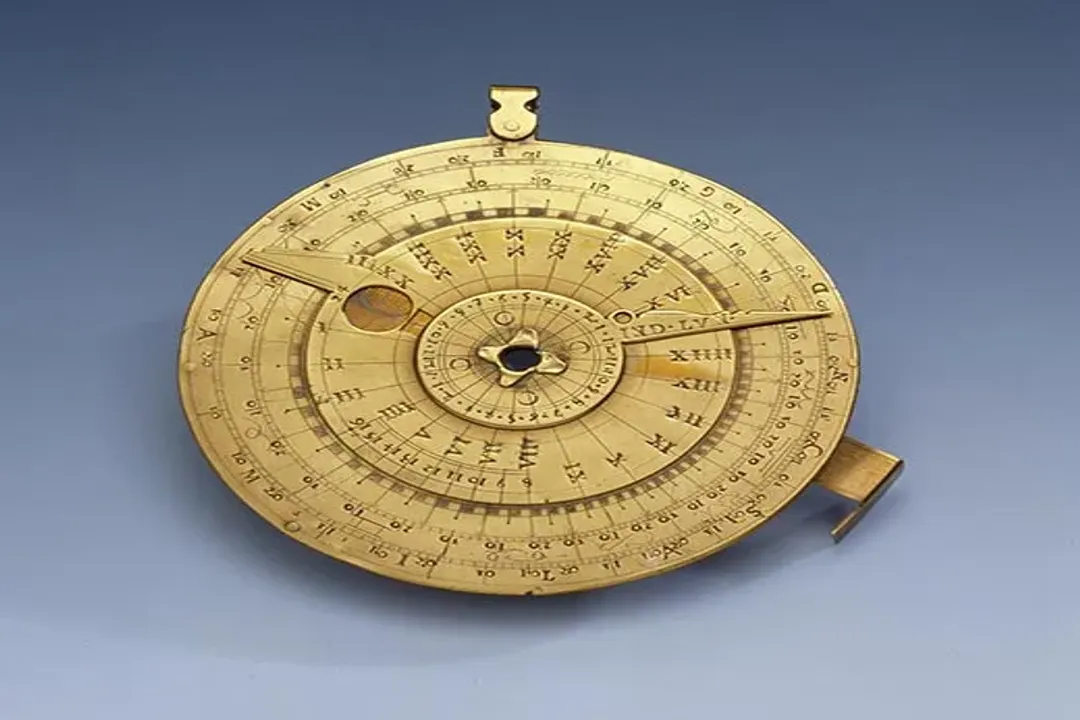
While the telescope captures the spotlight, Galileo’s inventive spirit also produced several other practical and scientific tools. One of the most significant was the thermoscope, which served as the precursor to the modern thermometer. This device worked on the principle that air expands when heated and contracts when cooled. Galileo constructed it using a sealed glass tube, often with a bulb at the top, and immersed the open end in colored water. As the ambient temperature changed, the water level in the tube would rise or fall, offering a relative measure of heat change. It is important to note that this instrument lacked a standardized scale, meaning it could indicate hotter or colder but not a specific, repeatable numerical temperature like 100 degrees. This limitation highlights a recurring theme: Galileo excelled at creating the apparatus for observation and measurement, even if the standardization of the resulting data often required later refinement by others.
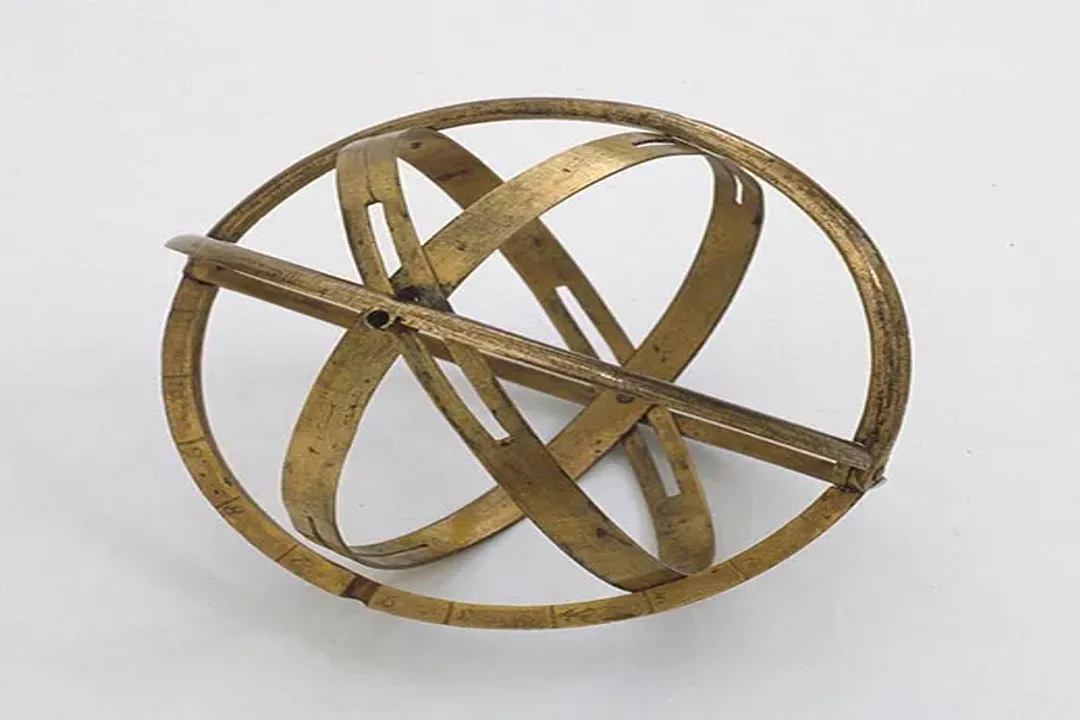
Another key invention was the geometric and military compass, also known as the sector. This was a complex instrument featuring hinged arms marked with several scales that allowed users to solve mathematical problems related to proportion, area, volume, and artillery trajectory. It was a sophisticated calculating device made of brass or wood, essential for surveyors, engineers, and military officers. Unlike the telescope, which was an optical improvement, the sector represented a more original mechanical assembly designed to streamline complex practical mathematics. It could perform calculations that were tedious or impossible with simple dividers, demonstrating Galileo’s direct application of geometry to practical needs.
Galileo also made important contributions to understanding mechanics and motion. His experimental work, often involving rolling balls down inclined planes to slow down the effects of gravity, was itself an invention of method. He improved the hydrostatic balance, allowing for a more accurate determination of specific gravity, aiding in metallurgical analysis. Although he did not "invent" the pendulum, he famously observed its regular swing—perhaps while an altar was moving during a church service in Pisa—and recognized its isochronism (the property that the period of the swing is independent of the amplitude). This observation was critical, leading to the development of the pendulum clock centuries later.
# Insights into Scientific Invention

The comparison between the telescope and the geometric compass offers an interesting perspective on the nature of Galileo's inventiveness. The telescope exemplifies applied innovation: taking an existing foreign concept, dissecting its mechanism, and engineering a superior version for a specific, ambitious goal (celestial mapping). It proves that understanding how something works is often more important than being the first to sketch the idea. On the other hand, the sector appears closer to fundamental engineering invention, as it synthesized known mathematical principles into a novel, multi-functional mechanical tool. For anyone looking to contribute to science today, this dichotomy is instructive: true impact can come from radically improving a commonplace item, or from creating an entirely new class of tool that solves an established problem in a different domain.
When examining Galileo’s tools, it’s striking how much his scientific revolution was instrument-dependent. Without the improved optics, the telescope remained a sailor’s toy; without the inclined plane apparatus, the science of kinematics would have remained speculative. This reliance on physical apparatus underscores a shift from purely philosophical inquiry to empirical science. Consider the logistical hurdle Galileo faced: to prove his astronomical claims, he needed an instrument that provided undeniable, repeatable evidence, visible to others (even if skeptics still chose to disbelieve their own eyes). An insight emerging from this historical application is recognizing that the quality of the measuring device dictates the quality of the scientific claim it supports. If Galileo had been stuck with a 3x magnification toy, his observations of Jupiter’s moons would have been too faint or ambiguous to convince the authorities of their reality. The step up to 30x magnification wasn't just a numerical improvement; it was the difference between suggestion and proof.
# Dissemination and Legacy
Galileo understood that an invention, no matter how brilliant, held little power until it was seen, tested, and accepted by the scientific community, which, for him, often meant powerful patrons. Presenting his telescope to the Venetian Senate was a political and financial maneuver as much as a scientific one. His subsequent publication, Sidereus Nuncius (Starry Messenger), detailing his telescopic discoveries, was the critical act that disseminated his optical findings across Europe. This rapid publication ensured that others—like Christoph Clavius in Rome—could verify his claims, lending authority to his work even amidst resistance.
Furthermore, the way he marketed his inventions reveals a deep understanding of patronage systems. While the upright telescope had clear military applications for spotting ships, securing the financial backing necessary to continue purely astronomical research often required emphasizing these terrestrial benefits first. This pragmatic approach allowed him to secure the time and resources to pursue the more controversial celestial studies later.
In summary, Galileo did not simply invent a device; he invented better ways to see, measure, and calculate. The invention most famously associated with him—the telescope—was a masterpiece of engineering iteration, transforming a novelty into the era’s most potent scientific instrument. His other creations, like the sector and the thermoscope, though less celebrated, were equally important in building the experimental foundation upon which modern physics and astronomy stand. He was, in essence, the ultimate implementer, turning abstract theory into tangible, world-altering machines.
Related Questions
#Citations
Galileo Galilei - Wikipedia
Instruments - Museo Galileo
Galileo's Instruments of Discovery - Smithsonian Magazine
What inspired Galileo to create his telescope? How did he construct ...
Galileo's Instruments
What Did Galileo Invent? - Universe Today
What Galileo invented? A. Barometer B. Pendulum clock C ...
Galileo's Telescope | PBS LearningMedia
Telescope - The Galileo Project | Biography