How did Watt's double-acting engine improve upon earlier designs regarding piston movement?
Answer
Steam pressure drove the machine on both the forward and return strokes
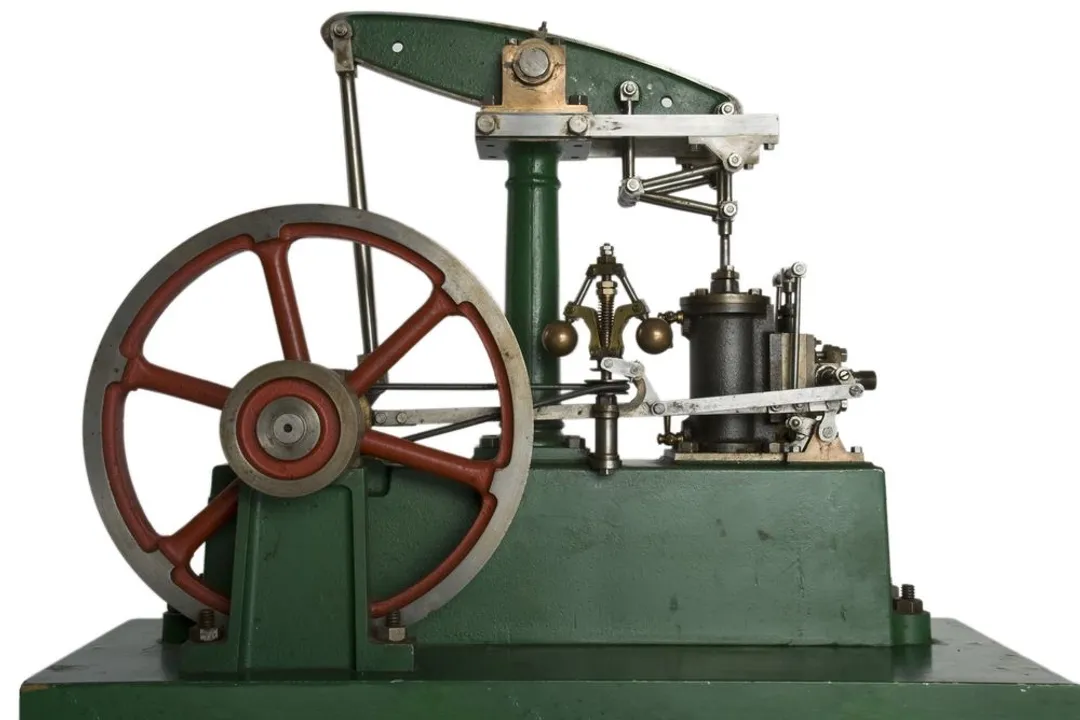
The double-acting engine admitted steam alternately to both sides of the piston, meaning steam pressure provided the motive force for both directions of travel, increasing power and smoothing operation.
Related Questions
What was the primary purpose of Thomas Newcomen's atmospheric engine around 1712?What crippling flaw severely limited the practical range of Newcomen's atmospheric engine?What crucial component did James Watt conceive in 1765 to solve the Newcomen engine's wastefulness?Which established manufacturer became James Watt's crucial business partner for production and financing?What mechanism did Watt invent to convert the piston's reciprocating motion into continuous rotary power?How did Watt's double-acting engine improve upon earlier designs regarding piston movement?What was James Watt trained to be before repairing the Newcomen model?What was the primary mechanism driving the piston down in the Newcomen Atmospheric Engine?What fundamental change did the efficiency of Watt's engine allow for concerning factory locations?According to the comparison table, what was the approximate fuel consumption advantage of Watt's engine?What specific aspect of steam technology did James Watt avoid developing due to safety concerns?