Who is the father of fuse?
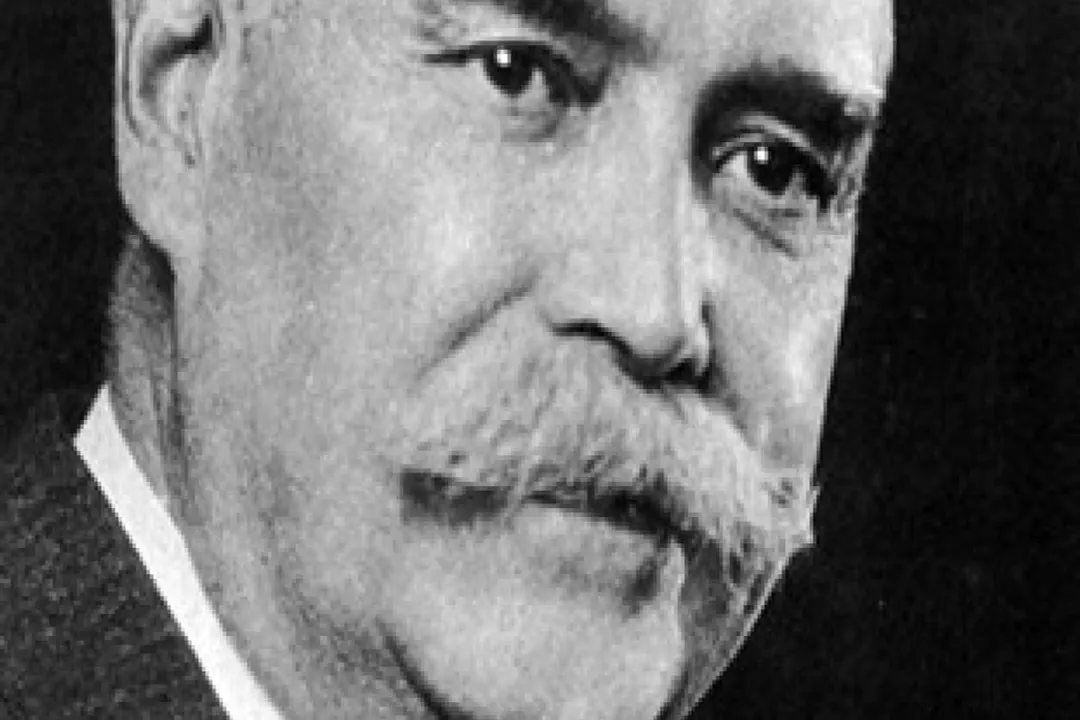
The title of "father of the fuse" is most frequently attributed to Thomas E. Murray, an American engineer and inventor whose work laid a foundational stone for electrical safety. His contributions were vital during the early days of widespread electrification, a time when the rapid expansion of electrical power systems introduced significant, often unmanaged, fire and shock hazards. Murray was deeply involved in the technical challenges of harnessing direct current (DC) power, a prevalent system in the late 19th and early 20th centuries.
# Electrical Pioneer
Thomas E. Murray was an inventor and an engineer of considerable repute, holding numerous patents throughout his life. His professional activity centered around improving the reliability and safety of electrical infrastructure, especially in the nascent stages of public utilities. He was not just an inventor in isolation; his work often involved the practical application of new concepts to existing power distribution methods. Recognizing that electrical distribution systems needed built-in safeguards against overcurrents—which could melt wires, ignite insulation, and cause widespread outages—he focused significant inventive effort on protective devices.
# First Invention
The key breakthrough credited to Murray was the creation of the first electric fuse. While the concept of a weak link in a circuit to prevent damage existed conceptually, Murray developed a practical device that could reliably interrupt a circuit when the current exceeded a safe limit. A crucial aspect of his design, which distinguished it from simpler predecessors, was the incorporation of a time-delay mechanism.
This feature is essential because electrical circuits routinely experience momentary, harmless surges, such as when a motor starts up or other inductive loads are switched on. A fuse that tripped instantly on these brief spikes would be functionally useless for practical applications. Murray's innovation allowed the device to tolerate these short, high-current events while still protecting the system from sustained overloads or dangerous short circuits. This element of controlled response is what cemented his status as the originator of the practical electric fuse.
# Protection Context
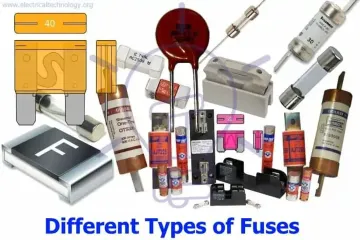
To fully appreciate Murray's contribution, it helps to place the fuse alongside its counterpart, the circuit breaker. While both devices share the same objective—interrupting an overcurrent to protect conductors and equipment—they function differently. A fuse is a sacrificial device; once it blows, it must be replaced. A circuit breaker, by contrast, is designed to be reset after an overload event.
In the early 1900s, the reliability and cost of these protective devices were major concerns for utility providers. The fuse, being simpler and generally cheaper to manufacture than the complex mechanical switches that would become circuit breakers, offered an accessible form of protection for a rapidly expanding network of homes and businesses. Considering the relatively low capacity and often inconsistent nature of early power grids, having an inexpensive, one-time-use device that always failed safely—by interrupting the circuit—provided a necessary level of protection that was immediately deployable on a large scale. The very act of requiring replacement after a fault also served as a powerful, albeit disruptive, indicator that a significant problem occurred on the line, something a resettable breaker might obscure in the earliest, least monitored systems.
# Engineering Iterations
The fundamental principle established by Murray—a current-responsive element designed to fail safely—persisted for decades, evolving as electrical demands grew more sophisticated. While Murray’s initial work focused on the developing DC power systems of his era, the need for protection naturally extended into new applications, most notably the automotive industry.
The design philosophy shifted over time, moving from simple wires or meltable links to more standardized and user-serviceable formats. For instance, the later development of the automotive blade fuse in the 1970s and 1980s exemplifies this evolution. These modern incarnations, often color-coded for easy identification of their current ratings, are standardized for quick swaps in vehicle fuse boxes. Comparing the early standardized fuse slot for a residential breaker panel, which often looked like a screw-in base, to the modern plug-in blade fuse used in cars highlights a shift from proprietary utility protection toward mass-produced, modular consumer safety. The blade fuse, for instance, often used a simple metal strip encased in plastic, allowing for visible confirmation of the break, a design choice prioritizing immediate visual verification over the internal mechanisms of older cartridge fuses.
If we track the materials used, the journey from Murray's original fuse elements—likely employing simple metal alloys—to modern automotive fuses that use precisely calibrated zinc or copper strips illustrates how material science has refined the time-delay characteristic he first introduced. An engineer today designing a low-voltage automotive circuit has the benefit of knowing exactly how a specific metal alloy will react to a specific current load over a specific duration, thanks to the baseline knowledge established by pioneers like Murray.

# Enduring Legacy
Thomas E. Murray's role extends beyond simply inventing a device; he established the concept of electrical overcurrent protection as a necessary, integral component of any functional electrical system. His patent portfolio, which included work on circuit breakers as well, demonstrates a deep understanding of the entire protection spectrum.
The longevity of the fuse concept, even as circuit breakers became dominant in mains electrical work, speaks to its fundamental effectiveness. While you might not find a direct descendant of Murray’s original DC fuse in a modern home’s breaker panel, the principle it established is encoded in every protective device used globally. From the smallest surface-mount fuse protecting a microchip on a circuit board to the large fuses guarding high-capacity transformers, the core idea—a predictable weak point to absorb catastrophic failure—remains the same. It is this concept of predictable failure for system preservation that secures Thomas E. Murray's place as the originator of fuse technology.
#Videos
I Built $200M Nuclear Energy Startup at 19 | JC.B, Fuse - YouTube
Related Questions
#Citations
Thomas E. Murray - Wikipedia
Fuse or Circuit Breaker - RS Online
JC Btaiche - Plymouth Street
History of the humble Automotive Blade Fuse - Classic Retrofit
NIHF Inductee Thomas E. Murray Invented the Electric Fuse Box
Fuse - Apex Legends Wiki - Fandom
I Built $200M Nuclear Energy Startup at 19 | JC.B, Fuse - YouTube
By chance are Fuse and Blisk related in some way? - Reddit