What camera did George Eastman invent?
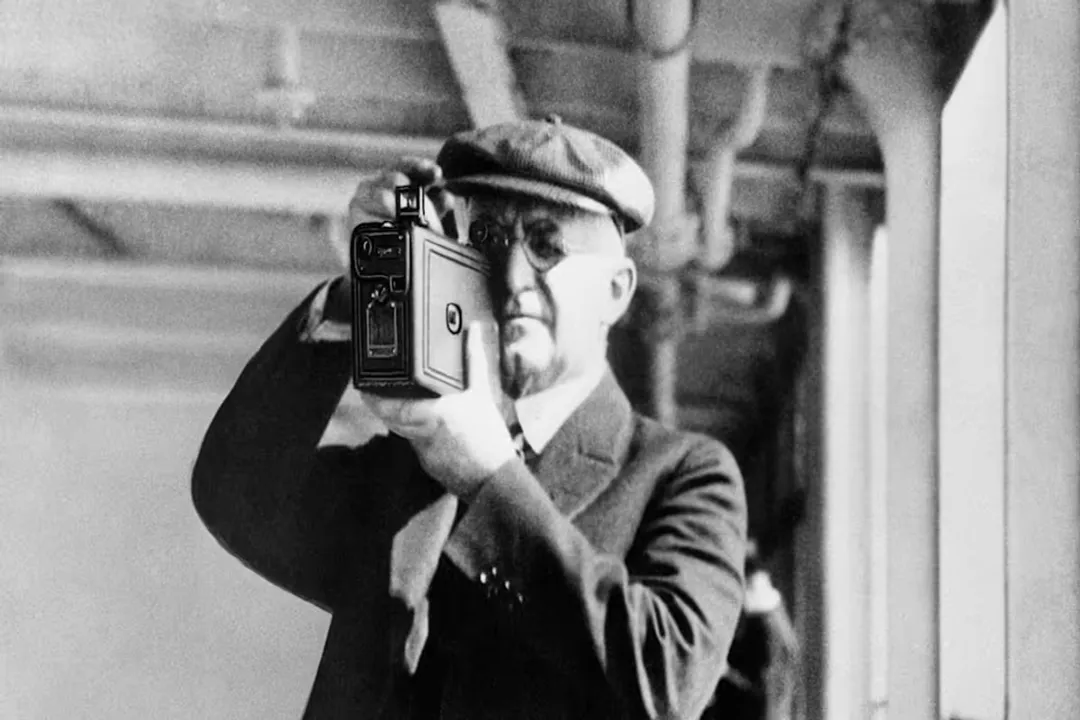
George Eastman’s name is synonymous with the democratization of photography, a transformation achieved through a single, deceptively simple device: the Kodak camera. [4] Before his innovation, photography was a technical, often messy, pursuit reserved for professionals or dedicated hobbyists armed with heavy equipment, glass plates, and chemical knowledge. [1] Eastman, born on July 12, 1854, [9] changed the entire equation, moving the art from the laboratory bench into the hands of the everyday person. [6] His great invention wasn't just a new box; it was a complete rethinking of the photographic process. [4]
# Film Foundation
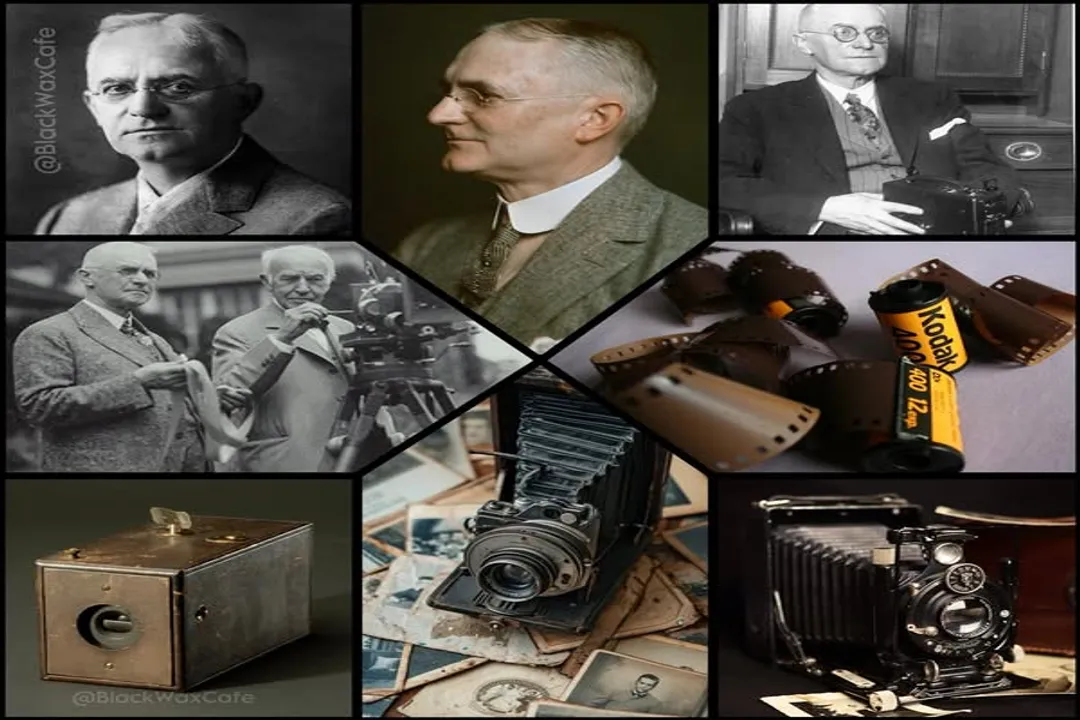
The essential prerequisite for the groundbreaking camera was a flexible, practical medium to replace fragile glass plates. [6] Eastman, who had been working on improving dry-plate photography in the late 1870s, [6] achieved a major breakthrough in 1884 when he patented the first practical roll film. [4][6] This flexible film was the key that unlocked the door to making cameras small, light, and easy to use. [4] This foundational work demonstrated his expertise not only in mechanics but also in the underlying chemistry necessary for imaging processes. [6]
# The Box Camera
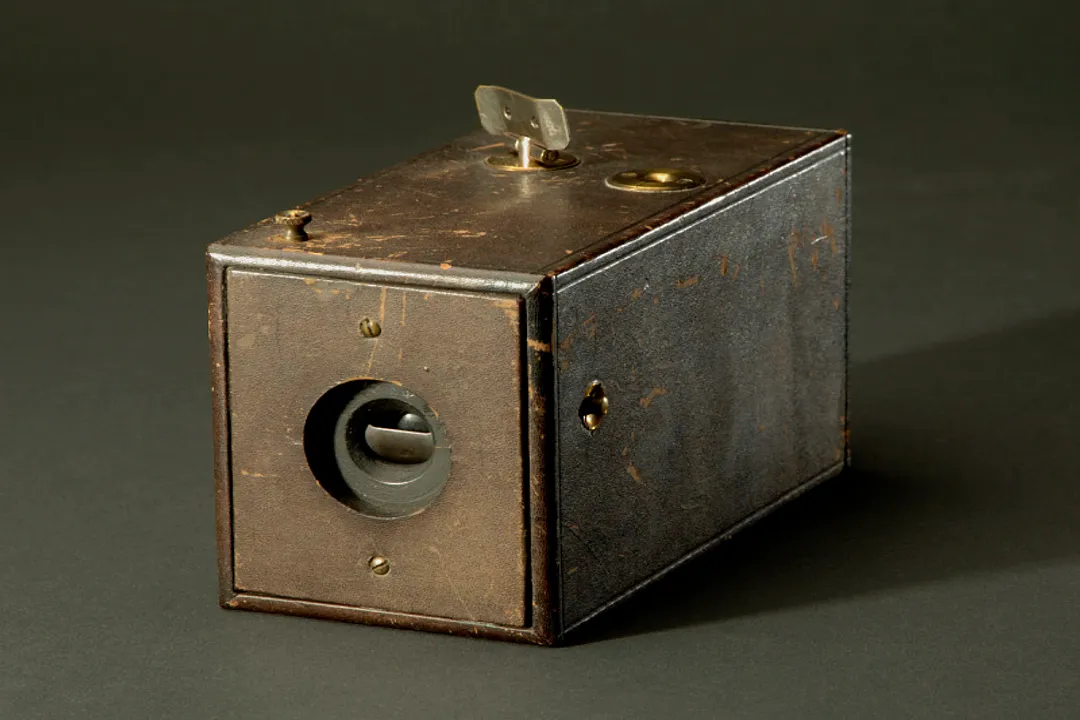
The actual camera that carried Eastman’s vision to the public arrived a few years later. On September 4, 1888, Eastman secured the patent for the first practical Kodak camera. [8] This device was a small, simple box camera, [1] designed specifically to be operated by amateurs who knew nothing of optics or chemistry. [4]
This first consumer model was sold pre-loaded with a strip of flexible film capable of capturing 100 exposures. [4] The camera itself was a relatively low-cost mechanism, [1] contrasting sharply with the high cost and complexity associated with the bulky apparatus required for earlier photographic methods involving wet-plate collodion or even large-format dry plates. [1] Consider the difference: a professional photographer in the 1870s might have needed to transport a dark tent, bottles of chemicals, and several heavy plate holders; the Kodak user simply needed to carry the small box. [1] This represents an extraordinary leap in portability and ease of use, moving photography from a skilled trade toward a common pastime. [4]

# The Service Model
What truly defined the Kodak invention—and what separates it from being just another camera design—was the accompanying business strategy. [1][4] Eastman’s company branded this service with the now-immortal slogan: "You press the button, we do the rest". [1][4][7]
This simple phrase encapsulated a radical departure from the existing market. When the customer finished the 100 exposures, they did not develop the film themselves. [4] Instead, they mailed the entire camera back to the Eastman Kodak factory located in Rochester, New York. [1][4] Upon receipt, Eastman's staff would:
- Develop the roll of film. [1]
- Print the resulting images. [4]
- Reload the camera with a fresh 100-exposure roll of film. [1]
- Return the fully functional camera, along with the newly printed photographs, to the customer. [4]
This approach established a remarkably clever, early form of a service subscription tied to hardware. The customer was buying not just a tool, but guaranteed results and ongoing access to the medium. [4] The initial price of the camera, while not trivial, bought an experience that bundled the material cost, the chemical processing, and the necessary labor into one transaction, effectively removing the largest barrier to entry for the general public. [1]
# Naming and Legacy
Eastman himself was reportedly fond of the letter 'K', [7] which influenced the memorable, somewhat sharp-sounding name he settled on for his brand and camera: Kodak. [7] The company he founded, the Eastman Kodak Company, became a global entity rooted in this initial invention. [6][7]
While the camera obscura concept—a darkened room or box with a small aperture projecting an external image onto a surface—had been understood for centuries, [1] Eastman's genius lay in mechanizing and simplifying the capture of that projected image onto a durable, mass-producible medium. [1][6] He successfully translated a scientific principle into a consumer product accessible to almost anyone. [4]
# Early Impact and Industry Shift
The introduction of the Kodak camera profoundly affected the photographic landscape, moving the focus away from cumbersome equipment and toward the moment being captured. [1] The success of this initial box camera spurred significant expansion and subsequent model iterations. [4][7] The original 1888 model itself is now a celebrated artifact, recognized for its historical importance in collections today. [3]
One interesting analytical point stems from understanding the cost differential of amateur versus professional photography at that time. While the first Kodak sold for around $25 (a significant sum then, roughly equivalent to several weeks' wages for some workers), [4] the cost was primarily for the initial roll and the return service. A professional setup for large-format photography involved ongoing, recurring expenses for chemicals, glass plates, and time spent in the darkroom for every single shot, often yielding only one usable negative per plate. Eastman's system, by standardizing the development cost into the initial purchase price, created a predictable, transparent expense model that appealed immensely to the burgeoning middle class interested in recording family life and travel. [1]
The long-term result of this simplicity was the establishment of photography as a mass-market hobby. [4] People began documenting everyday life, historical events, and personal milestones with an ease previously unimaginable. [1] This focus on ease of use and service delivery became an enduring characteristic of the company's philosophy. [7] George Eastman, the inventor of the Kodak camera, passed away in 1932, [9] leaving behind an industry fundamentally altered by his vision of making photography universally accessible. [2][6]
# Modern Echoes of the Kodak Principle
It is worth noting how the service element of the original Kodak model continues to echo in modern technology, even decades after the initial hardware was superseded. The principle of selling a device that requires proprietary consumables or mandatory ongoing service—be it for film processing, specialized ink cartridges, or cloud-based storage—can trace its lineage back to that 1888 arrangement. [4] While the digital age has replaced chemical processing with memory cards and cloud uploads, the core concept Eastman perfected—bundling the hardware with an indispensable after-sale service to ensure the customer achieves the final product—remains a staple of consumer electronics marketing today. [1][7] The success of the Kodak camera was not just its mechanics but its closed-loop system. [4]
Related Questions
#Citations
From the Camera Obscura to the Revolutionary Kodak
George Eastman - Wikipedia
Original Kodak Camera, Serial No. 540
Kodak camera | Definition, Inventor, History, & Facts - Britannica
B&C Member Spotlight - George Eastman | Boone and Crockett Club
George Eastman, Kodak, and the Birth of Consumer Photography
George Eastman patents Kodak camera - History.com
George Eastman (1854-1932) American inventor (Kodak camera ...