Which country is credited with providing the essential breakthrough of direct pedal drive, turning the bicycle into a functional machine?
Answer
France
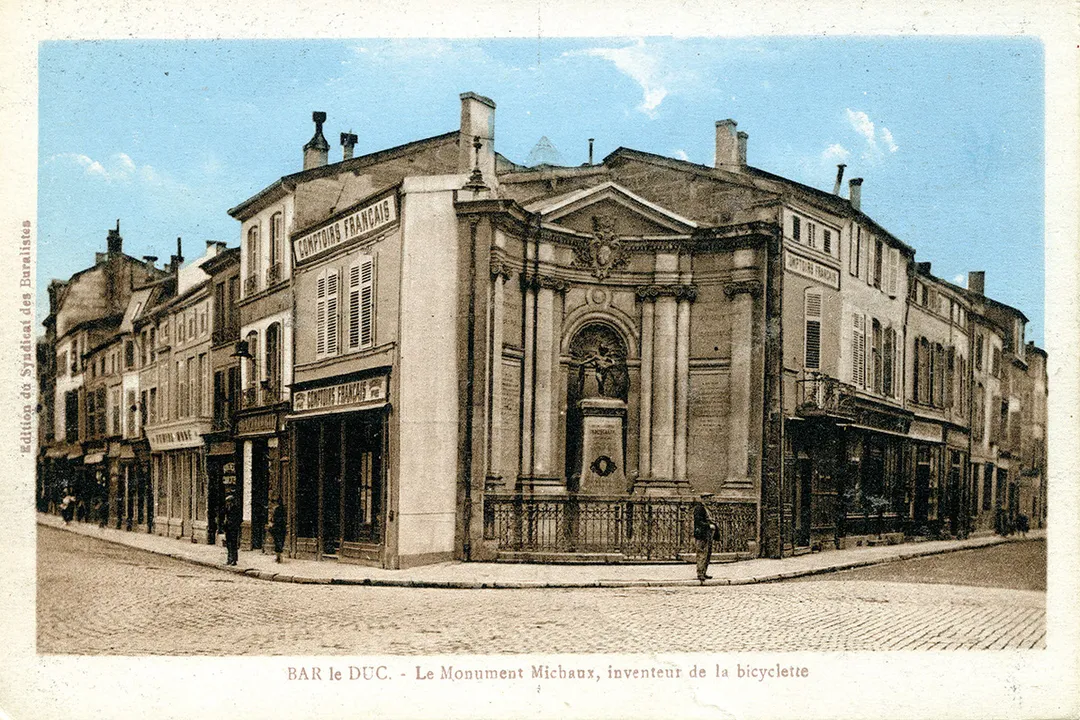
While Germany is credited with inventing the first steerable, two-wheeled machine (the Draisine) and Great Britain is credited with the modern chain-driven safety bicycle, France is widely recognized for the invention of the pedal-driven velocipede in the 1860s. This specific innovation of adding cranks and pedals to the front wheel hub solved the problem of continuous propulsion. This development marked the moment the device evolved from a push-scooter into a true bicycle, and it serves as the foundation for the performance advantages that encouraged widespread adoption of early cycling.
Related Questions
What fundamental mechanical feature did the Celerifere, attributed to the Comte de Sivrac, lack that disqualified it from being a true bicycle?Which invention by the German Baron Karl von Drais in 1817 provided the first verifiable advancement in steerable two-wheeled personal transport?What specific components did Pierre Michaux and Pierre Lallement add to the front wheel hub to create the velocipede in the 1860s?Why was the early French velocipede famously and disparagingly referred to as the boneshaker?What major design innovation did John Kemp Starley introduce in 1885 with the Rover Safety Bicycle?How did the rider propel themselves on the German Draisine compared to the later French velocipede?What was the primary danger associated with the Penny-Farthing, or high-wheel bicycle, that led to its eventual decline?Which country is credited with providing the essential breakthrough of direct pedal drive, turning the bicycle into a functional machine?Why is the invention of the bicycle considered a relay race of innovation rather than the work of one nation?What does the historical debate regarding the Celerifere versus the Draisine reveal about historical memory and national narratives?