Why did they invent the safety bicycle?
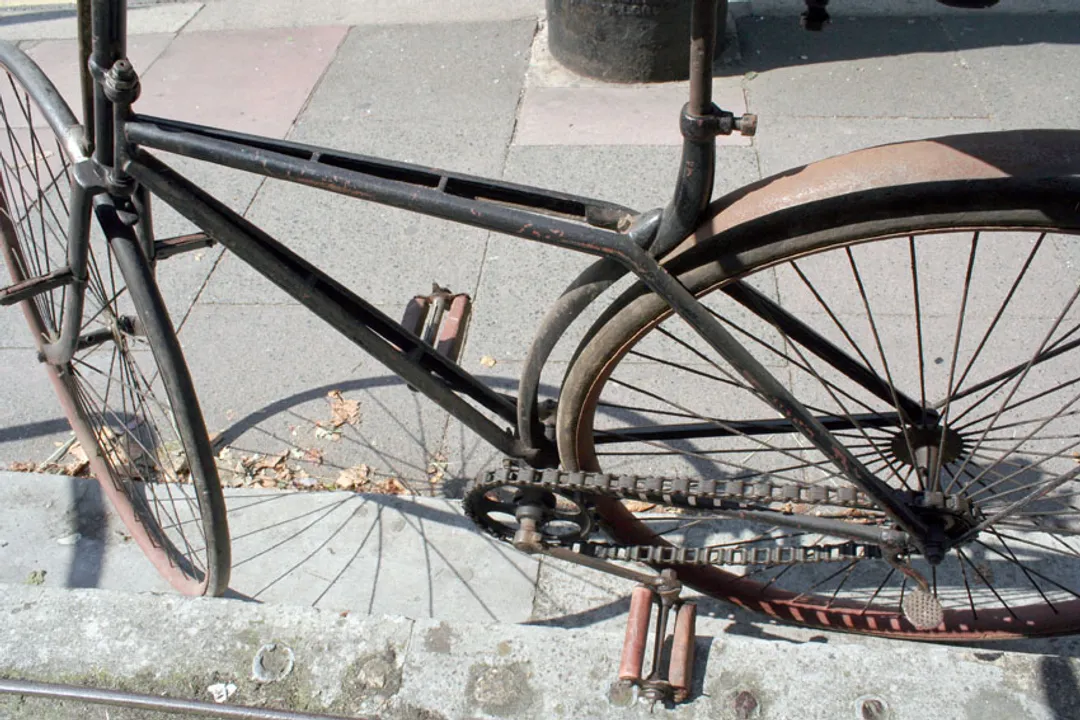
The simple act of riding a bicycle today feels almost instinctive, an easy application of balance and forward momentum. Yet, if you could travel back to the mid-1880s, you would find an entirely different, and far more perilous, experience awaiting anyone who wished to pedal their way down a thoroughfare. The bicycle, in its earlier forms, was a machine built for speed and novelty, but it was fundamentally flawed in terms of safety and practicality for the average person. The invention of the safety bicycle wasn't merely an incremental improvement; it was a revolution born out of necessity to stop cyclists from frequently crashing and sustaining serious injury, thereby opening the bicycle up to the general public.[1][9]
# Rough Rides
Before the elegant, chain-driven machine we recognize today took hold, early cyclists wrestled with contraptions that prioritized direct mechanical linkage over rider comfort. The velocipede, often dubbed the boneshaker, was one of the first widely recognized designs. While it introduced cranks and pedals connected directly to the front wheel, its construction was harsh. Made with iron frames and fitted with solid rubber tires, every stone, rut, or imperfection in the road was transmitted directly through the machine and into the rider’s body.[9] It was an unforgiving ride, limiting its appeal primarily to young men willing to endure significant physical discomfort for the thrill of self-propelled speed.[4]
# High Wheel Dangers
The next major iteration, the penny-farthing or ordinary bicycle, solved the comfort issue partially by introducing larger wheels (though still solid rubber initially) and later by incorporating hollow frames, but it created a far more significant hazard: instability. Because the pedals were attached directly to the hub of the driving wheel, greater distance per revolution meant a larger wheel was necessary to achieve reasonable speed.[3] This led to the iconic, massive front wheel and tiny rear wheel configuration.[1][9]
Riding one meant sitting perched high above the center of gravity, often five feet or more off the ground.[2] If the front wheel struck a small obstacle—a stone, a rut, or even a sudden dip—the entire machine would pitch forward violently. The rider, unable to dismount quickly due to the height, would often be thrown head-first over the large wheel, a common accident graphically referred to as "taking a header." [3][5][9] This inherent instability severely restricted cycling to experienced riders who had mastered the precise balance required and were willing to accept the constant risk of severe falls. Learning to ride such a machine demanded a level of physical adaptation and confidence that simply wasn't practical for mass adoption. It was a machine for daredevils, not commuters.
# Engineering Solution
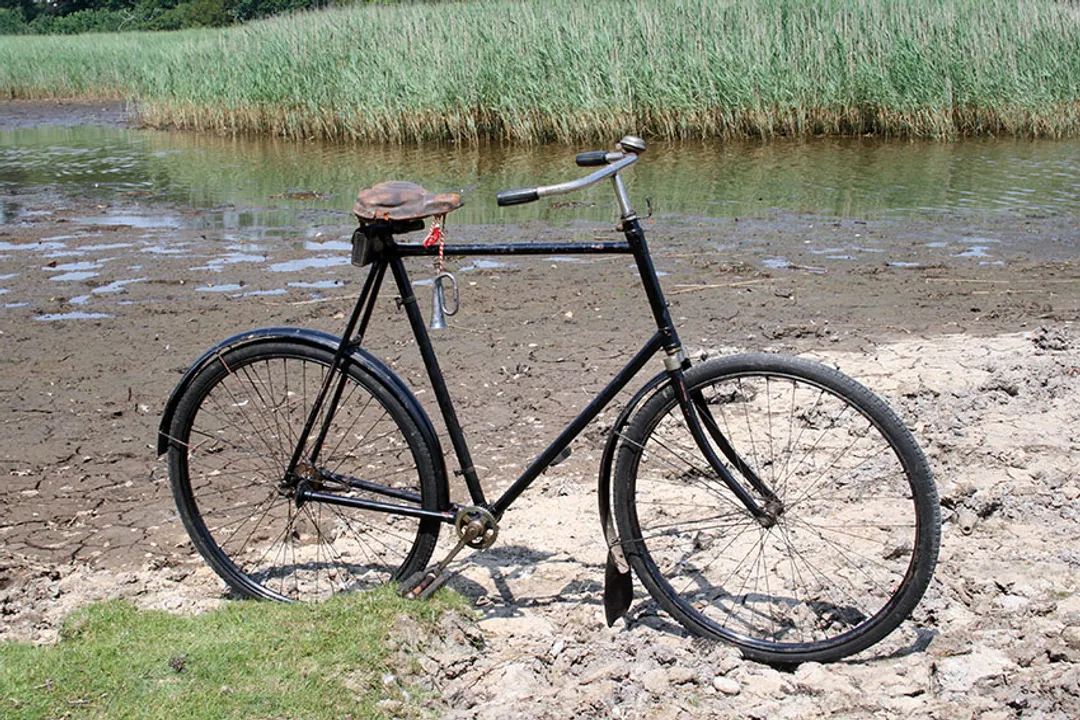
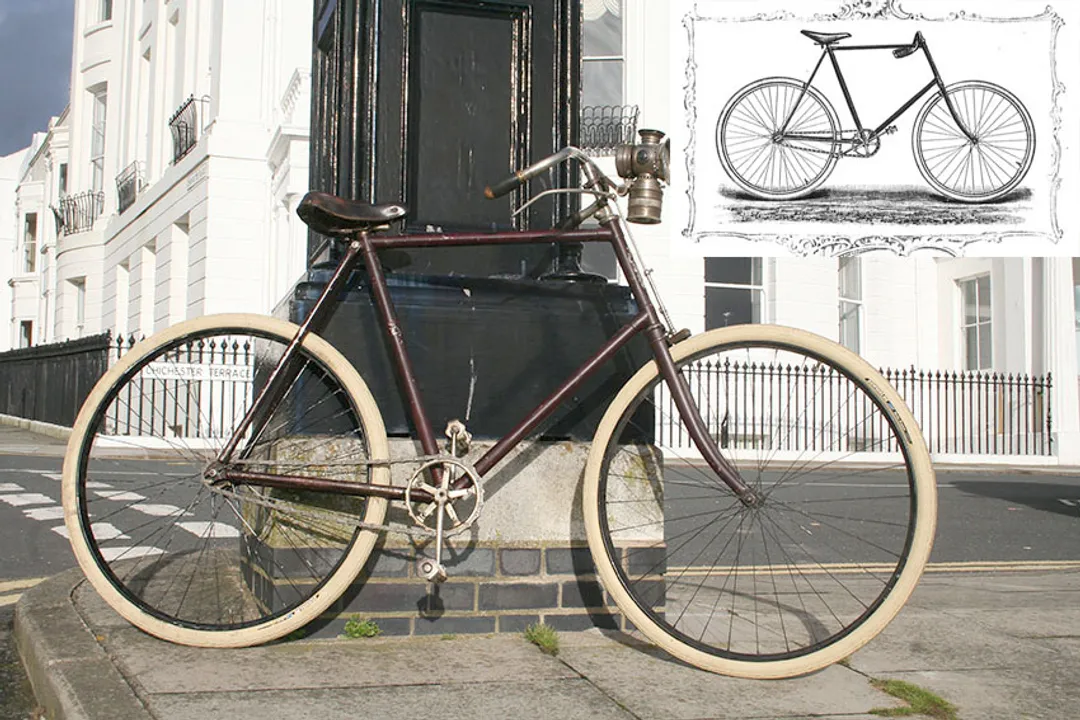
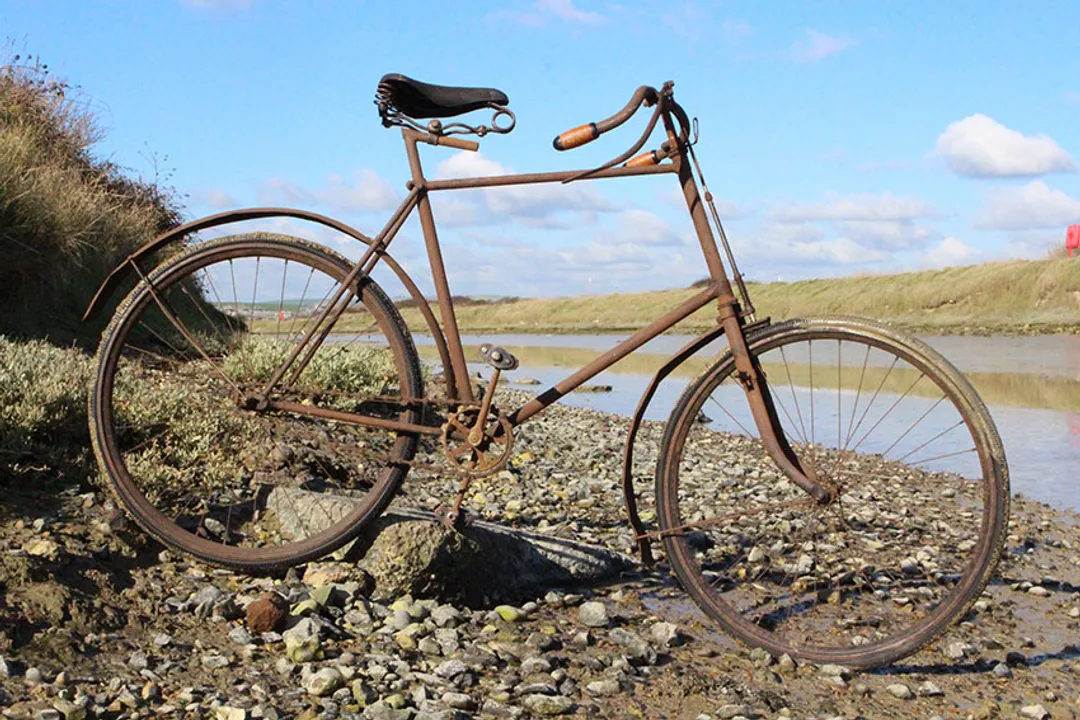
The inventors realized that to make cycling safe and accessible, they had to fundamentally decouple speed from wheel diameter. The key to this breakthrough was the introduction of the chain drive connected to the rear wheel.[1][9] This mechanical link allowed the rider to turn a small sprocket near the pedals, which then drove a larger sprocket attached to the rear wheel via a chain. This gearing system meant that the physical size of the driving wheel no longer dictated the distance covered with each pedal stroke.[1][6]
This innovation had two immediate, revolutionary benefits. First, it allowed the wheels to be of equal, small size—much closer to what we see today.[1] Second, this equalization dramatically lowered the rider’s center of gravity, placing the saddle much closer to the ground.[2][9] This inherently stable geometry meant that minor obstacles were far less likely to cause a catastrophic pitch forward. Mounting and dismounting became simple, similar to getting on and off a modern bicycle or a small horse, rather than needing a careful, running start or a step-off from a great height.
# Starley's Design
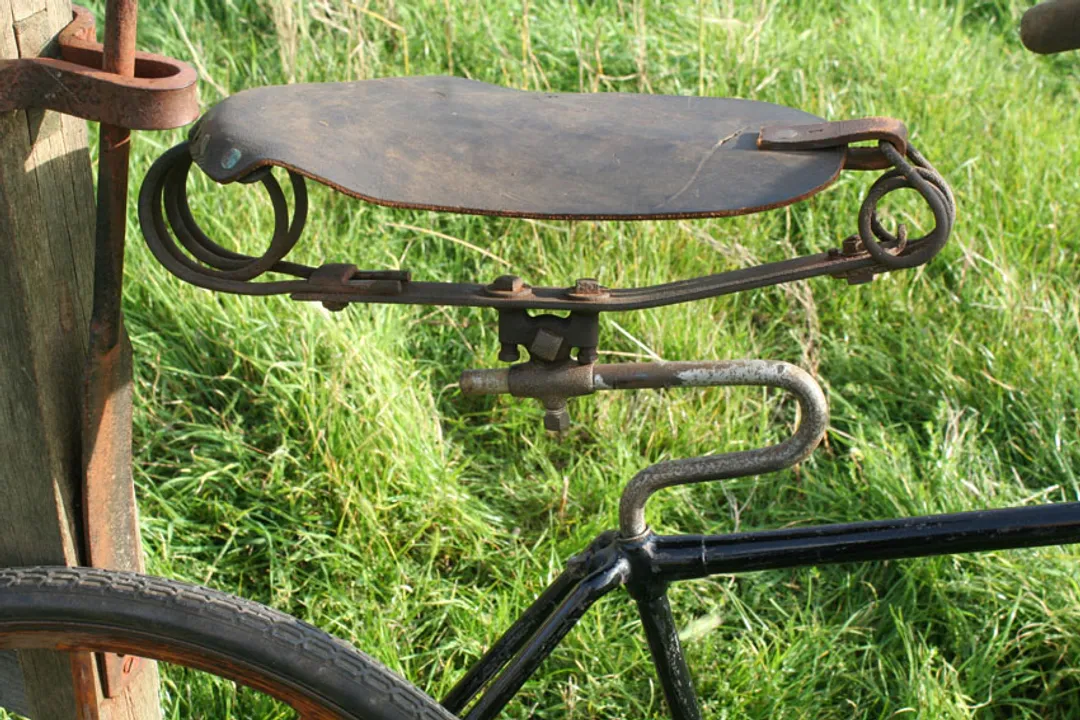
While many inventors tinkered with chain-driven concepts in the early 1880s, the machine that truly codified the safety bicycle and sparked the cycling craze was the Rover Safety Bicycle, introduced by John Kemp Starley in 1885.[1][6] The Rover was characterized by its direct steering, rear-wheel drive via a chain, and two similarly sized wheels, typically around 26 inches in diameter.[6] It marked a clear break from the high-wheel era.
The transition was rapid. Once the Rover proved that a low, stable machine could be fast and efficient, the market quickly abandoned the older style. It wasn't just that the Rover was safer; it was easier to learn and control, effectively lowering the barrier to entry from "expert athlete" to "average person seeking personal mobility." [2] The shift in rider demographics was immediate; suddenly, women, older individuals, and those who were never athletic enough for the Penny-Farthing could ride with confidence.
# Tire Comfort
While Starley’s mechanical design solved the danger issue, the ride quality still left something to be desired. The early safety bicycles often retained solid rubber tires, meaning the ride remained jarring on uneven roads.[9] The final, critical piece of the puzzle that cemented the safety bicycle’s dominance—and its enduring success—was the application of pneumatic tires.[1][9]
In 1888, John Boyd Dunlop developed practical pneumatic tires (air-filled) for his son's tricycle.[1][9] When these air-filled cushions were mounted onto the already stable safety bicycle chassis, the combination was unbeatable. The safety bicycle now offered stability and comfort, transforming the experience from a jarring necessity into a pleasurable activity. This pairing—the chain-driven, equally-wheeled frame and the air-filled tire—is the fundamental blueprint for nearly every bicycle produced since that time.[1]
# Societal Shift
The impact of this invention cannot be overstated. It moved the bicycle from being a niche sporting device to a genuine mode of transportation and recreation for the masses.[2] The increase in personal mobility had profound social effects, granting people unprecedented freedom of movement outside their immediate neighborhoods.[4]
Consider the practical difference in learning: on a high-wheeler, the first lesson involved learning how to manage the terrifying height and the physics of an imminent fall. On the safety bicycle, the learning curve was dramatically flattened. A novice could start rolling with relatively minor instruction, as the machine naturally sought equilibrium close to the ground. This ease of access directly fueled the cycling boom of the 1890s, marking the true democratization of personal wheeled transport long before the mass production of the automobile.[1][2] The invention wasn't just about mechanics; it was about making movement accessible to everyone, regardless of their physical daring.
To better visualize the transformation in design philosophy, one can compare the key features that necessitated the change:
| Feature | Penny-Farthing (Ordinary) | Safety Bicycle (Rover Type) |
|---|---|---|
| Wheel Size | Highly unequal (one very large, one very small) | Equal or near-equal |
| Power Transmission | Direct drive from pedals to front axle | Chain drive to rear axle |
| Rider Height | Very high center of gravity | Low center of gravity |
| Primary Risk | Pitching forward ("taking a header") | Standard loss of balance at low speed |
| Ride Comfort (Pre-1888) | Poor, even with hollow frames | Poor without pneumatic tires |
The inherent stability provided by the lowered frame and the controlled gearing meant that maintenance became less about surviving crashes and more about keeping the chain and bearings running smoothly. This simplified operation further encouraged wider adoption. The engineering success was that the safety bicycle retained the speed potential unlocked by the large wheel of the Penny-Farthing, but delivered that speed through mechanical advantage (the gearing) rather than direct physical size, solving the fundamental paradox that had plagued cyclists for a decade.[3] The safety bicycle, therefore, was invented because society demanded a vehicle that offered speed and range without demanding a constant gamble with broken bones.[9]
#Videos
How the safety bicycle changed the way we ride. #13 - YouTube
Related Questions
#Citations
Safety bicycle - Wikipedia
The Safety Bicycle and Beyond | Smithsonian Institution
ELI5: Why were early bicycles so weird? : r/explainlikeimfive - Reddit
A History of the World - Object : Rover Safety Bicycle - BBC
safety bicycle invention in 1891 - Facebook
1. SAFETY BICYCLES: 1886-1899
How the safety bicycle changed the way we ride. #13 - YouTube
History of Bicycle Safety: Re-Inventing Two Wheels - Traffic Signs
Bicycle - Evolution, Design, Safety | Britannica