Who invented supply chain serialization?

Tracing the origin of supply chain serialization—the practice of assigning a unique identifier to every saleable unit as it moves through the distribution network—does not point to a single moment or an individual inventor in the same way we credit someone like Phil Farnsworth with television. Instead, serialization is an evolutionary step in product tracking, deeply intertwined with technological capability and, more recently, legislative necessity, particularly within the pharmaceutical sector. [4][7] It represents the maturation of previous tracking methods, shifting from tracking batches or cases to tracking items individually. [10]
# Tracking Roots
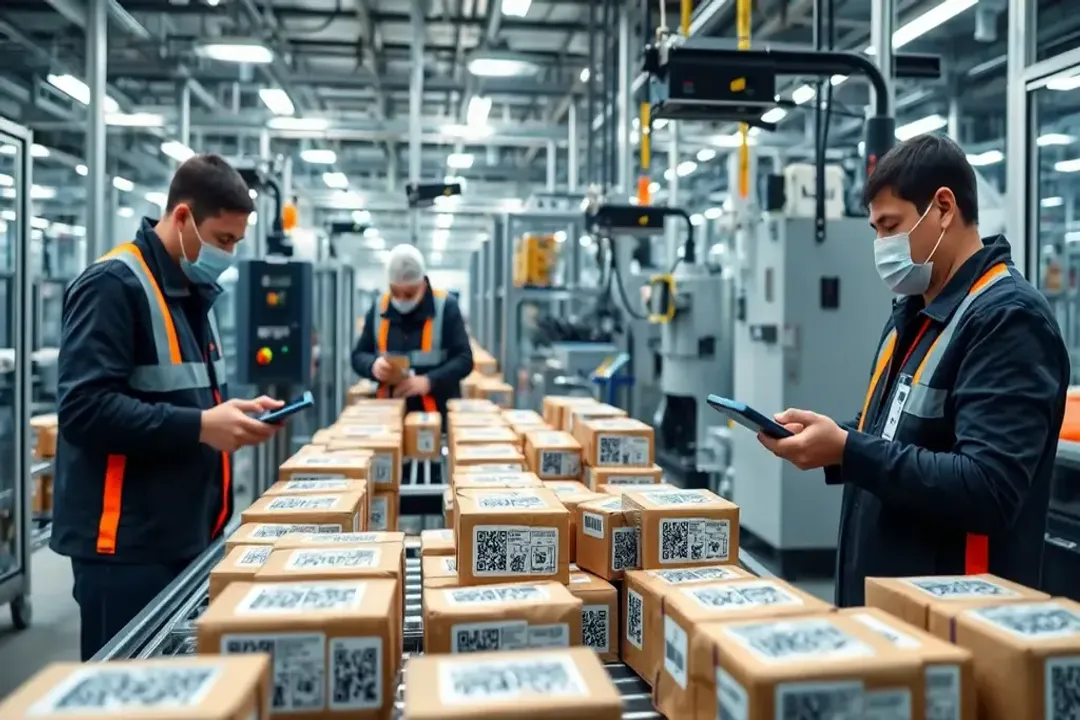
The fundamental desire to track goods over distances is ancient, but the modern iteration of serialization rests heavily on earlier identification systems. The invention of the barcode in the mid-20th century provided the initial, scalable framework for automated tracking. [1] While the barcode was revolutionary for managing inventory at the item level in retail environments, early applications often involved tracking groups of items, like shipping cartons or cases, rather than every single pill bottle or cosmetic item moving through the entire chain. [1][7]
This difference between early machine-readable identification and modern serialization is crucial. The barcode system allowed for the rapid capture of data at specific points, like a warehouse receiving dock or a checkout scanner. [1] However, the concept of serialization demands that the identifier is globally unique across the entire product lifecycle, often requiring more complex data structures than basic retail UPCs. [4] The groundwork laid by early tracking technology, and the broader field of supply chain management itself—with figures like Keith Oliver being instrumental in defining the scope of modern supply chain thinking—created the intellectual space for serialization to be conceived as a necessity for high-stakes goods. [9]
# Regulatory Catalyst

If there isn't one person who invented the concept of unit-level tracking, the catalyst for its widespread, mandatory adoption in complex supply chains was definitely legislative. In the United States, this impetus crystallized around securing prescription drugs from counterfeiting, diversion, and adulteration. [2][5]
The major turning point arrived with the Drug Supply Chain Security Act (DSCSA), enacted in late 2013. [5][6] The DSCSA didn't invent serialization overnight; rather, it established a clear, non-negotiable timeline for phasing in unit-level tracking requirements across the drug supply chain. [6][10] Before this act, serialization efforts were often siloed, voluntary, or focused only on pilot programs or regional compliance efforts. [8] The DSCSA essentially invented the market demand for universal, interoperable, unit-level serialization by setting hard deadlines for trading partners to exchange transactional information using product identifiers. [5][8]
This regulatory push contrasted sharply with earlier, voluntary quality control measures. While many companies understood the value of tracking for inventory management or product recalls—situations where tracking batches or cases suffices—the threat of sophisticated counterfeits demanded a level of granularity that only serialization could provide. [3][8] The regulatory environment moved the industry from a "nice-to-have" security feature to a "must-have" operational requirement enforced by law. [6]
# Unit-Level Detail
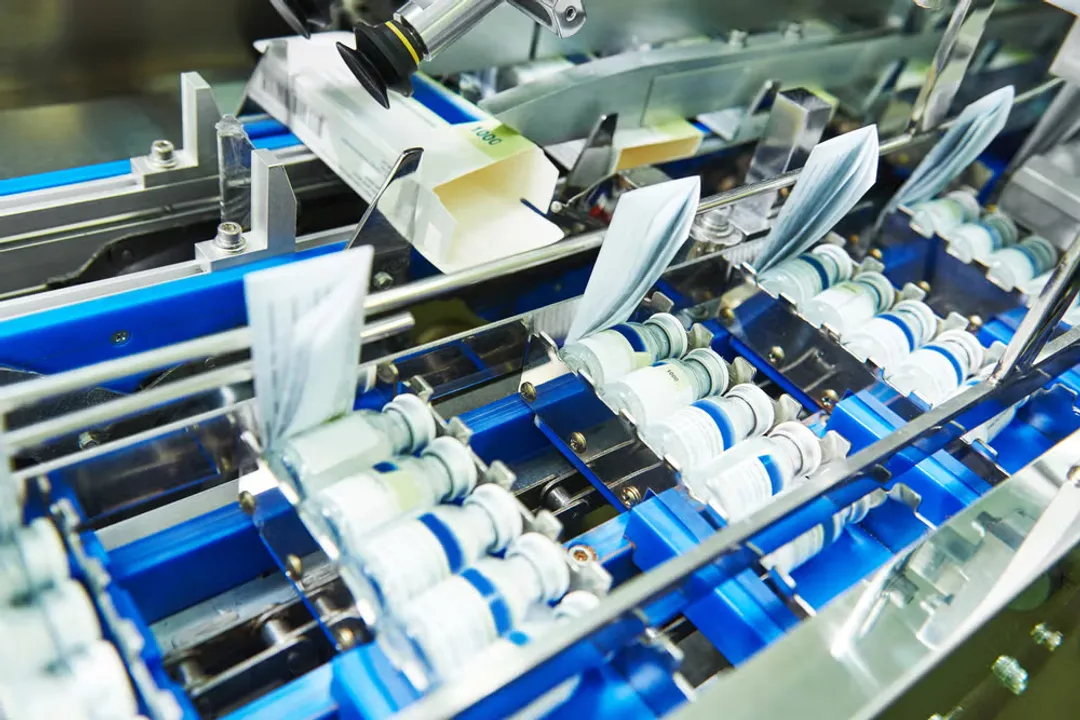
What defines true supply chain serialization, as mandated by modern legislation, is the specific data attached to the identifier. It goes beyond simply scanning a box; it involves tracking the saleable unit. [7]
For pharmaceutical products, this typically means affixing a unique, serialized National Drug Code (NDC) along with a serial number, lot number, and expiration date to each individual product container. [6][10] This data must be encoded, usually in a 2D barcode format like the GS1 Data Matrix, which can hold far more information than older linear barcodes. [4][7]
The effectiveness hinges on aggregation and interoperability. [4][10] Aggregation is the process of electronically linking the smaller, serialized units to their next level of packaging (e.g., linking 10 blister packs to their outer carton, and linking multiple cartons to a pallet). This linkage allows the system to know that if you scan the pallet, you inherently know the status of every item within it. [4] Interoperability is ensuring that the manufacturer's system can seamlessly communicate this serialized data with the wholesaler's system, and then with the dispenser's system, regardless of the software vendors involved. [5][10]
It’s interesting to observe how this requirement forces an entirely new level of data standardization across otherwise competitive entities. Unlike earlier systems where companies could use proprietary batch numbers for internal use, serialization demands a common language—like the GS1 standards—to ensure that a unique serial number created in a lab in one country can be verified and recognized by a pharmacy in another, provided both comply with local mandates. [7] This shared standard, rather than a person, becomes the underlying invention that makes the system work globally.
# Compliance Nuances
The path to full serialization compliance has not been uniform, highlighting that the "invention" of the system is an ongoing, iterative process driven by regional interpretation. For instance, while the DSCSA set major compliance milestones in the US, the specific requirements and timelines for verification and tracing have evolved, creating different adoption speeds across various segments of the market. [5][6]
For example, some regions, like the European Union, adopted similar track-and-trace requirements through the Falsified Medicines Directive (FMD), which implemented a sophisticated verification system based on unique product identifiers. [8] Comparing these global requirements shows that while the goal is consistent—patient safety—the method of serialization implementation varies. In some markets, the focus has been heavily on the manufacturing source and verification at the pharmacy point-of-dispensing, while others place more emphasis on the aggregation data within the wholesale distribution centers. [8][10]
An operational challenge that often gets overlooked when discussing the invention of serialization is the sheer data volume it generates. Moving from scanning a few hundred cartons per day to verifying millions of individual units means that IT infrastructure must scale dramatically to handle real-time lookups against external databases. [2][8] The true innovation, therefore, isn't just the idea of a unique number; it's the necessary invention of the supporting high-speed data exchange protocols that prevent verification delays at the point of sale or dispensing. A delay of even a few seconds could bottleneck a pharmacy trying to process high volumes of prescriptions.
# Future Integration
The initial deployment of serialization, driven by regulatory necessity, is merely the first step. The real value, beyond mitigating counterfeit risk, comes from integrating that granular data into broader supply chain operations. When every unit is uniquely identified, downstream processes become more efficient. For instance, when a product is recalled, instead of recalling every unit from a specific batch that might have been compromised, companies can use their serialization data to quarantine and retrieve only the affected specific units. [3]
This shift represents a fundamental move away from reactive batch management toward proactive unit management. While the DSCSA mandates tracing capabilities, the ultimate benefit lies in optimizing inventory, managing returns with precision, and ensuring better cold-chain monitoring for sensitive biologics—all enabled by the unique identifier established during the initial serialization process. [2] The concept of "who invented it" is less important than acknowledging that serialization, as a mandated system, has effectively created a new, highly transparent layer of accountability in the movement of critical goods.
Related Questions
#Citations
The History of the Barcode and Product Serialization
The NATCO Story: Securing Drug Supply through Serialization
Why unit serialization matters in the supply chain - Metrc
Understanding Supply Chain Serialization - Cadre Technologies
The Drug Supply Chain Security Act: A progress report
New US serialization requirements: pharma supply chain impact
What Is Supply Chain Serialization? | Blog - Radley Corporation
The Long Road To Serialization - Clinical Leader
Keith Oliver and the Birth of Supply Chain Management - Booz Allen
Serialization: Background, Justification, Requirements, Timelines ...