Who invented the electricity supply?
The question of who invented the electricity supply is not one answered by naming a single person or even a single decade; rather, it is the story of centuries of cumulative scientific breakthroughs finally converging into a functional, commercial infrastructure. Unlike inventing the lightbulb, which can be attributed to specific engineering efforts, the actual supply—the reliable, scalable delivery of power to homes and industries—required understanding the fundamental nature of electricity, mastering its generation, and winning a fierce commercial battle over how it should be transmitted across distances. [1][4]
# Ancient Static
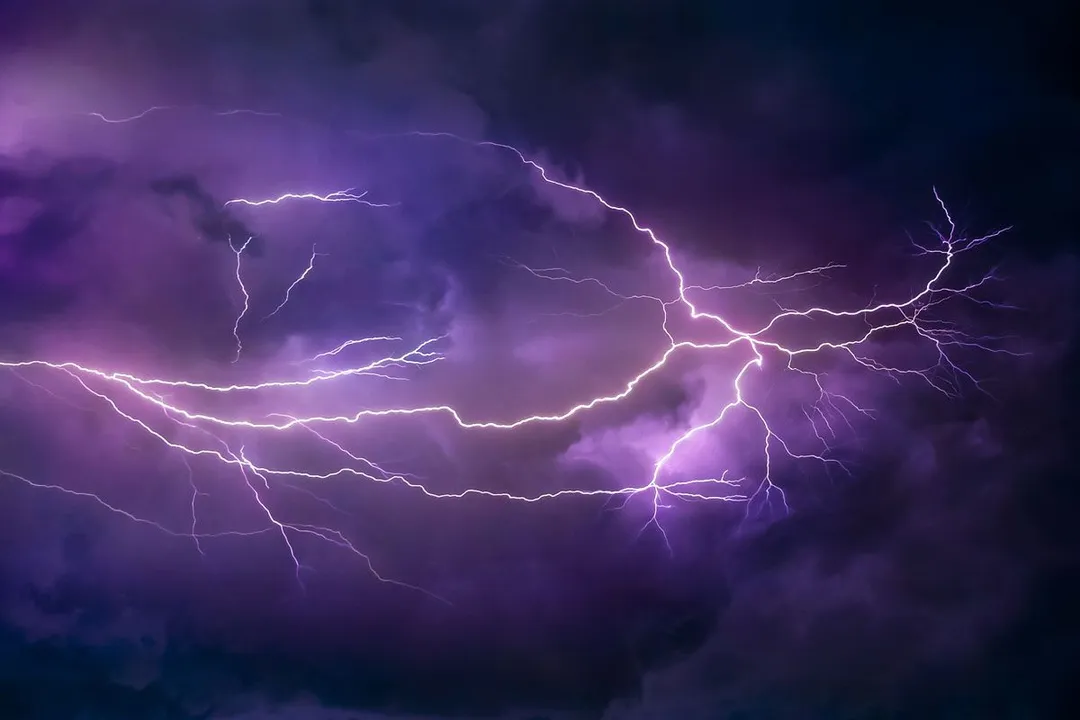
Long before anyone dreamed of lighting a city, observers noted strange phenomena related to electricity. The earliest documented observation dates back to around 600 BC with the Greek philosopher Thales of Miletus. [1][2] Thales noticed that rubbing amber caused it to attract light objects like feathers. [1][2] The word electron, which is the root of the modern term electricity, actually derives from the Greek word for amber, elektron. [2] This early understanding was limited to static charge, an interesting curiosity but entirely incapable of powering anything practical. [1]
# Voltaic Power
For millennia, electricity remained an intriguing parlor trick based on static charge. The real shift, the move from static observation to a continuous, usable source of electrical current, came with the development of the battery. [4][10] This involved understanding how chemical reactions could produce a steady flow of charge. The key figures here are Luigi Galvani and Alessandro Volta. [1][3] Galvani, through his experiments on frog legs in the late 18th century, demonstrated what he termed "animal electricity". [1][3] While his interpretation was flawed, his work spurred further investigation. [3] The crucial step was taken by Alessandro Volta, who, building on Galvani’s findings, invented the first true electrical battery in 1800, known as the voltaic pile. [1][3][10] The voltaic pile stacked alternating discs of zinc and copper separated by brine-soaked cardboard or cloth. [3] This invention was revolutionary because it created the first reliable, sustained source of electric current—a foundation absolutely necessary before any large-scale supply system could even be conceptualized. [3][4]
# Electromagnetic Basis
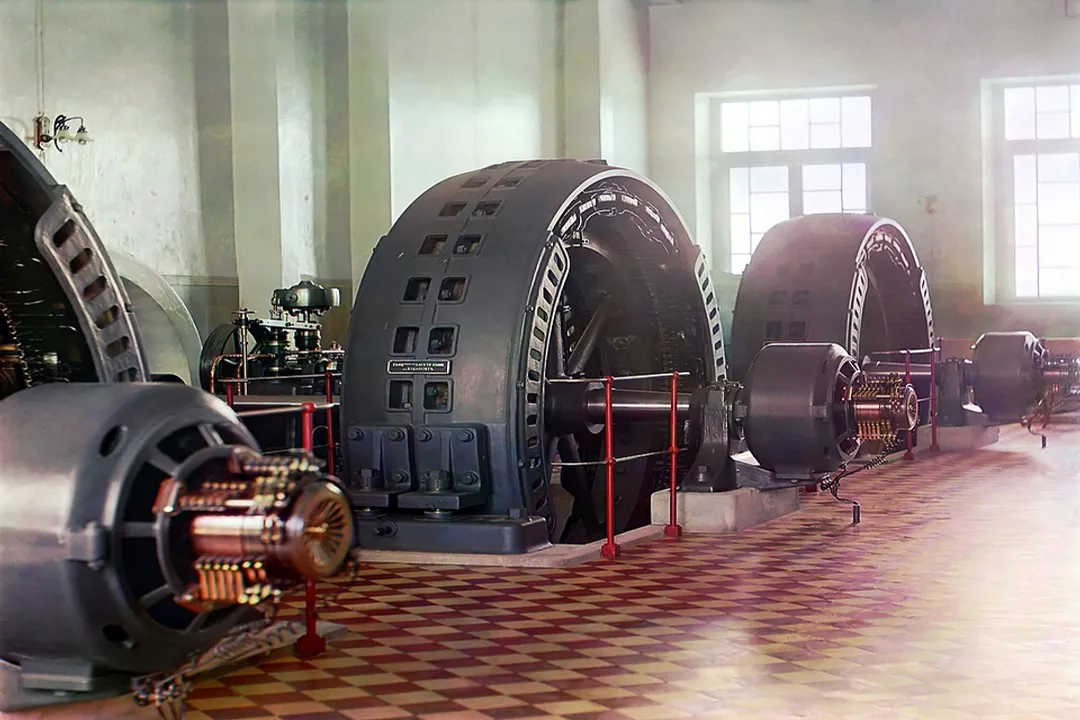
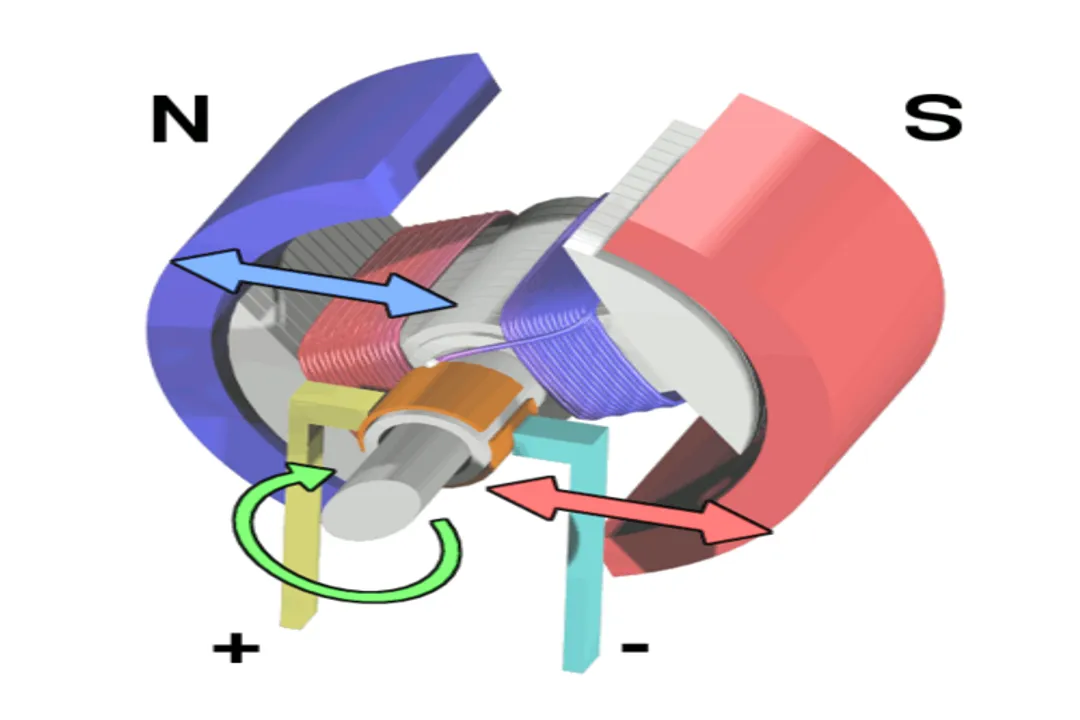
While Volta provided the current, the means to generate that current mechanically and on a massive scale—the prerequisite for a widespread supply network—came from the study of magnetism and electricity’s relationship. [1] This link was solidified by Michael Faraday. [1][3][5] In 1831, Faraday demonstrated the principle of electromagnetic induction. [1][3][5] He showed that moving a magnet through a coil of wire could generate an electric current. [3][5] This discovery was monumental; it laid the groundwork for the modern electric generator (or dynamo). [1][3][5] Where Volta’s battery had a limited lifespan and output, Faraday’s principle meant that mechanical energy—from steam engines, water wheels, or later, turbines—could be converted into electrical energy continuously and powerfully. [10] This moved electricity from a scientific curiosity to a potential commodity. [10]
Another crucial scientific figure in establishing the theory behind electrical power transmission was James Clerk Maxwell, whose equations in the 1860s mathematically described the relationship between electricity and magnetism, providing the scientific authority for the emerging technologies. [1]
# Edison's DC

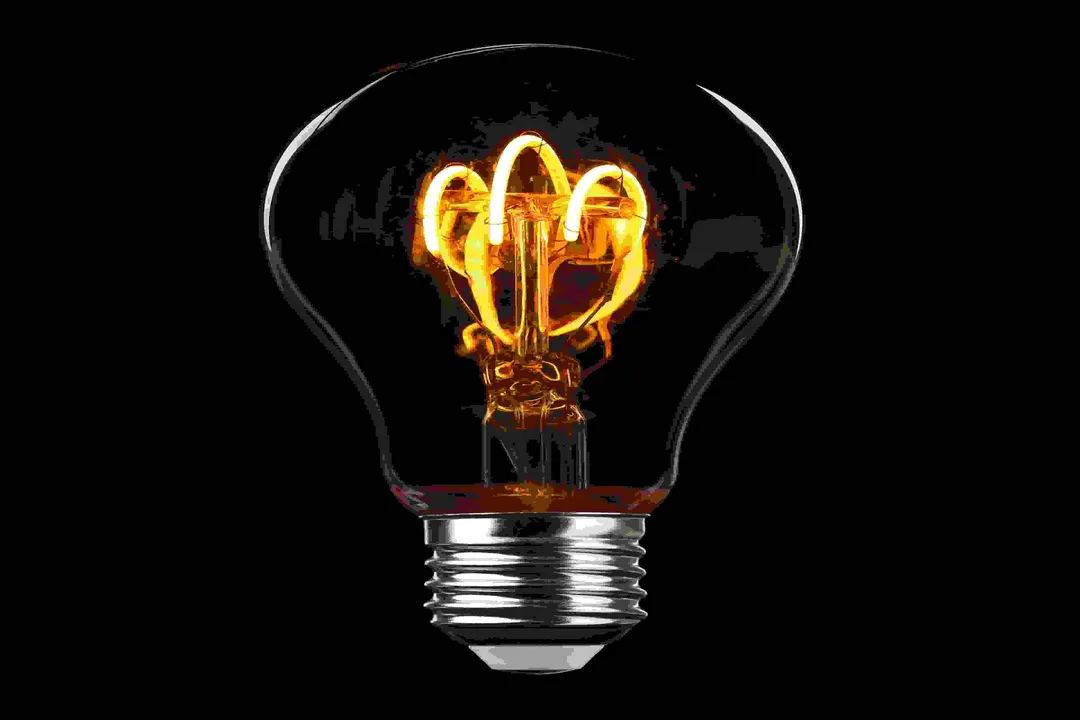
The transition from theoretical understanding to actual commercial supply is often associated with Thomas Alva Edison. [1][4] Edison’s genius lay not just in inventing the long-lasting, commercially viable incandescent light bulb around 1879, but in realizing that the bulb was useless without the entire supporting infrastructure—the complete supply system. [1][4][5]
Edison developed and implemented the world’s first central power station in Lower Manhattan, the Pearl Street Station, which began operation in 1882. [4][5][7] This station generated power using large steam-driven dynamos. [7] Edison’s chosen method of delivery was Direct Current (DC). [4] DC was simple; it flowed in one direction, which made it relatively straightforward for early engineers to manage its first applications like arc lighting and his new incandescent lamps. [4]
However, the limitations of DC quickly became apparent as cities began to expand. [4][10] DC power lost significant voltage over distance, meaning that power stations had to be built every few city blocks to serve customers. [4][10] This proximity requirement made the DC system incredibly expensive, inefficient, and spatially demanding for anything beyond a very small, dense urban area. [4]

# AC Versus DC
The true modern electricity supply system was born out of the infamous "War of the Currents" fought between Edison’s DC system and the superior Alternating Current (AC) system. [1][4][10]
While Edison championed DC, the technology that allowed electricity to be transmitted across hundreds of miles was AC, championed by George Westinghouse and promoted by the brilliant inventor Nikola Tesla. [1][4][5] Tesla developed the key components necessary for a practical AC system, most notably the AC induction motor and the polyphase system. [1][5]
The fundamental advantage of AC lies in the transformer. [4][10] Transformers allow AC voltage to be easily stepped up for long-distance transmission (minimizing line loss) and then stepped down near the point of use for safety and application. [4][10] This transformational ability eliminated the need for power stations every few blocks, making large-scale, regional power distribution economically viable. [4]
The contrast between the two systems, which dictated the infrastructure we use today, can be summarized simply:
| Feature | Direct Current (DC) | Alternating Current (AC) |
|---|---|---|
| Inventor Association | Thomas Edison | Nikola Tesla/George Westinghouse |
| Transmission Distance | Very Short (High Loss) | Very Long (Low Loss) |
| Key Component | None needed for transmission | Transformer |
| Power Delivery | Constant flow | Cyclical flow |
| Commercialization Start | 1882 (Pearl Street) | Late 1880s/Early 1890s |
The turning point in this commercial and technical battle is often marked by the successful lighting of the 1893 World’s Columbian Exposition in Chicago using Westinghouse's AC system, followed by securing the contract to harness Niagara Falls for hydroelectric power generation using AC technology. [5] Once the engineering superiority of AC for widespread supply was proven, it rapidly became the global standard. [4]
# Innovation Layers
It is an interesting historical pattern to observe how the invention of the electricity supply unfolded, requiring entirely different skill sets at each stage. The initial breakthrough of sustained current by Volta was primarily chemical innovation. [3] Faraday’s subsequent work was pure physics, understanding fundamental forces. [1][3] Edison's success was system integration and commercial application—he didn't just invent a lightbulb; he invented the utility. [4][7] Finally, Tesla and Westinghouse’s triumph was in electrical engineering that solved the critical problem of scale through AC transmission. [4][5] To truly invent the supply, you needed all four talents working in sequence. [10]
If we trace the lineage of any modern home outlet, we are seeing the direct engineering result of the AC standard set nearly 130 years ago. While we now have advancements in generation (like solar or efficient gas turbines) and the recent introduction of DC electronics, the long-haul arteries carrying power—the high-voltage transmission lines—still operate on the principles established by Tesla and Westinghouse to keep transmission losses manageable. [4]
# Transmission Standard
The establishment of the AC standard meant the construction of entire national grids, often starting regionally and connecting over time. [7] Early electrical operations, such as those in Alcoa, Tennessee, for instance, often began with hydroelectric power generation tied directly to industrial needs, like aluminum smelting, before being integrated into broader public supply networks. [7] In these industrial settings, early supply systems might have been entirely isolated, built solely to run the factory floor, representing an early, self-contained supply microcosm before the grid era. [7]
The ability of AC to use transformers meant that large, centralized power stations—often located near fuel sources (like coal mines) or water (for hydro power)—could efficiently send electricity over vast distances to population centers. [4][10] This efficiency drastically lowered the cost per kilowatt-hour compared to localized DC generation, making widespread access to electric light and power an economic reality for the masses, not just the wealthy city center. [4]
For anyone looking to trace the practical evolution of power access today, it is often illuminating to look at local utility history. For example, knowing when your town got its first substation or who originally owned the local hydro dam often reveals the precise moment the national AC supply chain connected to your community, moving from localized, independent power solutions to being part of the continental infrastructure. [7] This transition marks the true invention of the electricity supply as we know it: a massive, interconnected, high-voltage transportation network designed for maximum efficiency across distance.
# System Legacy
The inventor of the electricity supply, therefore, is a collective: Thales saw the static, Volta created the current, Faraday showed how to generate it mechanically, and Edison first bundled it into a commercial service, while Tesla and Westinghouse provided the scalable transmission method that defined the infrastructure for the next century. [1][3][5][10] Without any single one of these steps—especially the ability to efficiently transform and transmit the energy over distance—the modern electrified world, powered by an ever-present, near-invisible flow, simply would not exist. [4][10]
#Videos
Greatest Discovery of All Time | Benjamin Franklin Kite Experiment
Related Questions
#Citations
Who discovered electricity? Probably not who you're thinking
Electricity - Wikipedia
Who Invented Electricity? A History of Electricity - ElectricityPlans
Who invented electricity? - Telefónica
Electricity timeline - Energy Kids - EIA
Who invented electricity : r/AskHistorians - Reddit
A History of Electricity in the U.S. | Alcoa, TN
Greatest Discovery of All Time | Benjamin Franklin Kite Experiment
Key figures in the history of electricity - Endesa
Who Invented Electricity? History of Energy and Power - EnergyBot