Who invented emergency medical kits?
The evolution of the emergency medical kit is less the story of a single "Eureka!" moment and more a gradual, often life-saving, accretion of necessity, military discipline, and philanthropic organization. While the impulse to carry remedies for injury is ancient—from rudimentary bandages carried by Roman legions to herbal pouches used by medieval travelers—the modern concept of a standardized, pre-packaged kit for immediate, non-professional care truly took shape on the battlefields of the late 19th and early 20th centuries. [5][9]
# Military Need
The intense pressures of modern warfare revealed glaring shortcomings in how battlefield injuries were managed. Before standardized approaches, soldiers often relied on whatever supplies were on hand or the often-overburdened medical corps several hundred yards away. This gap between injury occurrence and definitive care became a powerful driver for change. [3] The development of organized first aid, supported by entities like the Red Cross, began pushing for better preparation among the general public and non-medical personnel, but the army environment provided the crucible for true standardization. [8]
One significant catalyst was the Boer War in South Africa, where the need for immediate, on-site care for soldiers awaiting transport became acutely apparent. [5] It was here, and subsequently during the lead-up to and outbreak of the First World War, that militaries began recognizing that the soldier nearest the casualty—the "buddy"—was the most critical immediate responder. [5][9] This realization spurred the creation of unit-level medical supplies designed not for surgeons, but for immediate application by trained or semi-trained infantrymen. [5] These early military packs were tightly controlled and focused on hemorrhage control, antisepsis, and basic splinting materials to keep a soldier viable until they could reach a field dressing station. [3]
Another key influence came from early industrial and civic organizations. The development of the railway systems in the late 19th century necessitated on-the-spot care for accidents occurring far from established towns. [4] Similarly, organizations such as the St. John Ambulance Association, founded in Britain in 1877, were instrumental in teaching first aid and promoting the carrying of basic supplies, often through public demonstrations and instruction. [8] These early non-military efforts established the principle of carrying a kit, even if the contents weren't universally codified as they would become later. [8]
# Standardized Civilian Product
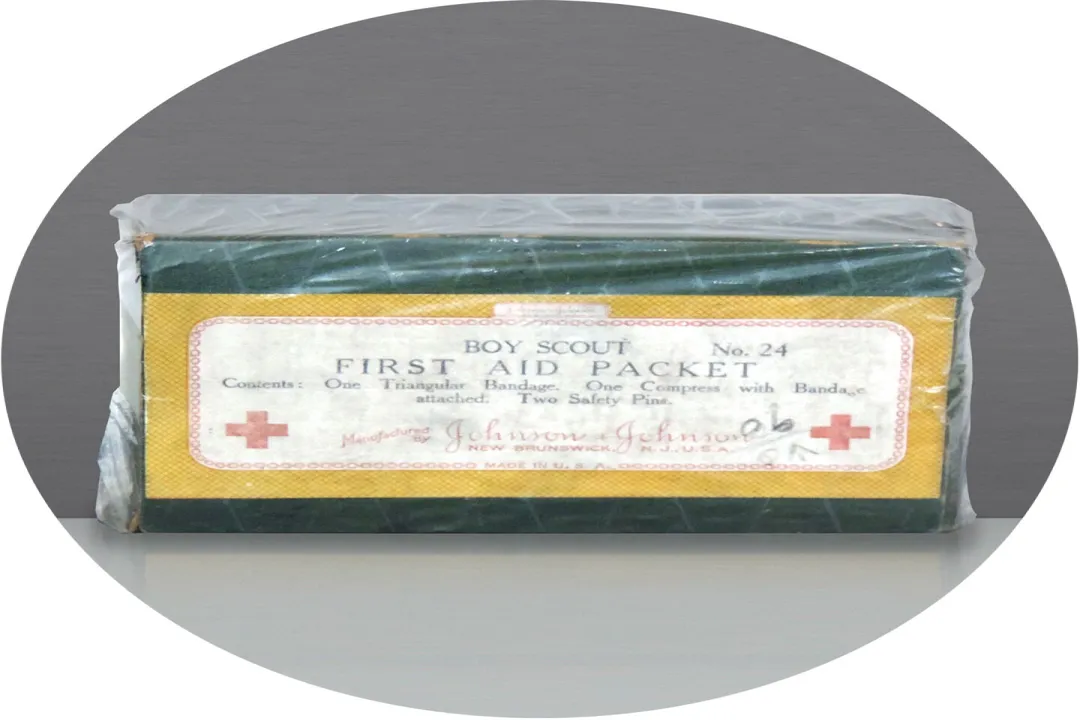
The jump from specialized military or railway equipment to a common household item required two things: a recognized need outside of dire emergencies, and a marketable, recognizable package. This leap is often attributed, in part, to youth organizations dedicated to civic responsibility and self-reliance. [2]
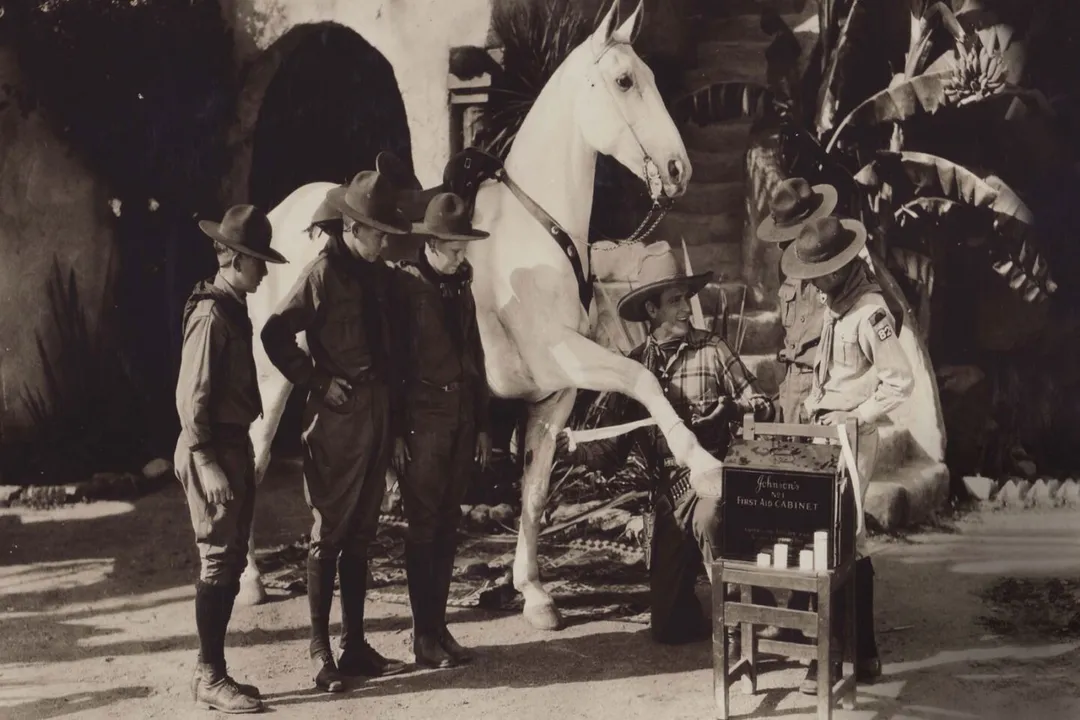
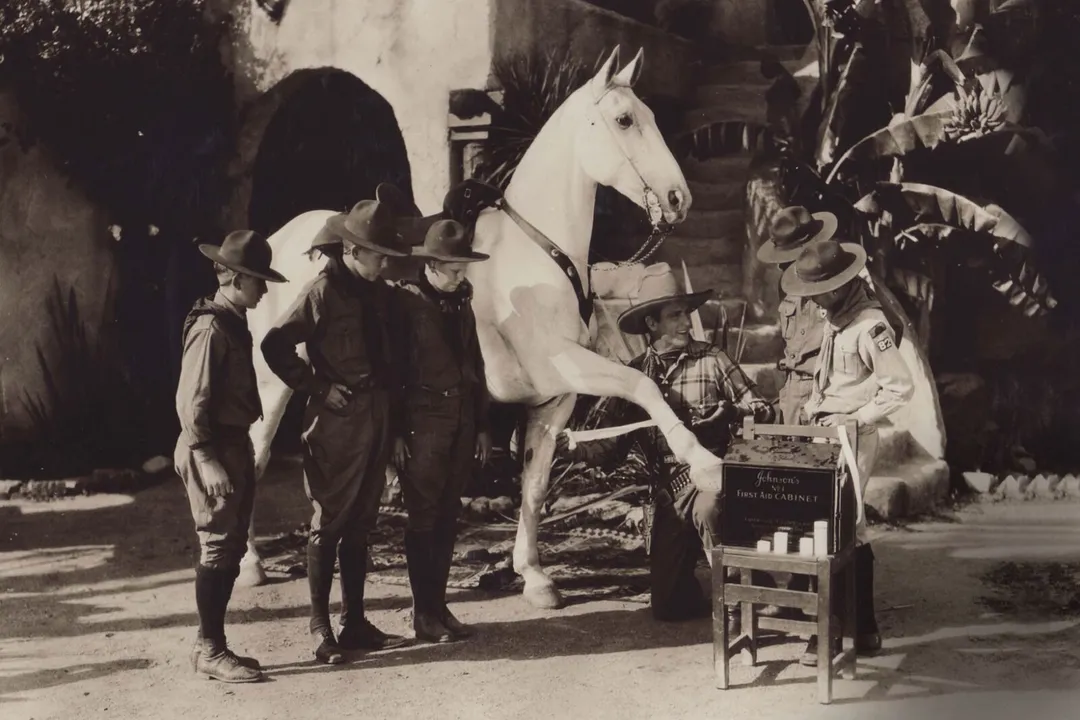
In the United States, the Boy Scouts of America (BSA) played a profound role in popularizing the concept of the personal, accessible medical kit. [2] The BSA’s emphasis on self-sufficiency—being prepared for the unexpected while camping or hiking—made the first aid kit an essential piece of personal equipment. [1] The need for standardization within the BSA led to the formal introduction of the Boy Scout first aid kit. [2]
The creation of this specific kit is tied to Robert Louis Garner, who, in 1910, was tasked with developing a first aid handbook for the organization. [2] Garner’s work, which included the design of a practical, portable kit, was heavily informed by the existing military standards of the era. [1][2] The Handbook for Boys, first published in 1910, detailed the contents and use of this kit, essentially creating a blueprint for civilian preparedness. [1] This BSA kit became an iconic symbol of preparedness, its contents designed to handle common injuries encountered in outdoor activities, differing slightly from the more severe trauma focus of military equivalents. [2]
It is interesting to note the underlying philosophical difference this consumerization introduced. The military kit was designed for the preservation of fighting capacity by stabilizing major injuries until a medical professional could take over. In contrast, the BSA kit promoted immediate personal stewardship over minor incidents—a scraped knee, a minor burn, a simple cut—that the individual Scout could manage entirely on their own. [1] This subtle shift in intended user and scope allowed the first aid kit to transition from being exclusively a component of organized response infrastructure to a personal responsibility item.

# Early Kit Contents
The components of these early standardized kits reveal a focus on infection prevention and basic wound management, reflecting the medical understanding of the time. For instance, the BSA kit often contained items such as:
- Gauze bandages and rolls
- Adhesive tape
- Antiseptic solutions, such as tincture of iodine
- Safety pins
- A tourniquet
- A triangular bandage for slings [2]
Compare this to the military needs where materials for deep lacerations and fractures were prioritized. An insightful way to view these early iterations is as a snapshot of accepted medical knowledge for immediate trauma management. The prominence of iodine or similar antiseptics speaks directly to the primary fear of the time: sepsis and infection setting in before proper cleaning could occur. [3] While today's kits might emphasize trauma dressings or specialized tourniquets, the basic format established by Garner and military predecessors—a durable container holding essential cleansing, covering, and securing materials—remains fundamentally the same. [9]
# The Growth of EMS
The formalization of the Emergency Medical Services (EMS) system in the latter half of the 20th century marked another significant evolution in the medical kit concept. [7] As emergency medical technicians (EMTs) became recognized professionals, the need for portable, yet significantly more advanced, trauma bags emerged. [7]
While the Boy Scout kit served the amateur, the developing EMS field required supplies capable of advanced airway management, intravenous access, and complex hemorrhage control, moving well beyond the contents of the original standardized box. The professional EMS jump bag became less about first aid in the traditional sense and more about pre-hospital emergency medicine. [7] The foundational principle—a well-organized container of necessary implements—persisted, but the contents became far more sophisticated, demanding materials like specialized splinting devices, airway adjuncts, and pharmaceutical supplies. [7]
We can observe a clear progression based on expected practitioner skill level:
| Kit Type | Primary User | Core Philosophy | Typical Contents Focus |
|---|---|---|---|
| Civilian Personal Kit (pre-1950) | Individual/Buddy | Self-care for minor injury | Bandages, tape, basic antiseptic [2] |
| Military Field Dressing | Soldier/Medic | Stabilization for evacuation | Tourniquets, wound packing, combat gauze [5] |
| Modern EMS Bag | EMT/Paramedic | Immediate life support/trauma care | Airway devices, IV supplies, advanced dressings [7] |
This divergence illustrates how the term "emergency medical kit" had to expand to cover vastly different scenarios and skill sets. The simple kit remained for the home or car, while specialized packs were engineered for the professional. [7]
# Local Preparation Today
The concept introduced by early military planners and popularized by youth groups continues to shape how we prepare for emergencies today. Understanding this history provides a helpful lens for personal preparedness. For instance, when assembling a modern vehicle or home kit, one should actively consider the intent behind the original designs. The early military mandate was simple: stop the bleeding and prevent infection. If you are preparing a kit for a remote location or an extended power outage where professional help is delayed, prioritizing those core functions—bleeding control and sanitation—over niche items becomes a direct nod to historical necessity. [1][5]
Furthermore, while the BSA kit standardized what to carry, its success also taught us the value of portability and accessibility. A perfectly stocked kit stored in the basement during a house fire is functionally useless. The original kits were designed to be carried on a belt or in a small pack; this principle of "ready access" remains paramount for any emergency supply, whether it's a hiking pack or a home disaster supply box. [9] The legacy of the early pioneers, whether they were quartermasters in the Boer War or scouts in the early 1900s, is not just the invention of a box, but the establishment of a preparedness mindset. [1][2]
Related Questions
#Citations
A Brief History of Medical Kits - Spartan Armor Systems
Badge of safety: The story behind Boy Scout first aid kits
Friedrich Esmarch, the Founder of Modern First Aid, and His Works
Who invented the First-Aid box? - EmerReady
The origins and early use of the first aid kit as we know it ... - Facebook
History of the First-Aid Kit - Prepared Physician
National EMS Week: 5 facts on the history of the Emergency Medical ...
The History of the First Aid Kit - Liverpool Training Solutions
First aid kit - Wikipedia