What key feature defined Watt’s double-acting engine compared to earlier single-acting engines?
Answer
Steam pressure was used alternately on both sides of the piston
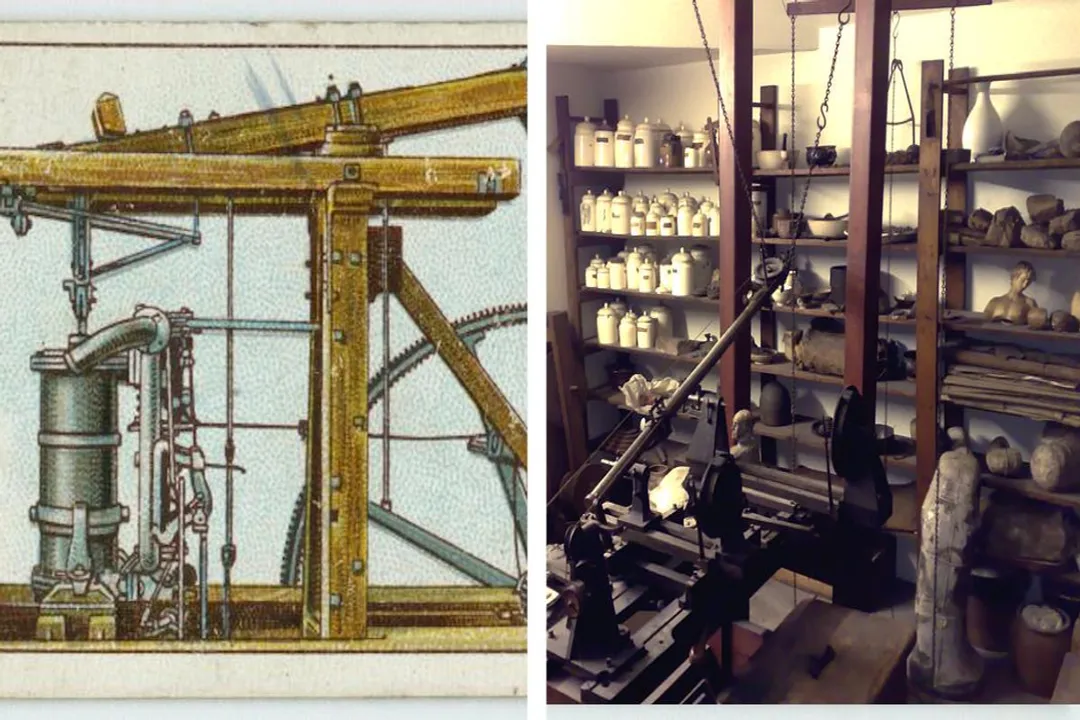
In the double-acting engine, steam pressure pushed the piston down, and then steam pressure was applied to the opposite side to push it back up, resulting in smoother operation and nearly doubling the effective power output.
Related Questions
What was James Watt's initial task at the University of Glasgow involving steam technology?What was the fundamental weakness Watt initially identified in the Newcomen engine?What was Watt's major conceptual breakthrough achieved around 1765?By introducing the separate condenser, approximately how much fuel did Watt's improved engine require compared to the Newcomen design for the same work?What mechanism did Watt and Boulton develop to convert the engine’s reciprocating motion into continuous rotary motion for factory use?What calculation formed the basis for Watt's standardized unit of horsepower?What key feature defined Watt’s double-acting engine compared to earlier single-acting engines?Which refinement did Watt introduce that allowed operators to control the engine's speed?How did the Boulton & Watt firm incentivize the adoption of the new steam technology?What essential role did Matthew Boulton primarily fulfill for Watt’s technical discoveries?