How did the Nipkow disk function at the transmitting end of Baird's system?
Answer
It captured tiny vertical slices of the image via spinning holes
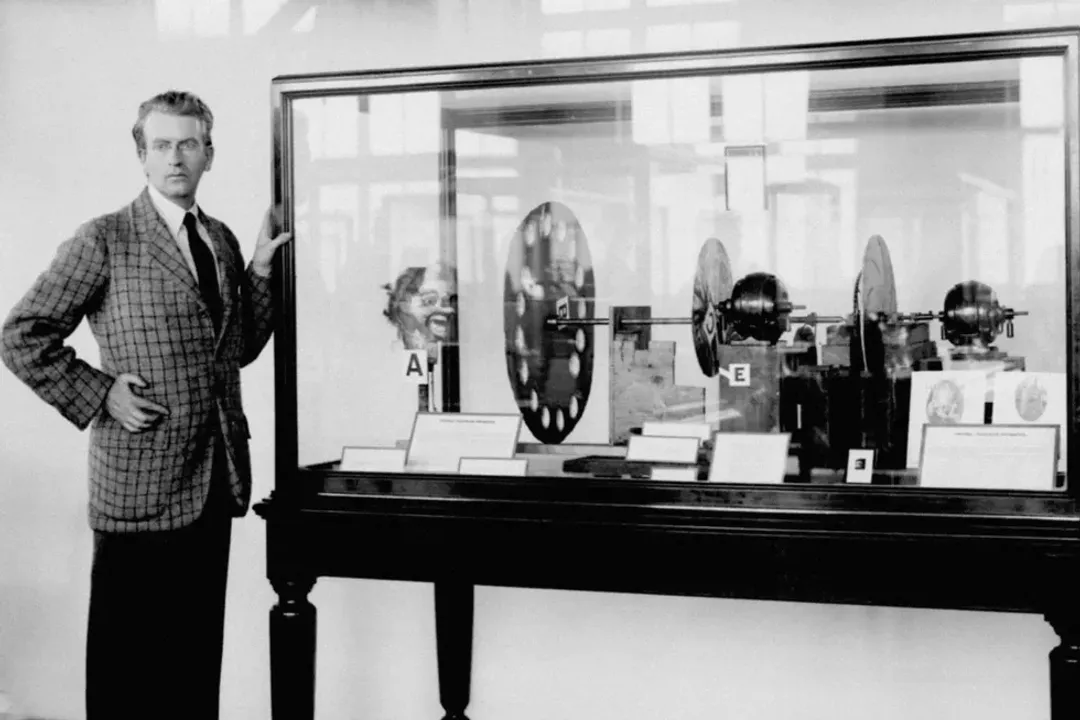
As the disk rotated, each hole momentarily captured a small vertical segment of the focused scene, which was then scanned across a photoelectric cell to convert the light information into electrical signals.
Related Questions
What was the apparatus famously associated with John Logie Baird's initial television success called?What core mechanical component did Baird's early system rely upon for both scanning and display?In what year did Baird first publicly display moving images that contained variations in tone (half-tone images)?What was the approximate resolution of the primitive images viewed during Baird's early public demonstrations?How did Baird name his device, the Televisor, as opposed to later electronic sets?What significant limitation did the physical nature of the Nipkow disk impose on image quality improvement?In which year did Baird first successfully transmit recognizable moving silhouette images?What technology characterized the electronic solutions being pursued simultaneously by inventors like Farnsworth and Zworykin?What critical event in 1936 signaled the official end of the mechanical era for UK broadcasting standards?How did the Nipkow disk function at the transmitting end of Baird's system?