What was Baird's first television called?
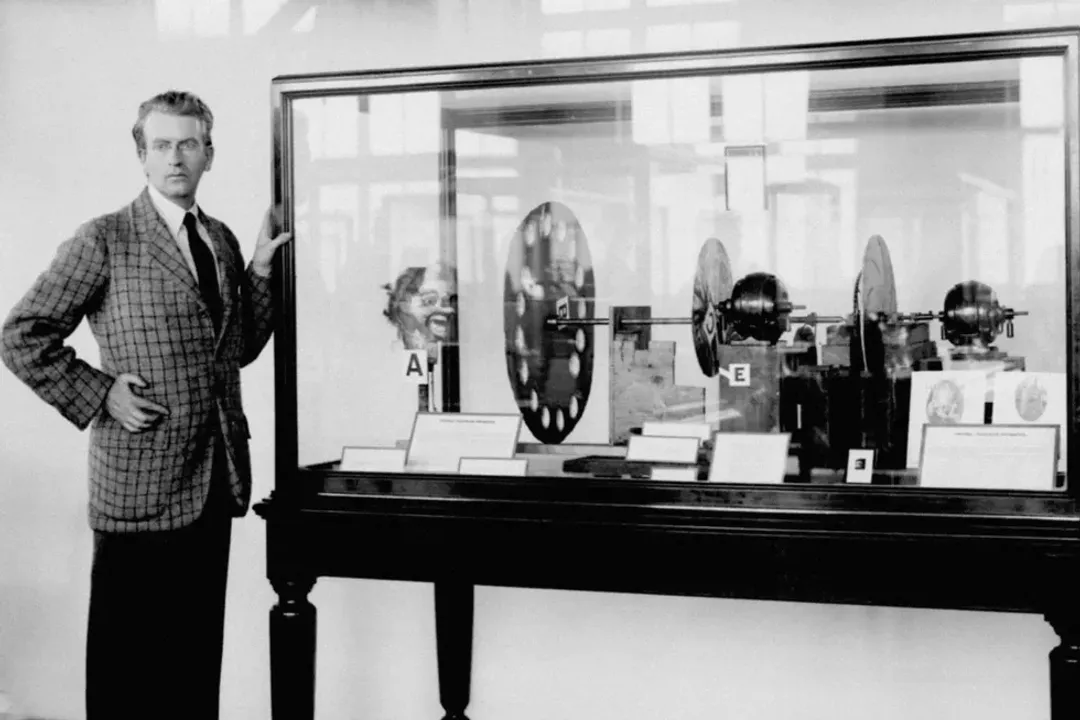
The apparatus most famously associated with John Logie Baird’s initial, groundbreaking success in transmitting moving images to an audience was called the Televisor. [5][7] This machine was not a sleek, modern screen but a temperamental, entirely mechanical device that signaled the very beginning of what we now recognize as television. [5][6] Baird, a tenacious Scottish inventor, managed to pull recognizable moving pictures out of the realm of theoretical physics and place them in front of a skeptical public, relying on spinning parts rather than the vacuum tubes that would soon define the medium. [1][5]
# Mechanical Core
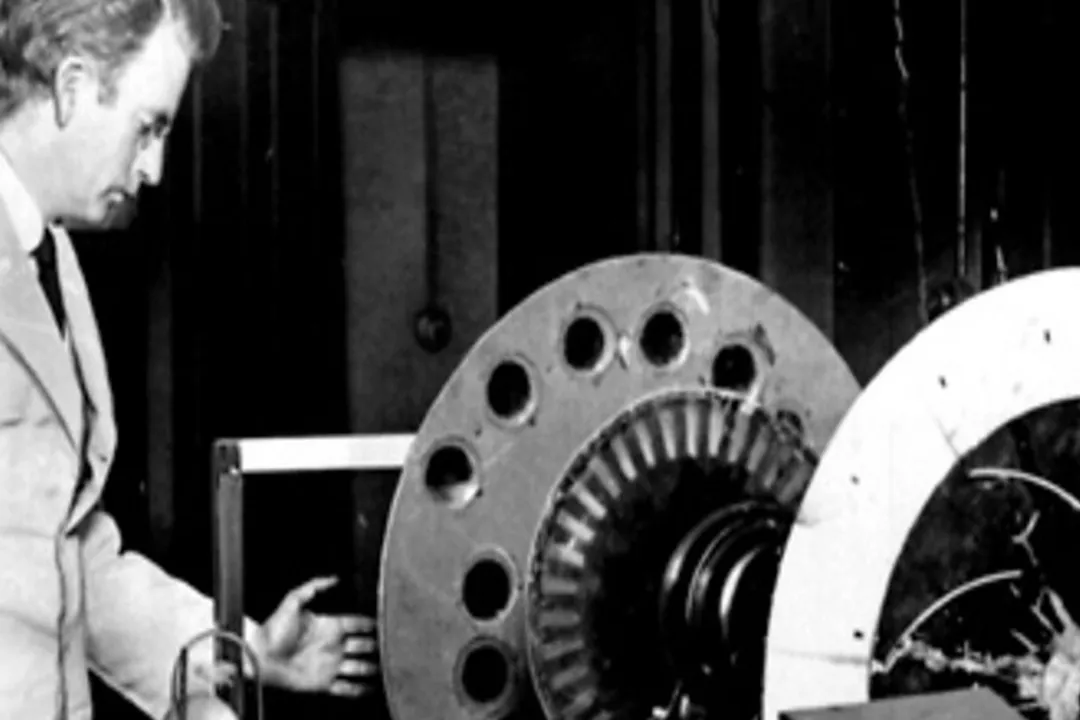
The genius—and the limitation—of Baird’s early system lay in its reliance on the Nipkow disk. [1][5] Patented decades earlier by Paul Nipkow, this spinning disk featured a spiral arrangement of small holes. Baird adapted this concept to serve as both the image scanner at the transmitting end and the display element at the receiving end. [5]
Imagine the process: a scene was focused onto this spinning disk. As the disk rotated, each hole momentarily captured a tiny vertical slice of the image, scanning it across a photoelectric cell (which converted light into electrical signals) or, conversely, sweeping a light source across a screen to recreate the image line by line. [1] The speed of rotation was absolutely critical. The faster the disk spun, the more lines could be scanned, leading to a clearer, less flickering picture, but this also placed immense strain on the motor mechanisms and increased the complexity of the required synchronization. [1]
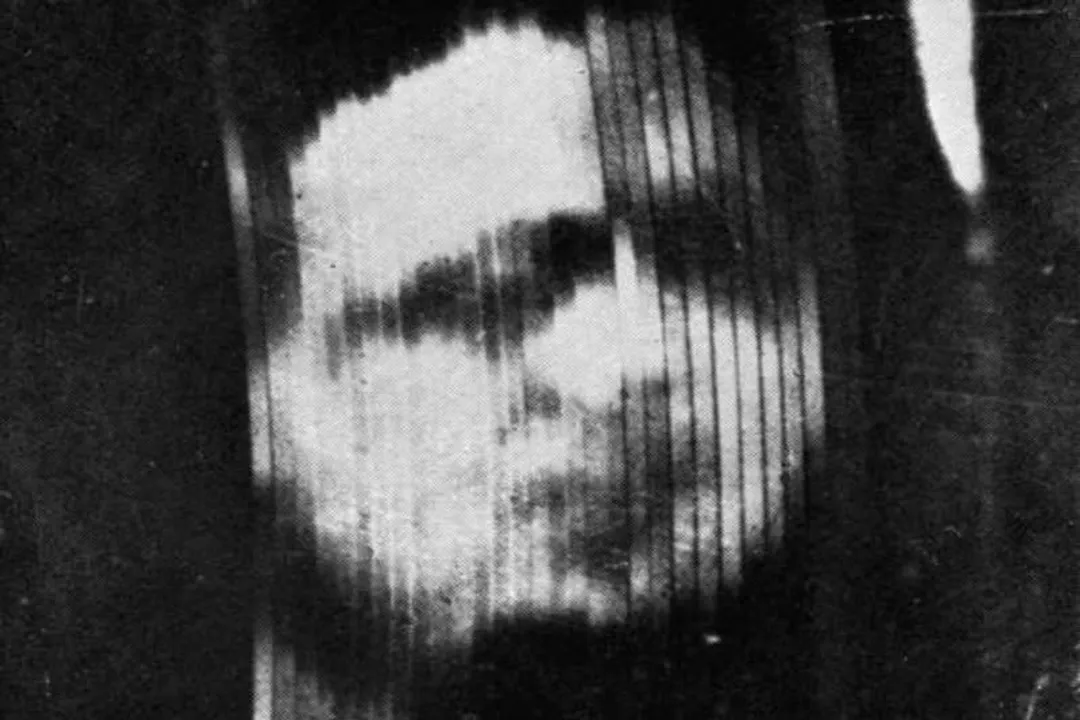
The earliest public display of what Baird termed true television—moving images with variations in tone, not just silhouettes—occurred in London in 1926. [1][9] While the images worked, the visual result was primitive by today’s standards. Early viewers saw pictures measuring perhaps only two inches square, displaying just 30 lines of resolution. [1][9] The experience was more akin to watching a faint, flickering shadow play than watching a modern broadcast, yet it proved the concept was viable. [1]
# Naming the Instrument
The name Televisor was a descriptive and practical choice for the time. [5][7] It neatly combined the prefix "tele" (meaning far) with "visor" (a viewer), clearly communicating the device's function as a distant viewing instrument. This contrasts with later electronic television sets, which often took their names from the electronic technology they employed, such as the Cathode Ray Tube (CRT). Baird’s naming emphasized the outcome—seeing far away—rather than the method of achieving that vision. [5] When he demonstrated this system to the press and members of the Royal Institution on January 26, 1926, the term Baird Televisor system was in use, establishing the brand identity of his invention. [5]
While we now associate "television" with the electronic standard that eventually prevailed, Baird’s contribution was establishing the concept of continuous electronic image transmission, even if his execution remained mechanical. [6]
While we now associate "television" with the electronic standard that eventually prevailed, Baird’s contribution was establishing the concept of continuous electronic image transmission, even if his execution remained mechanical. [6]
# Milestones and Progression
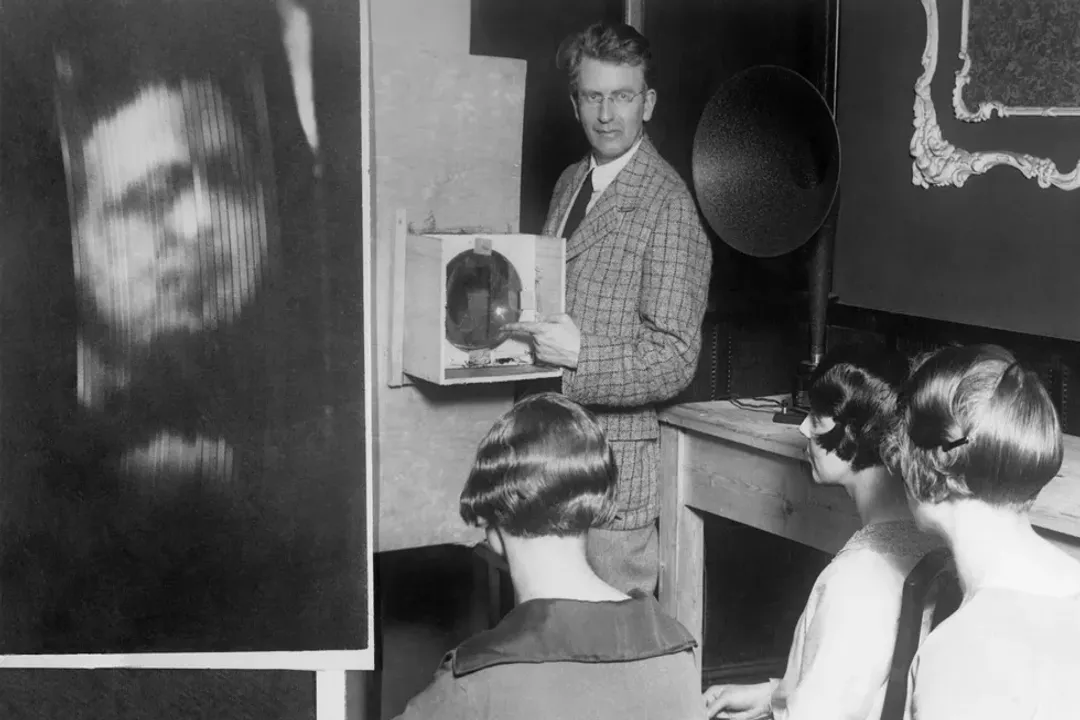
Baird’s path to the Televisor demonstration was marked by iterative improvements throughout the early 1920s. [9] Initially, his experiments yielded only vague, flickering shadows. [9] A significant early achievement came in 1925, where he successfully managed to transmit the first recognizable moving silhouette images, demonstrating movement across a receiver screen for the first time. [9]
The real technological leap, however, was achieving tonal representation. On February 3, 1926, Baird presented moving images that contained not just black and white but also gradations of gray—known as half-tone images—to an audience that included reporters from The Times. [1][9] This shift from pure silhouette to tonal variation is what cemented the demonstration as the birth of recognizable television. [1]
It is worth noting how Baird’s vision spanned continents, albeit slowly. His technology provided the basis for international adoption; for instance, the system was demonstrated publicly in France, where the device shown was referred to as the Cinémathèque française version of the Baird apparatus. [7] This international exposure confirmed the excitement surrounding the mechanical scanning method, even as its inherent limitations became apparent. [7]
# The Mechanical Barrier
The ultimate challenge faced by the Televisor and all subsequent mechanical television systems was physics itself. [1] The ability to create a sharp, flicker-free picture depended entirely on how quickly the disk could spin and how finely it could be machined. To increase the number of scan lines—and thus picture detail—the disk’s rotational speed had to increase proportionally. [1]
To understand this engineering challenge from a practical standpoint, consider the sheer rotational demands. If Baird aimed for a 60-line picture, the disk might need to spin at several hundred revolutions per minute (RPM). Increasing this to, say, 120 lines to approach better quality required a much more powerful, finely balanced motor, increasing cost and reducing reliability for consumer use. [1] This mechanical bottleneck created a hard ceiling on image quality that electronic scanning methods could bypass.
When we look back at the Televisor, its most significant weakness was that it was a system built around motion constrained by mass. Unlike an electron beam, which can change direction near-instantaneously across a vacuum, a physical piece of metal with holes must obey the laws of inertia. This trade-off between picture fidelity and rotational speed is the main reason why mechanical television remained a demonstration curiosity rather than the standard for mass communication.

# The Shift to Electronics
While Baird was refining his mechanical Televisor, inventors elsewhere, notably Philo T. Farnsworth and Vladimir Zworykin in the United States, were pursuing entirely electronic solutions. [6] Electronic television used the cathode-ray tube (CRT), allowing an electron beam to scan the image area almost instantaneously, offering vastly superior frame rates, resolution potential, and picture stability. [6]
This difference was stark. Where Baird's machine was characterized by visible spinning disks and mechanical linkages, the electronic systems were characterized by glass tubes and invisible beams of energy. By the mid-1930s, the superiority of the electronic method became undeniable, particularly as broadcast demands grew. [6] Even Baird himself eventually had to pivot, working on higher-definition mechanical systems before ultimately accepting the electronic standard for practical broadcasting in the UK. [9] The BBC’s decision to launch its regular high-definition service in 1936 signaled the end of the mechanical era, with the electronic system being adopted as the standard. [9] Baird’s company was later acquired, finalizing the transition away from the Televisor technology toward fully electronic receivers. [9]
The legacy of Baird’s first television, the Televisor, is therefore twofold: it was the machine that proved television was possible, overcoming initial scientific skepticism, but it was also a technological dead end whose very mechanics dictated its eventual replacement by the faster, more flexible electronic methods. [6] It remains an extraordinary artifact demonstrating innovation born from necessity and persistence in the early 20th century. [1][5]
Related Questions
#Citations
John Logie Baird - Wikipedia
First image of a televised person ever sent was in 1926, when John ...
John Logie Baird's Televisor: An Early Mechanical TV - IEEE Spectrum
Who Invented Television: History of TV - TCL
John Logie Baird (1888 - 1946) - Early Television Museum
John Logie Baird's Televisor - Google Arts & Culture
John Logie Baird Facts For Kids | AstroSafe Search - DIY.ORG
Early experiments: 1924-1929 - BBC