What was the first projector called?
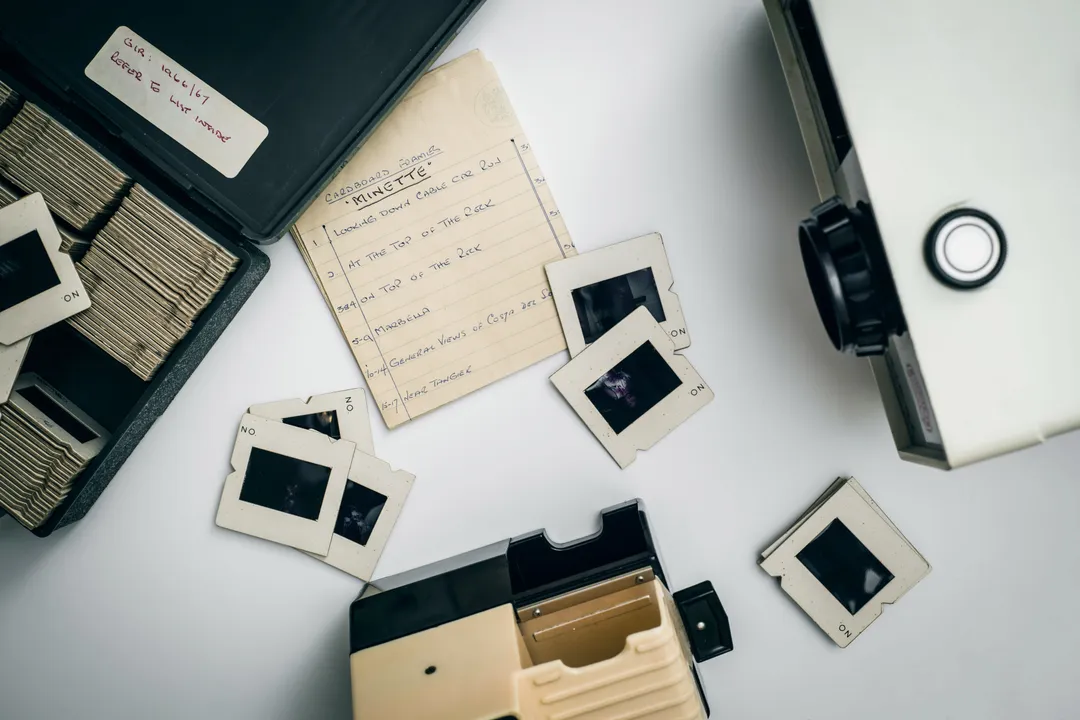
The simple question of what the very first projector was called does not yield a single, neat answer; rather, it uncovers a fascinating race among inventors at the close of the 19th century who were all trying to bring moving images to the public eye. Before the era of the motion picture machine, the foundation for visual display was already laid by much older optical devices. One significant ancestor to modern projection technology is the Magic Lantern, a device that had been around for centuries and could project still images, often illuminated by simple light sources. While impressive for its time, the Magic Lantern lacked the mechanism necessary to display a sequence of images rapidly enough to create the illusion of continuous motion that defines cinema. The evolution toward true cinema projection involved transitioning from static images to dynamic narratives, a shift that required mechanical ingenuity concerning film handling and light intensity.
# Precursors
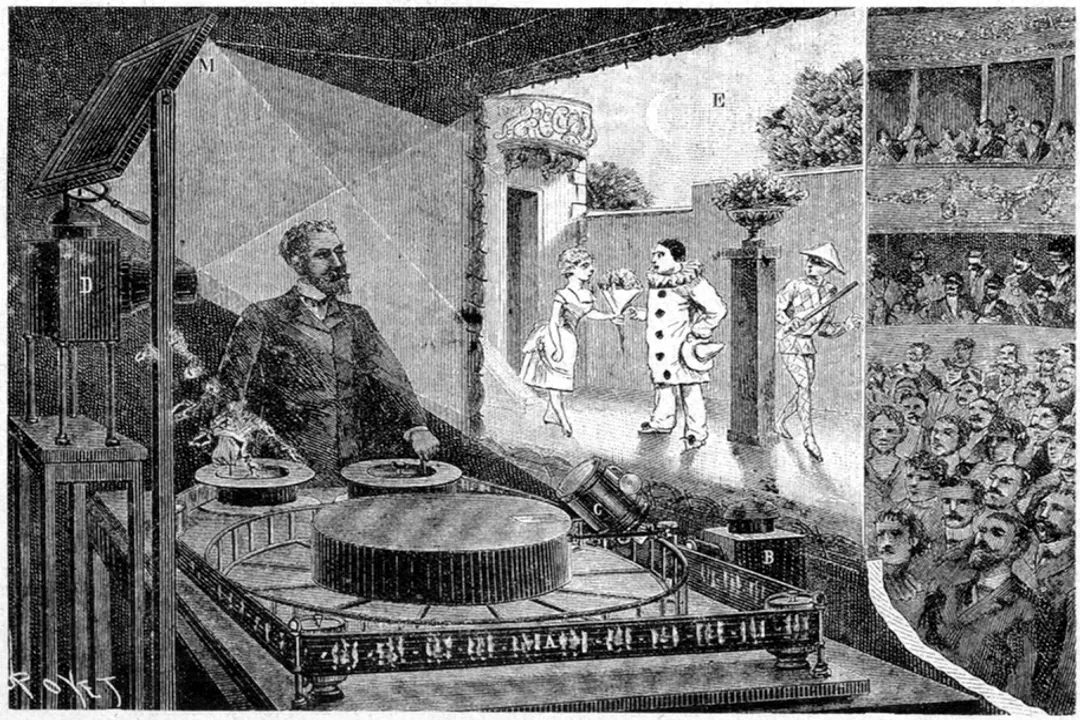
The concept of projecting light through lenses to display an image is ancient, but the real development toward film projection centered on manipulating flexible strips of celluloid photographs. Before inventors settled on the standard film gauge and mechanism, there were several experimental devices. The need was clear: spectators wanted to see the moving pictures being captured by devices like the Kinetoscope—a peephole device—on a much larger scale, visible to an entire audience simultaneously. This desire fueled the transition from individual viewing experiences to shared public spectacles.
# Latham Demonstration
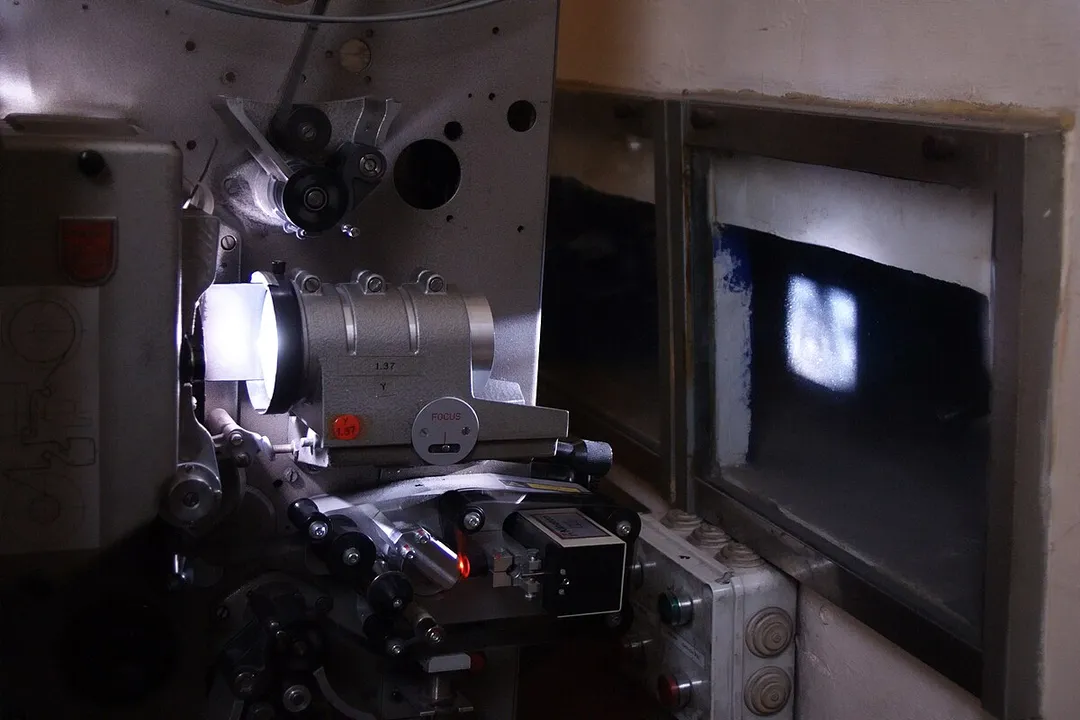
One of the earliest documented public demonstrations of a projector showing moving pictures involved Woodville Latham and his sons, Otway and Gray. Their demonstration took place in the United States on April 21, 1895. This presentation, which occurred at the Elias Howe Machine Shop in New York, showcased a device that marked a crucial step forward in projection mechanics.
What made the Latham device particularly notable, distinguishing it from earlier, simple projections, was its handling of the film strip. To maintain continuous movement without tearing the film against the intermittent gate mechanism required for projection, Latham’s system incorporated a film loop. This loop allowed the film to move into and out of the projector's light path smoothly, reducing strain and enabling longer viewing times than stop-motion mechanical processes might have allowed otherwise. This ability to manage continuous motion was a mechanical insight that separated true motion picture projection from mere sequential slide showing. However, while the Lathams achieved a demonstration first, their apparatus did not immediately translate into widespread commercial success or adoption in the way another system soon would.
# Edison Vitascope
When most people ask about the first projector, they are often thinking of the device that successfully launched the motion picture exhibition industry in America: the Vitascope. This machine is closely associated with the giant of innovation, Thomas Alva Edison.
The Vitascope itself was not entirely original in concept; it was essentially an adaptation or modification of Edison’s existing motion picture technology, likely based on the Kinetograph camera's principles. Edison’s team, particularly William Kennedy Dickson, had already established the basis for filming with the Kinetoscope, but projecting those films required a different apparatus. Edison acquired or adapted the projection technology, often citing the work of others like the Lumière brothers or, in the context of its American debut, integrating superior projection methods into his marketing structure.
# Commercial Debut
The true launch point for cinema projection in the United States, which cemented a machine's place in history, was the Vitascope's premiere. On April 23, 1896, the Vitascope was publicly shown at Koster & Bial's Music Hall in New York City. This event is often cited as the first successful public projection of motion pictures in the country. The impact was immediate and profound, proving that projected moving images were a viable form of large-scale entertainment. Edison’s commercial backing and showmanship turned a technical demonstration into a cultural phenomenon.
| Projector/Device | Key Date (US Context) | Inventor Association | Primary Significance |
|---|---|---|---|
| Latham's Device | April 21, 1895 | Woodville Latham & sons | Early demonstration using a film loop system |
| Vitascope | April 23, 1896 | Thomas Edison | First major commercial public projection |
| Magic Lantern | Centuries Prior | Various | Optical ancestor; projected still images |
Understanding the sequence of these events highlights an important distinction in technological history: the difference between the first technical proof of concept and the first commercially viable presentation. The Lathams provided the earlier demonstration of projected motion, but it was Edison’s Vitascope, backed by industrial scale, that established the projector as a cultural fixture. One might consider the Lathams’ device the first functional motion picture projector based on its early 1895 demonstration, but the Vitascope was undoubtedly the first marketed and widely adopted one in the US, leading to its common historical recognition.

# Technological Evolution
The devices emerging in the late 1890s, like the Vitascope and the similar Cinématographe developed by the Lumière brothers in France, shared common engineering challenges. They all needed a reliable way to feed film past an intense light source and a lens while stopping momentarily for each frame to be projected clearly before whipping the next one into place—a technique known as intermittent movement. The Vitascope, being a robust projector, often used a larger film format, which contributed to its bright, clear image quality on screen, setting a high bar for early cinematic visibility.
The general family of devices that followed these early pioneers are known broadly as movie projectors, a term that encompasses the subsequent innovations that refined shutter timing, lamp brightness, and cooling systems. As the technology matured, subsequent designs often streamlined the complexity inherited from the early experimental models, moving away from adaptations and toward purpose-built cinematic machines. Looking back from the perspective of modern digital projection, where light is modulated electronically rather than through mechanical shutters, it is remarkable that these early mechanical beasts could generate the illusion of life on a screen using only oil lamps or early arc lights. The very first projector, whatever its name, represents that critical tipping point where light, chemistry, and mechanics combined to create a new art form visible to the masses.
# Defining the First
To definitively name the first projector requires defining what criteria must be met. If "first" means the earliest known machine to project sequential, moving images before a live audience, the demonstration by Woodville Latham and his sons in April 1895 holds that distinction in the United States. If "first" implies the machine that successfully initiated the public cinema business and achieved immediate, broad recognition, then Edison's Vitascope, debuting commercially in April 1896, is the answer frequently cited in American historical accounts.
It is worth noting that innovation often happens in parallel. While Edison was perfecting the Vitascope, other inventors globally were working on similar apparatuses, such as the aforementioned Lumière Cinématographe, which was also operating successfully in Europe around the same time frame. The landscape was fertile, and multiple solutions to the same technical problem—projecting motion—were being developed almost simultaneously, making a singular "inventor" claim difficult. The Vitascope name stuck partly because of Edison’s unmatched brand recognition and his ability to package and market the experience effectively to theaters and music halls across the country.
The transition from the static image of the Magic Lantern to the dynamic capabilities of the Lathams' or Edison's device was not a small iterative step; it required solving the mechanical problem of film transport without burning the film or ripping the fragile early stock. That solution, whether it was the Latham loop or the later claw mechanisms, is arguably the true invention that created the projector as we understand it—a machine designed specifically for cinema. Therefore, while the Vitascope commercialized the experience, the necessary mechanical breakthroughs that allowed for sustained projection were present in earlier experimental models like the one demonstrated by the Lathams a year prior.
Related Questions
#Citations
Vitascope - Wikipedia
Timeline of Projection: When Were Projectors Invented?
First movie projector demonstrated in United States | April 21, 1895
Shift to Projectors and the Vitoscope | History of Edison Motion ...
The History of Projection Technology - Lightform
On April 21, 1895, Woodville Latham and his sons, Otway and Gray ...
Who Invented the Projector? - FUDONI
The Evolution of Projectors: From Magic Lanterns to Cutting-Edge ...
The Invention History and Advantages of Projector: Big to Small Size