How did the medical infrastructure evolve during the First World War compared to the Civil War model?
Answer
Casualty Clearing Stations took on major surgical roles while Advance Dressing Stations served as front-line points
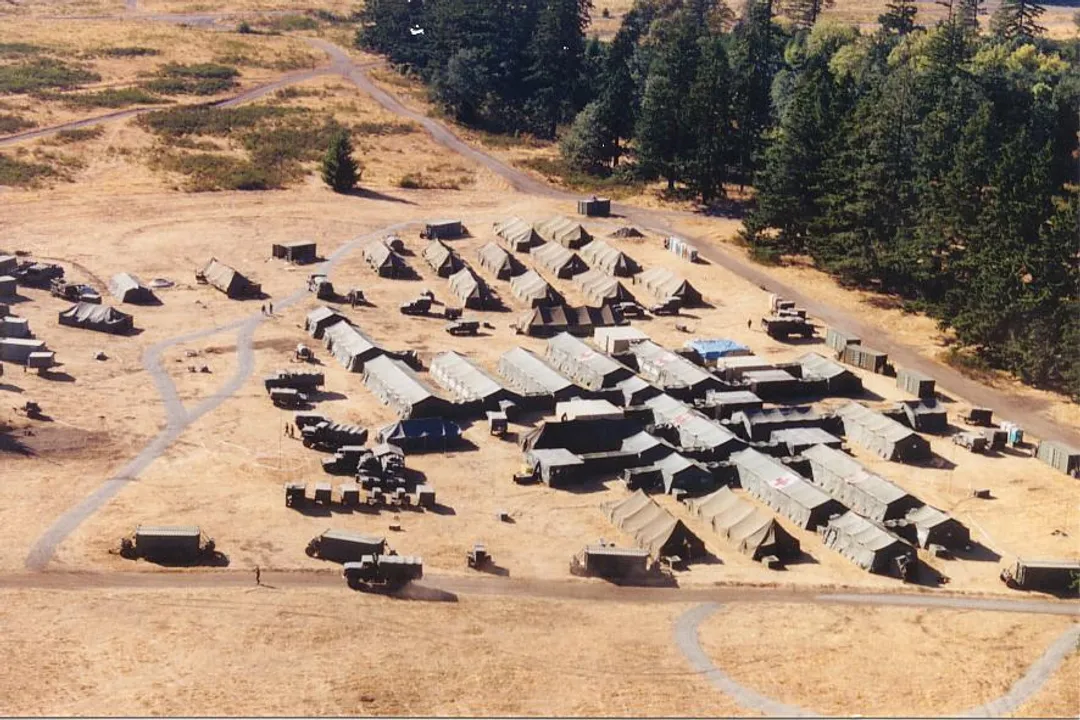
As combat became more destructive and complex during the First World War, the medical system became increasingly layered to handle diverse injuries like blast trauma and nerve damage. The system expanded beyond the basic three-tier structure used previously. Smaller, agile units known as Advance Dressing Stations assumed the duties of the original regimental aid stations, while larger, more specialized Casualty Clearing Stations became the primary centers for major surgical interventions, reflecting a trend toward greater specialization in response to more intense battlefield trauma.
Related Questions
What specific administrative role did Major Jonathan Letterman assume for the Army of the Potomac in 1862?Within the three-tiered system established by Major Jonathan Letterman, what was the primary function of Regimental Aid Stations?Why is the transition to a formal field hospital system primarily regarded as a logistical victory rather than a medical one?What major logistical deficiency during the American Civil War created significant preventable mortality?How did triage practices in American Civil War field hospitals often differ from the priorities of modern battlefield EMS?In Major Jonathan Letterman's system, what distinguished Division Field Hospitals from other medical facilities?How did the medical infrastructure evolve during the First World War compared to the Civil War model?Why was the strategic physical separation of the division field hospital from the immediate danger zone essential?What specific improvement did Major Jonathan Letterman introduce regarding the transport of wounded soldiers?What was the primary purpose of General Hospitals within the standardized tiered system?