Who is the father of knitting?

The lineage of knitting stretches back further than many might expect, rooted deeply in handcraft tradition long before mechanical innovation changed the landscape entirely. While we often search for a single foundational figure, the history of knitting is more accurately described as an evolution of techniques stretching across centuries and continents. [1][2] Evidence of loops being interlocked, a precursor to modern knitting, can be found in Coptic textile fragments dating back to the 11th century in Egypt and the Middle East. [1] These early forms demonstrate a foundational understanding of yarn manipulation that persisted, often silently, as a domestic craft practiced by men and women alike across various cultures. [1][3]
# Ancient Craft
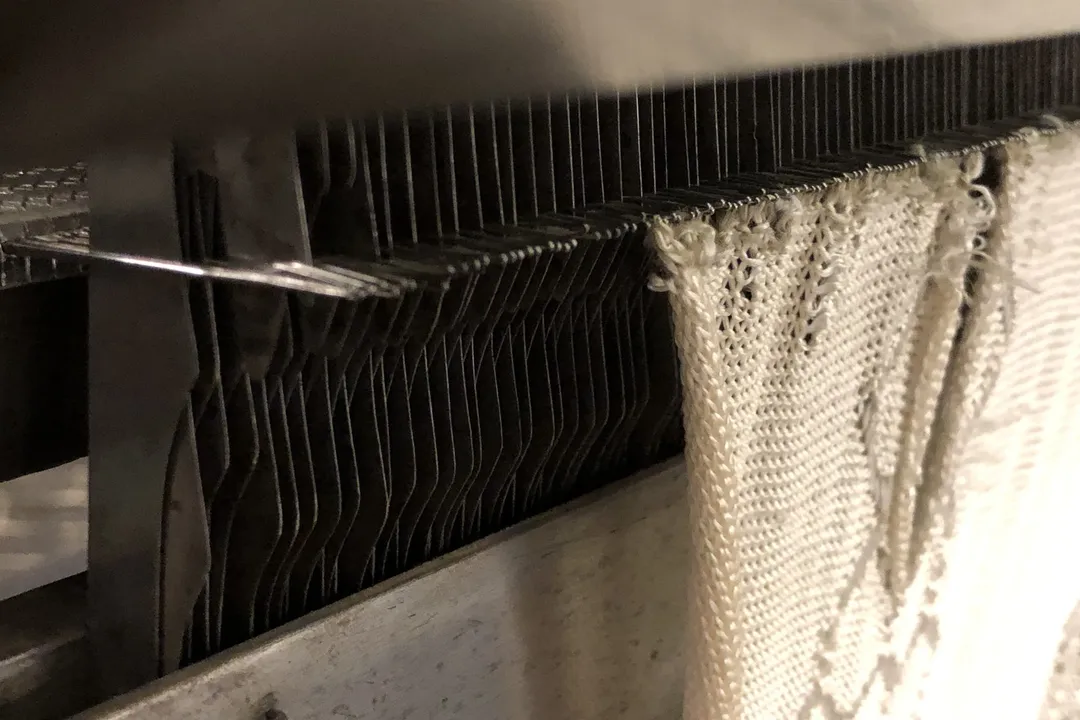
For centuries, the creation of knitted fabric remained an intimate, manual process. There was no single "father" because the practice grew organically from necessity and artistry across different populations. [1] Knitting served practical purposes, allowing for the creation of garments like socks and caps using just needles and yarn. [2] The skill itself was passed down through oral tradition and practical demonstration, meaning its origins are diffuse rather than traceable to a single moment of revelation. [1] This slow, deliberate development contrasts sharply with the sudden, world-altering event that would later propel knitting into the industrial age, leading many historians to focus their attention on that specific moment of mechanization rather than the craft’s ancient origins. [2]
# Frame Inventor
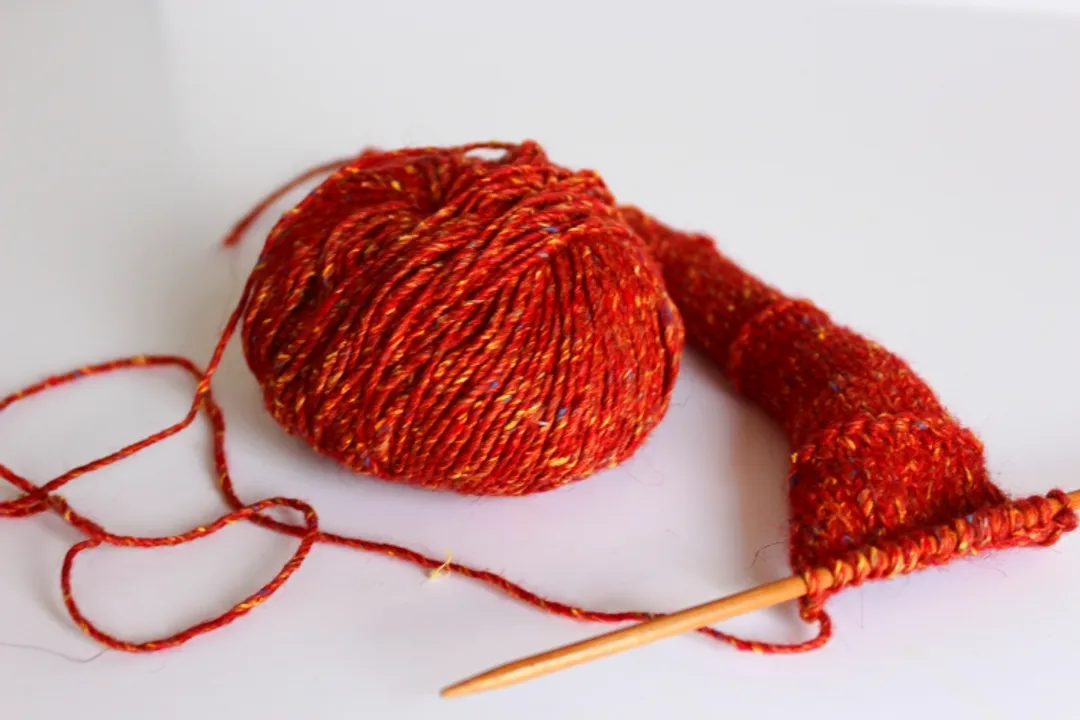
When the search for the "father of knitting" narrows, the focus shifts almost entirely to the person credited with developing the machine that mechanized the process: William Lee. [3][6][7] Lee was an Anglican clergyman from Calverton, Nottinghamshire, England. [6][7] His breakthrough invention, completed around 1589, was the stocking frame, the first successful machine capable of producing knitted fabric mechanically. [3][6][8] This device used a series of needles to imitate the action of hand-knitting stitches, providing a means to produce hose and other garments at speeds previously unimaginable. [8][5]
Lee’s innovation arrived at a moment when hand-knitting was already an established trade in England, but it was labor-intensive, limiting the volume and affordability of knitted goods. [1][3] The frame was a significant technological leap, fundamentally transforming a craft into an industry. [5] It is this shift from craft to reproducible manufacture that solidifies Lee’s reputation as the father of industrial knitting, even if he wasn't the first person to loop yarn. [3][6]

# Royal Rejection
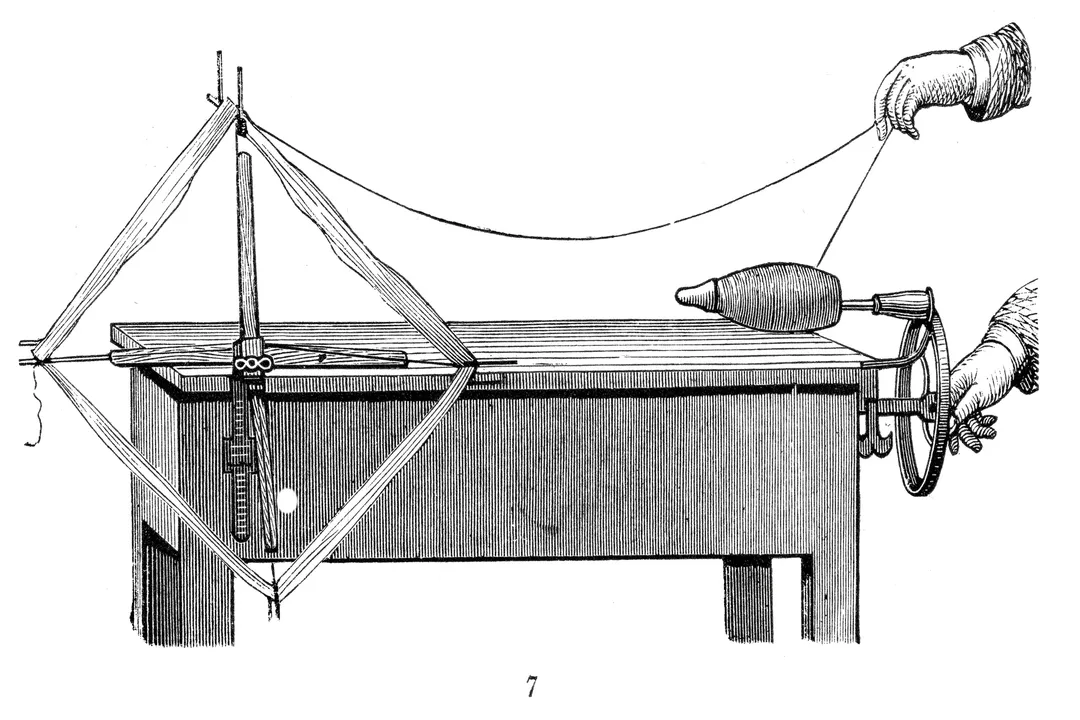
Despite recognizing the incredible potential of his invention, William Lee faced immediate and harsh resistance from the established powers of the time. [6][7] Lee sought a patent from Queen Elizabeth I to protect his invention, but his petition was denied. [6][7] The exact reasons for the rejection are debated, but the primary concern was economic security. [8] The Queen and her advisors feared that the stocking frame would put the many existing hand knitters out of work, thus creating widespread unemployment and social unrest. [6][7][8]
This failure to gain royal approval forced Lee to take his revolutionary technology abroad. [7] Around 1605, he traveled to France, where he found a more welcoming reception and established a framework knitting industry near Rouen. [7] Tragically, Lee did not live to see his invention take root permanently in England; he died in France around 1614. [7] His life illustrates a common historical pattern: the inventor often suffers while the industry that follows reaps the rewards. [6]
# Industrial Shift
Even after Lee’s death, the seeds of mechanized knitting had been sown. [7] His nephew, Thomas Garner, reportedly brought the designs back to England, setting up frames in London and later in the East Midlands. [7] This geographical concentration is a critical component of the story. The Nottingham area, specifically, became the epicenter for framework knitting, establishing a regional specialization that persisted for centuries. [3][5] The introduction of the frame created a new class of specialized laborers—the framework knitters—whose skills were centered around operating and maintaining the machinery. [9]
The initial stocking frames, while revolutionary, were essentially single-purpose machines designed primarily for producing hose. The true industrial expansion came later as these frames were adapted and improved for wider textile production, but the essential looping mechanism established by Lee remained the foundation. [5][9]
Considering the slow-moving evolution of textile arts prior to the 16th century, Lee’s contribution stands out not just for its technical brilliance but for its speed of adoption once the initial political hurdle was cleared. [1] While hand knitting continued—and still continues—as a respected craft, the economic reality of textiles was forever altered. It is worth noting that many early framework knitting centers, particularly in England, required significant cooperative effort; while Lee provided the blueprint, the growth of towns like Nottingham relied on local capital and the clustering of skilled artisans to support the new mechanized workshops, creating an early version of an industrial ecosystem around his invention. [9]

# Defining the Father
If we must assign the title "father of knitting" to an individual, William Lee earns it based on the weight of his impact on the industry and the scale of production, rather than the very first looped stitch. [3][6] He solved the problem of mass production for knitted goods when demand began to outstrip manual capacity. [5] A helpful way to frame his legacy is to view it through an economic lens: hand knitting is the craft, while machine knitting—the precursor to modern automated textile creation—is the industry, and Lee is its undeniable progenitor. [3][5]
The complexity arises because the word "knitting" itself covers both endeavors. For the contemporary crafter, the "father" might seem irrelevant compared to the lineage of patterns passed down through generations of home knitters. [1] However, for the history of textile manufacturing, supply chains, and industrial geography, William Lee is the figure whose singular design dictated the next several centuries of production methods. [8][9]
To truly appreciate the magnitude of Lee's legacy, one can look at the development timeline. Prior to 1589, a craftsman might produce a few pairs of stockings in a week; after the frame's successful implementation, production capacity increased exponentially, even if the initial output was concentrated in specialized centers. [3][5] If you were to compare the time it takes a skilled hand-knitter to create one yard of stocking fabric versus the output of an early, optimized framework shop, the ratio would likely exceed 100 to 1, demonstrating that Lee didn't just invent a tool; he invented volume for this sector of the textile world. [9]
Ultimately, the enduring story is one of necessary disruption. While ancient artisans laid the groundwork with simple looping techniques, William Lee provided the mechanical key that unlocked the door to industrial textile creation, earning him the title associated with the mechanized art form. [6][7]
Related Questions
#Citations
Unravelling the Past: A Brief History of Knitting - John Smedley
Threaded Through Time: A History of Knitting
The surprisingly manly history of knitting - The Crafty Gentleman
Handframe Knitting - G.H.Hurt & Son
The Development of Hosiery Knitting - Textiles History
William Lee - Christ's College - Alumni and Friends
William Lee (1563 - 1614) - Knitting Together
William Lee | Biography, Knitting Machine, & Facts | Britannica
The Knitting Frame - Strutts North Mill Belper