Who invented the punch card and when?
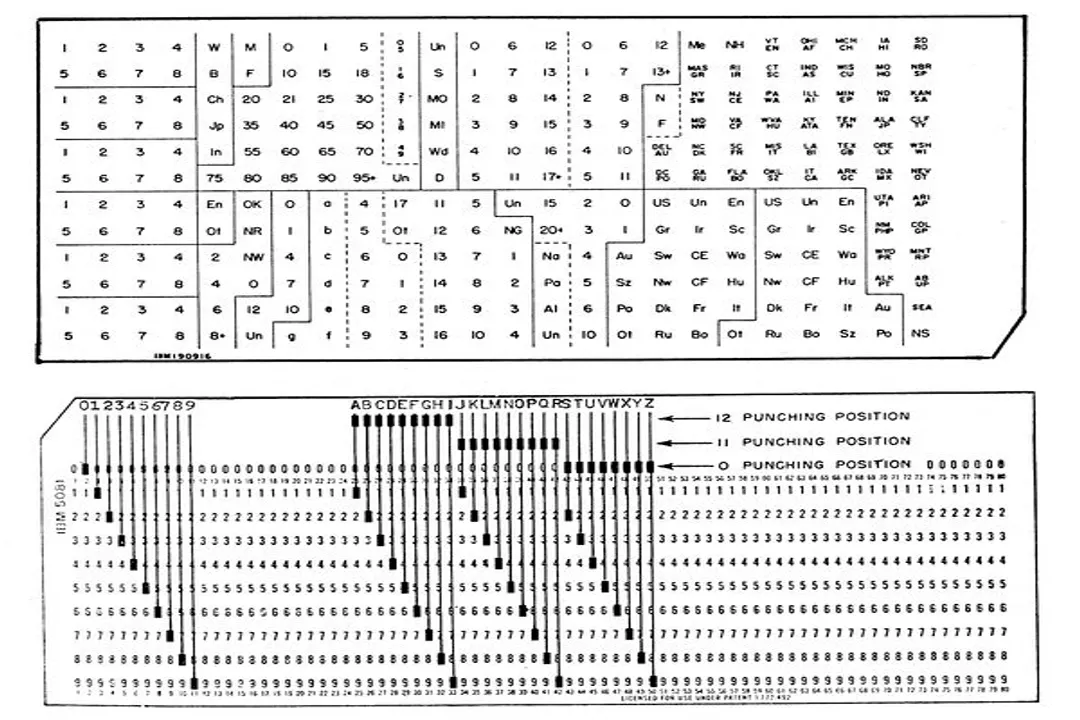
The concept of using a perforated card to store information predates electronic computation by many decades, finding its roots in textile manufacturing. While many people associate the punch card strictly with early data processing and computers, the physical mechanism of using holes in paper or card stock to dictate an action was established much earlier, primarily to automate the creation of complex woven patterns. [1][7]
# Loom Patterns
The earliest known predecessors to the data card emerged in the early 18th century, designed for the Jacquard loom. In 1725, the concept of using a series of punched cards to control the lifting of warp threads on a loom was introduced. [6] This idea was later refined by Joseph Marie Jacquard around 1801. [6][7] Jacquard's system allowed weavers to reproduce intricate patterns automatically and consistently, using the sequence of holes on the cards as the machine's instructions. [6] This mechanical memory was revolutionary for the textile industry, proving the viability of stored program control, even if the "program" was merely a design specification rather than arithmetic data. [1]
# Census Bottleneck
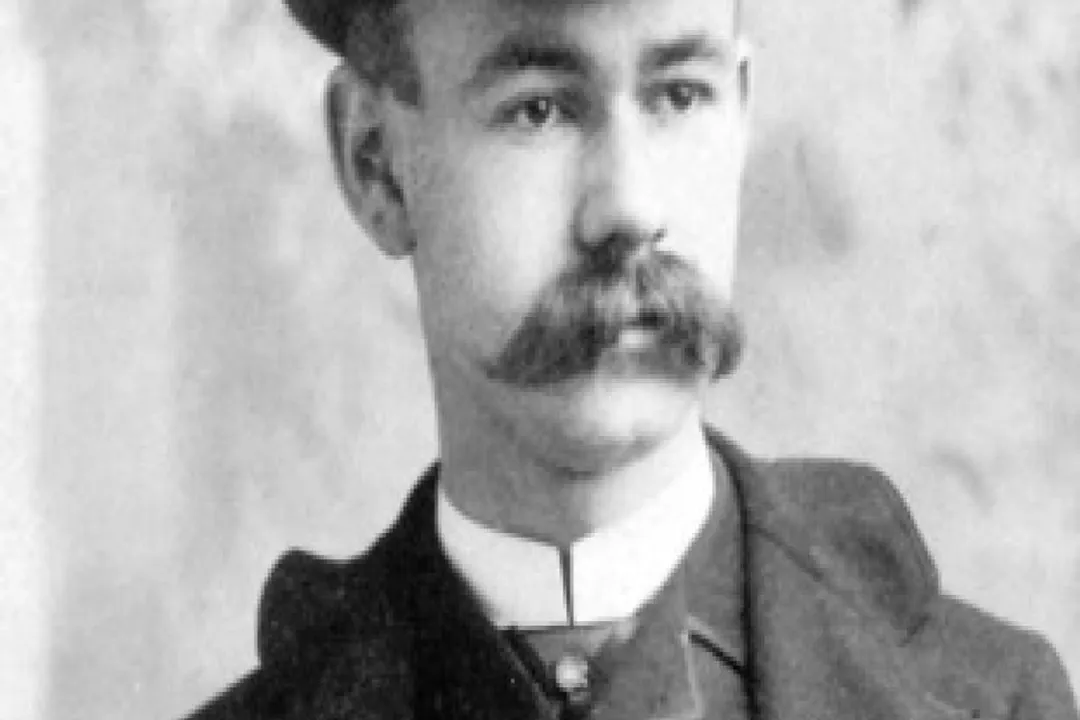
The critical transition from mechanical pattern control to data tabulation is attributed to Herman Hollerith. [2][6][9] Hollerith, born in 1860, was working during a period when the United States Census was facing a major crisis. [4][9] The data collection methods of the time were slow, cumbersome, and required massive amounts of manual calculation. [6] The 1880 Census took nearly eight years to compile and process, leading to fears that the 1890 count would take over a decade, potentially meaning the data would be obsolete before it was even finished. [6] This impending administrative failure spurred the need for a mechanized solution. [6]
# Electromechanical System
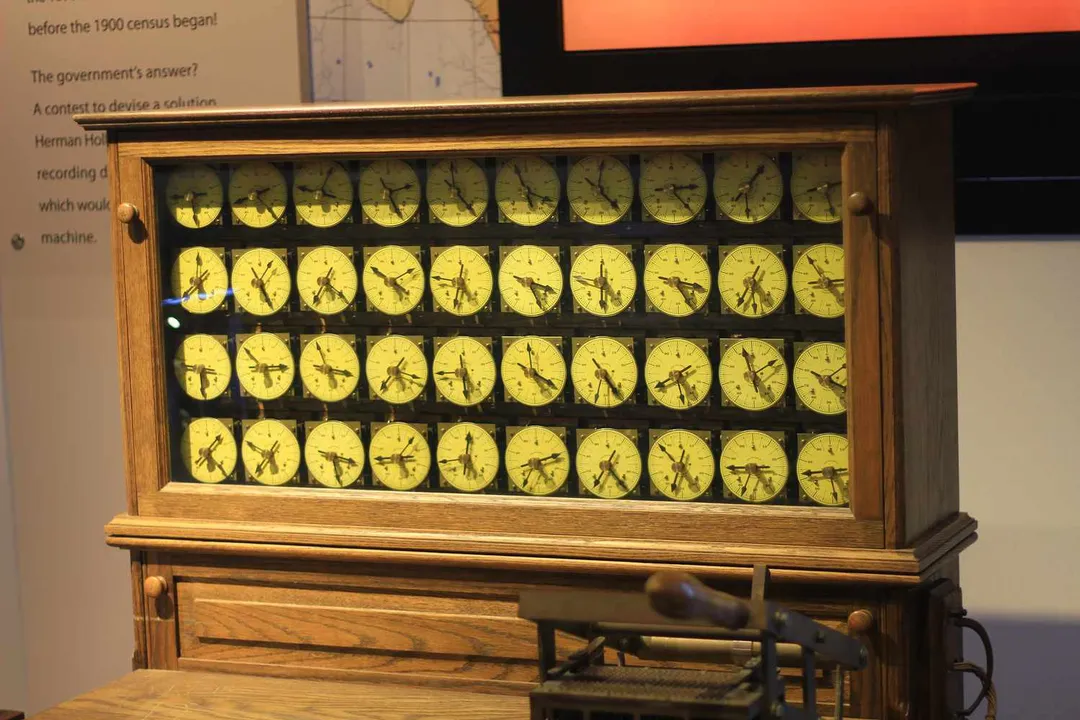
Hollerith adapted the existing punch card concept, but crucially, he paired it with electricity to achieve tabulation rather than just mechanical actuation. [9] He developed an electromechanical tabulating machine designed specifically to process the data recorded on these new punched cards. [2][4] The system involved recording demographic information, like age, gender, and location, by punching holes into standardized cards. [3][4] The actual innovation wasn't just the card itself—which borrowed from the loom design—but the apparatus that read the card: an electrical circuit that was completed when a reader made contact through a hole in the card. [9] This contact activated relays or counters within the tabulating machine. [9]
The specific development of this system for large-scale data handling took place through the 1880s. [8] By 1889, Hollerith had perfected his approach, presenting his system for the upcoming census. [9] The cards used were relatively robust, and the machines included both electrical tabulators and sorters to collate the results based on the hole positions. [8]
A remarkable feature of Hollerith’s success, often overlooked when focusing only on the machine, was the standardization of the data input itself. To make the machines work universally across all census collectors, the exact location and meaning of every hole on the card had to be agreed upon and rigidly followed nationwide. [6] This imposition of a uniform, machine-readable standard onto messy administrative data was perhaps as significant an invention as the hardware itself, setting a precedent for all future automated data handling. [6]
# Speed of Processing
The effectiveness of Hollerith’s invention became immediately clear when applied to the 1890 US Census. [2][3] Where the previous census took approximately seven to eight years for processing, Hollerith’s electromechanical system reduced the compilation time to just over a single year. [6] This dramatic time reduction illustrated the sheer processing capacity unlocked by mechanizing data interpretation. [6] It is worth noting that while the machines did the counting, the initial task of punching the data remained a human, manual effort, meaning the labor shifted from years of tedious arithmetic calculation to an intensive, but shorter-duration, data entry phase. [6]
# Corporate Lineage
Following his success with the Census Bureau, Hollerith moved to formalize his business interests. [2] In 1896, he established the Tabulating Machine Company (TMC). [5] This company aimed to market his tabulating machinery and services to other governments and private businesses needing large-scale data tabulation. [2]
The TMC grew over the following decades and became part of a larger conglomerate. Through mergers and acquisitions—including the Computing-Tabulating-Recording Company (CTR)—this entity eventually evolved into the modern International Business Machines Corporation (IBM). [4] Thus, the foundation of one of the world's most enduring technology companies rests squarely on the development of the electrical punch card system for census tabulation. [4][5]
# Variations and Evolution
The punch card, in its various iterations—from Hollerith's early census cards to the later 80-column cards standard for computer input—served as the dominant method for data entry, storage, and program instruction for decades. [1] The physical size and hole configuration often varied depending on the manufacturer or the specific application, though Hollerith's initial standard was highly influential. [1]
For instance, different industries adopted different hole configurations. While the census work likely used a specific design, later computing applications saw the adoption of cards with 80 columns, where each column represented one character of data. [1] This method allowed programmers to input instructions, variables, and data sets directly into early mainframe computers, such as the IBM 1401, which heavily relied on this technology well into the 1960s. [1]
The evolution from Jacquard's mechanical control to Hollerith's electrical counting demonstrates a key theme in technological progress: repurposing a proven mechanical concept and upgrading it with a new enabling technology—in this case, electricity—to solve a completely different class of problem, shifting from physical automation to information processing. [6][9] The invention, therefore, has dual paternity: Jacquard for the idea of perforated control and Hollerith for the application of that idea to systematic data recording and calculation. [6]
| Inventor/Developer | Primary Application | Approximate Date | Core Mechanism |
|---|---|---|---|
| Jacquard | Textile Weaving/Pattern Control | c. 1801 | Mechanical sequencing |
| Hollerith | US Census Data Tabulation | Late 1880s | Electromechanical reading |
| Later Computer Industry | Program Input/Data Storage | Mid-20th Century | Binary/Character encoding |
Related Questions
#Citations
Punched card - Wikipedia
NIHF Inductee Herman Hollerith Invented the Punch Card Machine
Punch Cards for Data Processing | Smithsonian Institution
Herman Hollerith (1860-1929) - Heinz Nixdorf MuseumsForum
#OTD in 1896, Herman Hollerith founded the Tabulating Machine ...
Douglas W. Jones's punched card index
Herman Hollerith, the Inventor of Computer Punch Cards - ThoughtCo
Early Punched Card Equipment, 1880 - 1951
The story of Herman Hollerith, inventor of the punch card