Who invented the Jacquard card?
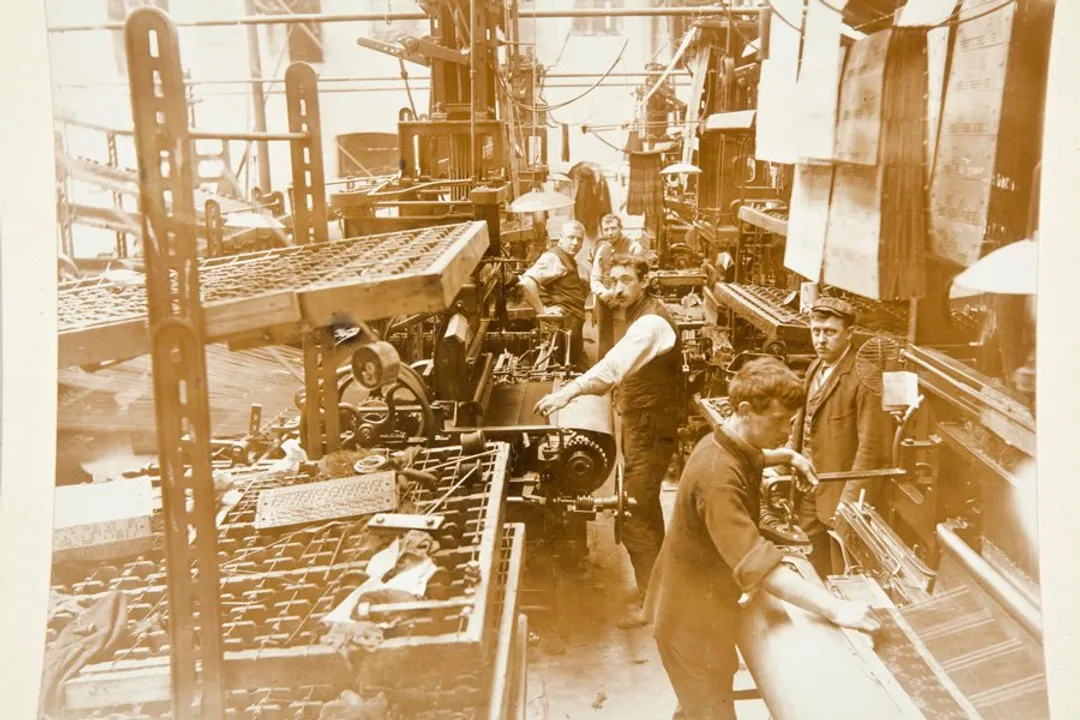
The name Joseph Marie Jacquard is inseparable from the punched card, an invention that profoundly altered the trajectory of automated manufacturing and, perhaps more surprisingly, the foundation of modern information technology. While the concept of using patterns to direct a mechanical process was ancient, Jacquard's innovation provided a practical, re-programmable method for complex production, specifically in the textile industry, around the turn of the 19th century. This system didn't just make weaving faster; it separated the design from the machine, establishing a durable paradigm for digital control.
# Jacquard's Life
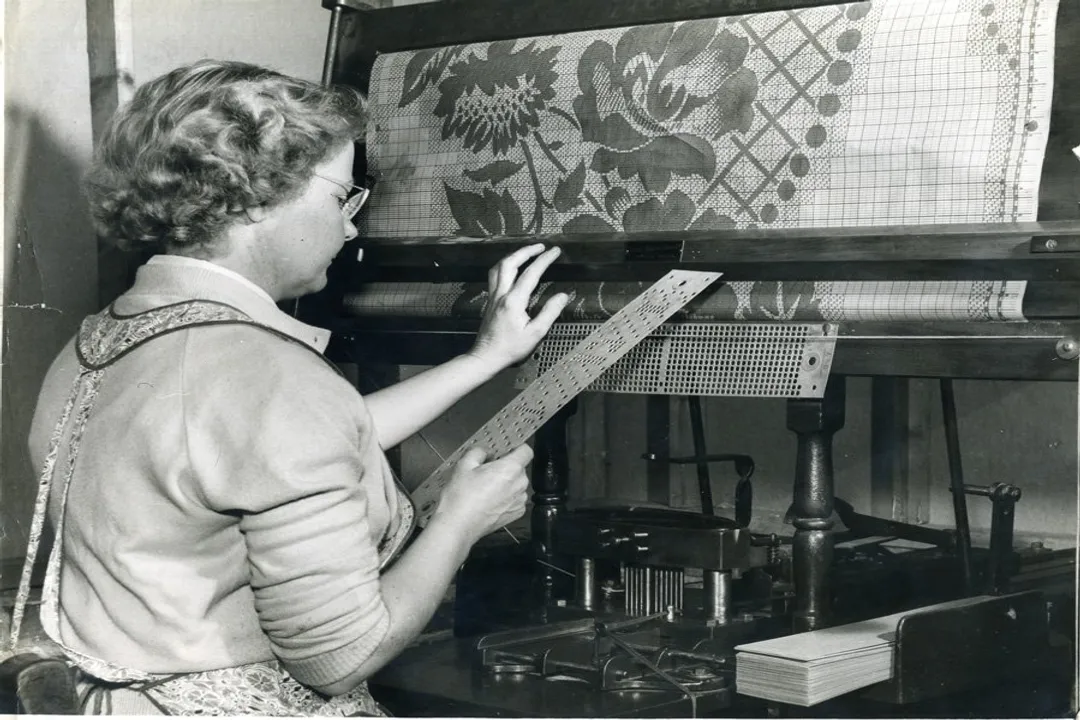
Joseph Marie Jacquard was a French inventor whose life spanned significant social and technological shifts in France, from the mid-18th century into the early 19th. Born in 1752, his background was not initially rooted in high mechanics, yet he possessed an inventive mind that focused on improving efficiency and complexity in production. Before his most famous contribution, Jacquard was already working on mechanical improvements, having developed what was called a "net loom" as early as 1790. This earlier device hinted at his interest in automating intricate patterns, but it was the subsequent loom that truly captured the attention of the industrial world. He passed away in 1834, long enough to see his invention begin to change the landscape of French silk production.
# Loom Mechanics
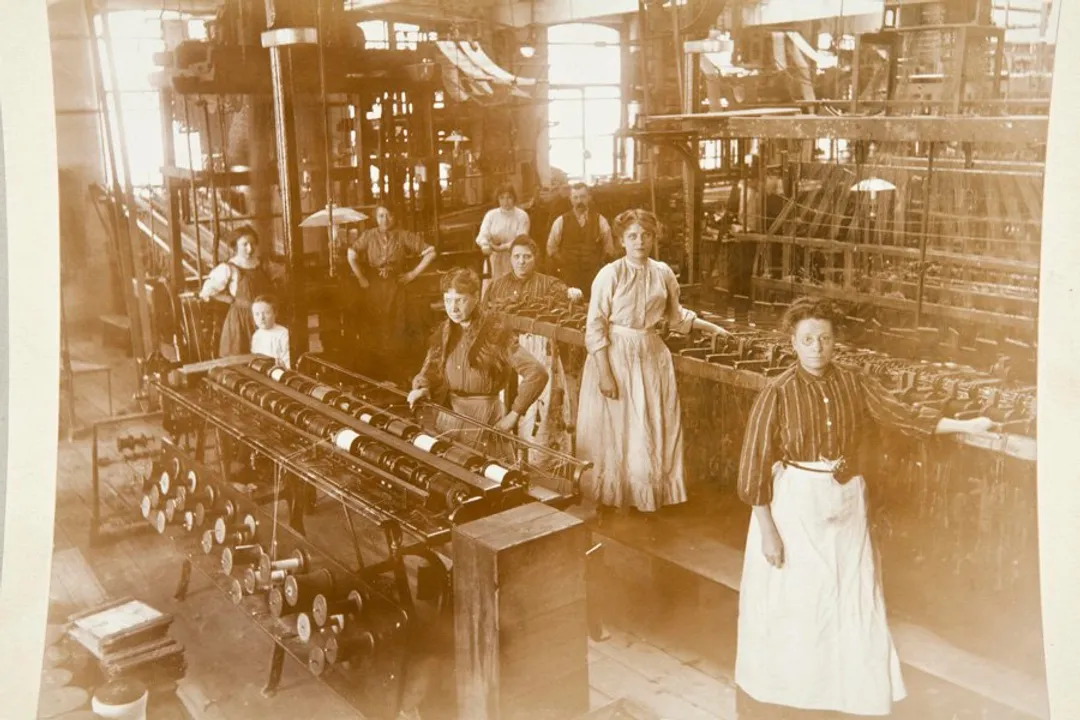
The Jacquard loom, which saw its final form developed around 1801, marked a monumental step forward in weaving technology. Before this, creating complex patterns—such as those favored in luxurious silks—required weavers to manually set up thousands of individual threads, a tedious and error-prone process that could take weeks or months for intricate designs. The loom Jacquard perfected automated this thread selection process.
The central mechanism of the Jacquard loom relied on a precise interaction between the loom's frame and a series of heavy cardboard cards. Each card represented a single row or pick of the shuttle in the weaving process. The crucial function of these cards was to control which specific warp threads were lifted out of the way for the shuttle to pass through, thereby determining the formation of the pattern. The machine's operation was entirely dictated by the sequence of these cards.
# Programmed Weaving
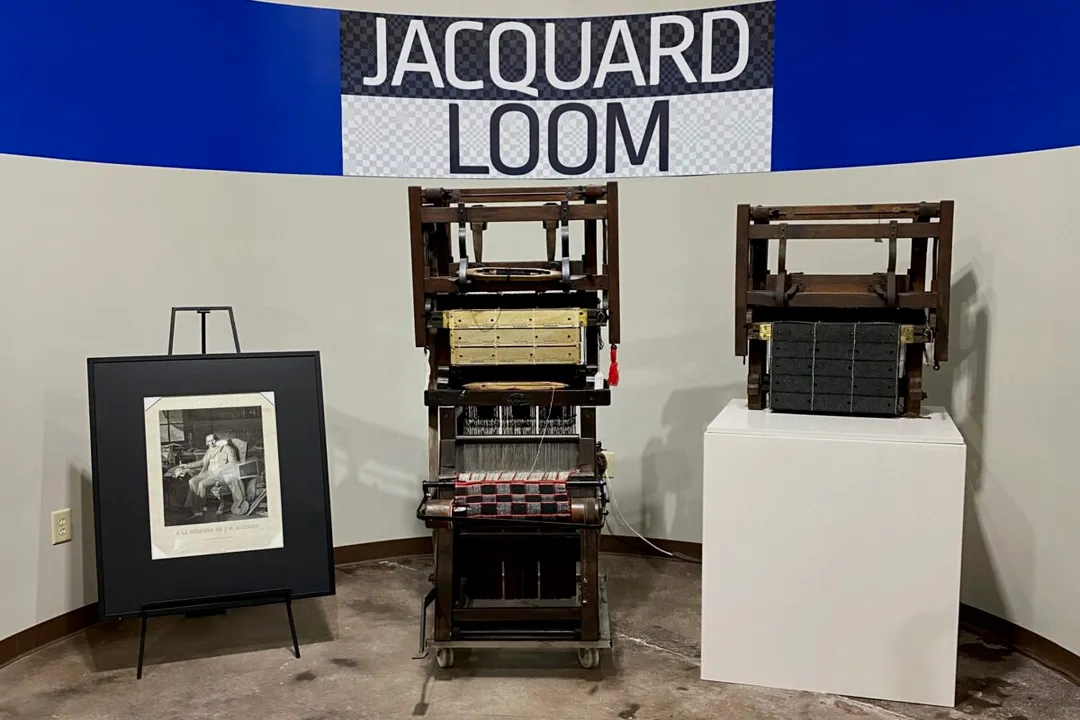
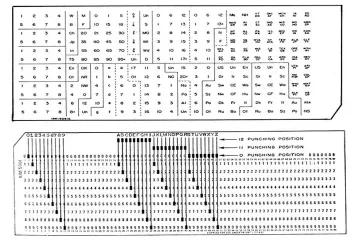
The real genius lay not just in the concept of automatic control, but in the method of control: the punched card. Jacquard’s predecessor looms often relied on complicated mechanical linkages or draw-boys (assistants) to manage the threads. Jacquard replaced this physical rigging with a sequence of pre-drilled cards.
These cards were physically linked together in order, forming a continuous loop or sequence that represented the entire woven design. When the loom cycled, a mechanism would read the holes on the active card; if a hole was present, a certain set of needles would be engaged, lifting the corresponding warp threads. If there was no hole, those threads remained down. As the machine progressed, the stack of cards would advance, presenting the next row's instructions to the loom.
This concept introduced a level of modularity previously unseen in textile machinery. If a weaver wanted to change from producing a floral damask to a geometric brocade, they did not need to rebuild the intricate mechanical structure of the loom; they simply needed to remove the existing sequence of pattern cards and replace it with a new set of coded cards. It is a fascinating demonstration of early separation between hardware (the loom) and software (the card sequence). Consider the sheer difference in setup time: re-rigging a complex mechanical loom could take a skilled artisan weeks, whereas swapping a stack of Jacquard cards took a matter of hours, representing an exponential gain in production flexibility for high-end fabrics. This ease of pattern switching meant that an almost infinite variety of designs could be produced on the same machine simply by changing the input medium.
# Computing Roots
While Jacquard himself was focused squarely on silk production in Lyon, France, the implications of his card system extended far past fabric manufacture. The Jacquard card essentially created the first viable, stored, and reusable "program" for a machine.
The holes on the cards were binary information—a hole or no hole—that directly commanded the machine's action. This is the conceptual leap that links the loom to the analytical engine and the modern computer. The cards held the instructions separate from the machine that executed them. This established a critical precedent: complex automated tasks could be governed by changeable instructions encoded in a physical medium.
It is essential to recognize that while Jacquard invented the application of the punched card for this specific purpose, the idea of using perforated paper to control machinery was later seen by figures like Charles Babbage in his designs for the Analytical Engine. Babbage recognized the power inherent in Jacquard’s method of encoding instructions. In effect, the Jacquard card allowed for the encoding of design, turning artistic intent into a sequence of yes/no instructions readable by metal and wood, predating the electronic computer by nearly a century.
The enduring nature of the punched card as an information storage medium, used for decades in everything from early tabulating machines to the first electronic computers, owes a direct debt to the textile innovation developed by Joseph Marie Jacquard. His invention was not merely a better loom; it was a foundational step in the history of automated control systems, proving that complex logic could be externalized and rapidly swapped out on a production floor. The legacy of the Jacquard card, therefore, is twofold: a revolution in textile artistry and a quiet, yet profound, beginning to the age of digital instruction.
Related Questions
#Citations
Joseph Marie Jacquard - Wikipedia
Punch Cards | Smithsonian Institution
1801: Punched cards control Jacquard loom | The Storage Engine
Jacquard Loom, 1934 - The Henry Ford
Joseph-Marie Jacquard's loom, first developed in 1801 ... - Facebook
A pattern of progress - The University of Chicago Magazine
The Jaquard Loom at CMoA - Mimms Museum of Technology and Art
Programming patterns: the story of the Jacquard loom
punch cards create automated weaving patterns, invented in 1801.