Who was the first to use a punch card?
The origin story of the punch card is not a single, neat moment but rather a slow evolution, moving from controlling silk patterns to counting populations, and finally, to commanding the earliest digital behemoths. To ask who was the first to use one requires defining what kind of use we mean: was it for mechanical automation, or for statistical data processing? The answer changes depending on the century you are examining.
# Weaving Patterns
The earliest known practical application of the perforated card concept appears not in a calculating engine, but in the textile industry. [7] This fundamental idea—using a piece of paper with specific holes to dictate an action—was perfected by Joseph Marie Jacquard in France during the early 1800s. [1][3][8] Around 1804, Jacquard introduced his automated loom, which relied on chains of these stiff cards linked together to direct the movement of the loom's warp threads. [1][7] If a hole existed in a specific position on the card, a particular needle would operate, causing a specific thread to lift or stay down, thus weaving a complex, pre-programmed pattern into the fabric. [3]
This textile mechanism represents the first widely successful, non-trivial deployment of programmed instructions via a removable medium. [1] Interestingly, the idea wasn't entirely Jacquard’s; he built upon earlier concepts, such as the work of Basile Bouchon in 1725, who used perforated paper rolls to control looms, a method later refined by Jacques de Vaucanson. [7] However, Jacquard’s card system was the one that proved durable and scalable enough to change manufacturing. [1] It is crucial to recognize that these cards encoded design instructions for physical objects, a far cry from storing numerical data for analysis.
# Calculating Census

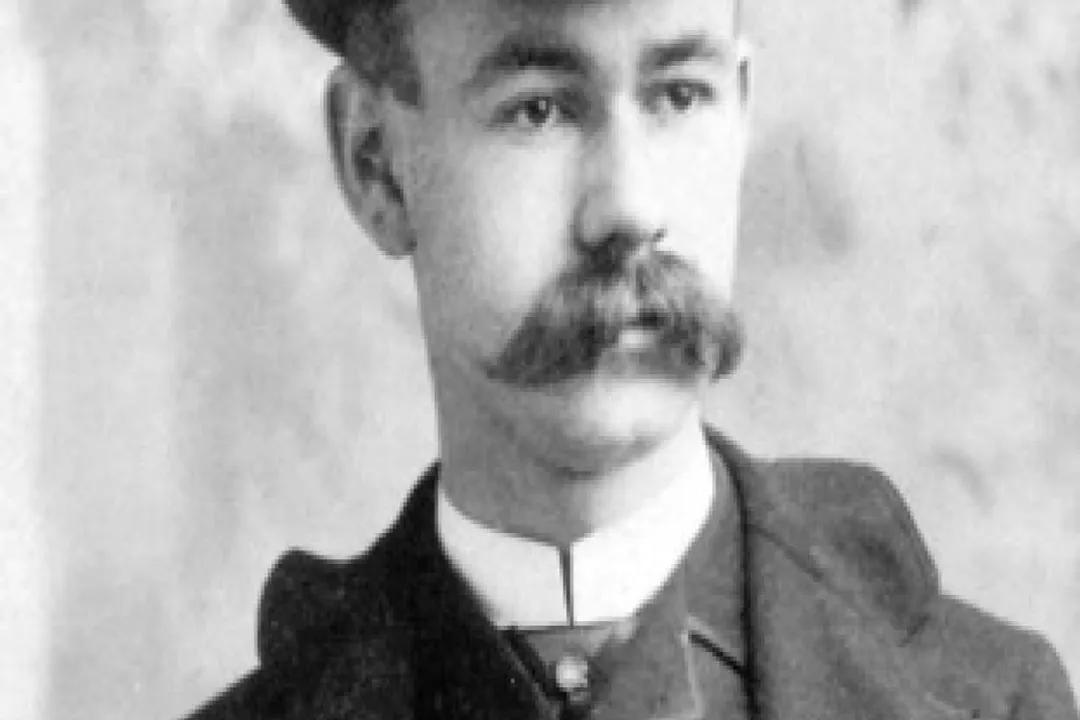
The leap from controlling patterns on cloth to controlling the tabulation of human statistics required a new kind of visionary. That figure is almost universally recognized as Herman Hollerith. [4][9] By the late 1880s, the process for compiling the U.S. Census was hopelessly slow. The 1880 count took nearly eight years to process, meaning the 1890 census data would be obsolete by the time it was fully tallied. [2][4] Hollerith, who had witnessed the mechanical recording of vital statistics in Buffalo, New York, saw the need for an automated solution. [4]
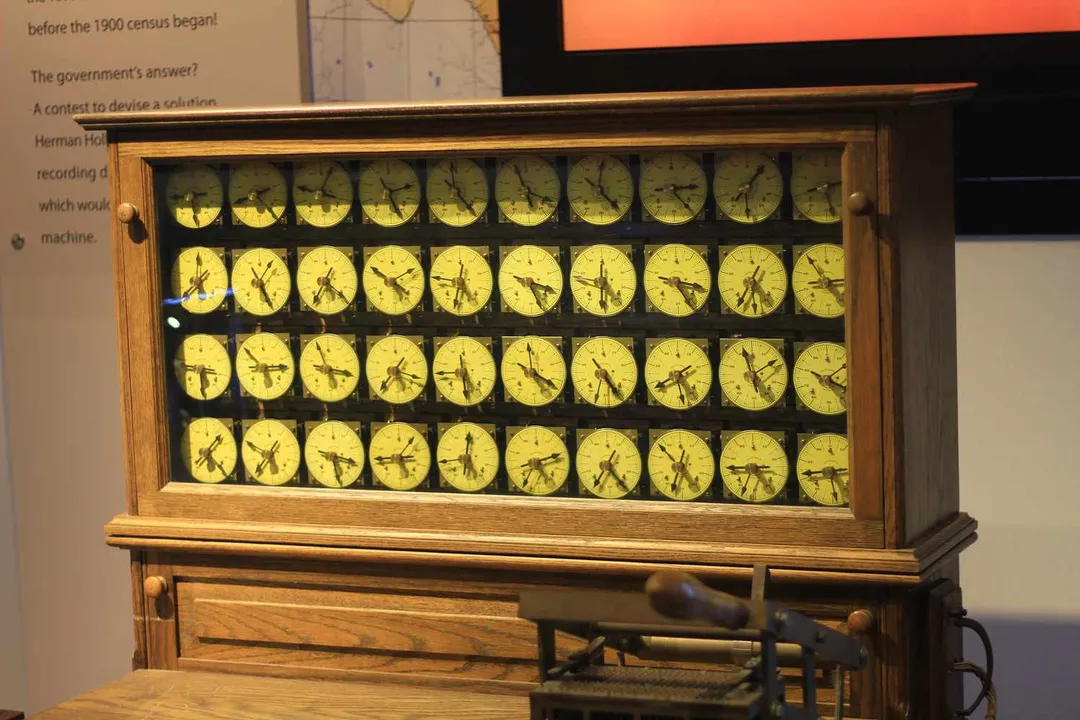
Hollerith’s innovation, which he developed leading up to the 1890 enumeration, was not just the card itself, but the electromechanical system designed to read it. [3][6] His tabulating machine used electricity to sense the presence or absence of a hole in a card as it passed over electrical contacts. [3] A hole completed a circuit, registering a count on an electrical counter. [6]
This application is often cited as the true beginning of modern data processing because it involved:
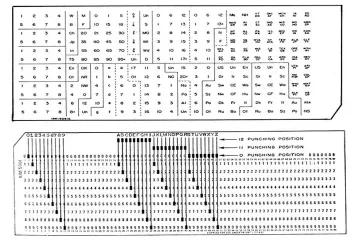
- Standardization of Data Format: Hollerith settled on a card format that became the de facto standard for data recording for decades to come—the now-famous 80-column card. [2][6]
- Automation of Analysis: The machine could tabulate massive amounts of data much faster than manual clerks. [4]
When comparing the Jacquard card to the Hollerith card, the difference in purpose becomes clear. Jacquard's card held binary information—thread up or thread down—to create geometric art. [1] Hollerith's card held coded categorical data—age, sex, location—to create social statistics. [9] The sheer analytical power unlocked by translating human demographics into a machine-readable, hole-punched format marks Hollerith’s contribution as the first use of punch cards for information technology as we currently define it. [2][6]
# Hollerith’s Machine Design
To appreciate the leap Hollerith made, one must understand the structure of his initial contribution. His system was intricate, combining several steps. [4] Clerks would use a manual punch to create the data cards based on raw census schedules. [6] Then, these cards would be fed into the electric tabulator. [3] Following tabulation, the cards could be sorted using a separate electrical sorting machine. [4]
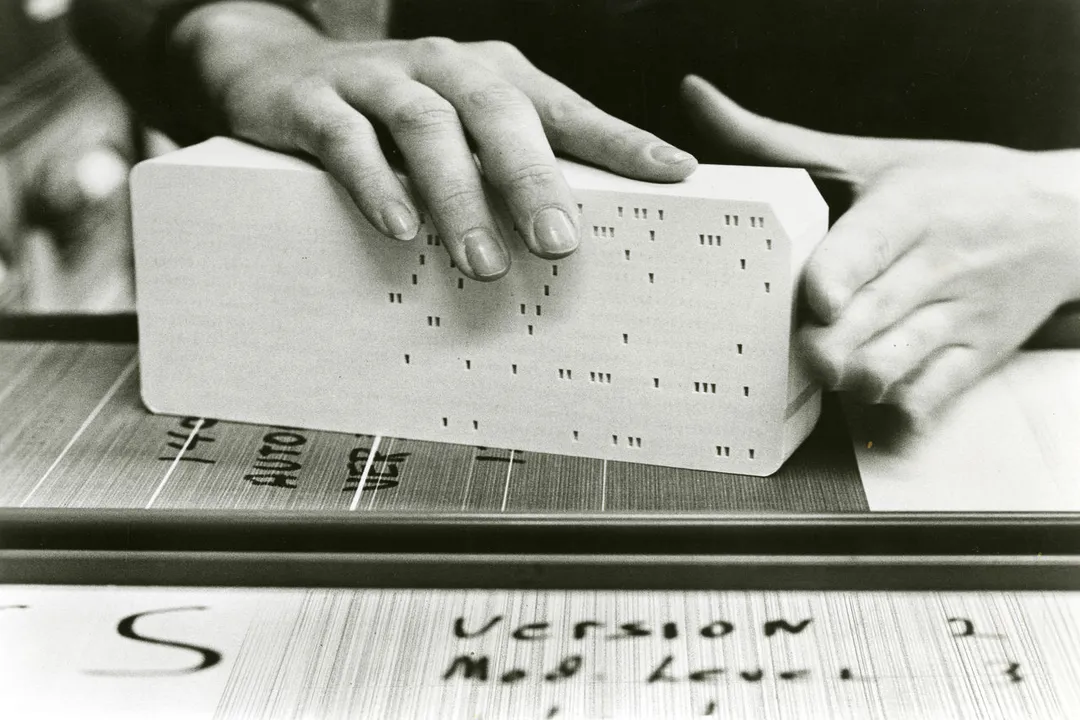
The card itself was simple by modern standards but revolutionary for its time. It was designed to hold data points corresponding to specific locations on the card, which were determined by the fixed layout of the census questionnaire. [2] The sheer volume of data—the 1890 Census required processing approximately 63 million people, each represented by a card—made the adoption of this technology a necessity rather than a luxury. [4] It is worth noting that while Hollerith is the recognized pioneer for the census, his work drew inspiration from earlier theoretical concepts, such as those proposed by Charles Babbage regarding analytical engines, which also envisioned using punched cards for instructions and data storage. [7] However, Hollerith was the first to successfully implement and commercialize this idea for large-scale data management. [9]
# Data Systems Growth
Hollerith’s success led to the formation of the Tabulating Machine Company, which eventually merged and evolved into the entity that would become International Business Machines (IBM). [2] This transition highlights that the first use rapidly morphed into the first industry dedicated to data handling via punch cards. [2]
The punch card remained the dominant input and storage medium for nearly a century. [8] While Hollerith used electricity to read data, subsequent generations, particularly those working with early computers like the UNIVAC and the IBM System/360 line, relied on punched cards to load programs and input initial data sets. [5][8] For programmers, the card was the physical representation of a line of code; a mistake meant physically repunching an entire card, leading to a culture where carefully stacking and handling one's "deck" of cards was paramount. [8]
This longevity is fascinating when you consider the underlying technology was inherently slow and prone to physical error. A single bent corner or a stray mark could halt a massive data run. Yet, for decades, the reliability and physical nature of the card—something you could hold, verify, and stack—was trusted over nascent magnetic storage methods for many critical tasks. [9]
# Physicality Versus Logic
When you look at the evolution from Jacquard to Hollerith, an interesting divergence in thinking occurs regarding the medium itself. Jacquard’s cards were programmers of action—they defined the sequence of how a machine should behave. Hollerith’s cards were data containers—they defined the state of the world at a point in time to be summarized by the machine. [1][6] An original insight here is realizing that this distinction shaped computing for decades. Early computers married these two concepts: the program was loaded via cards (Jacquard's logic), and the data was loaded via cards (Hollerith's statistics). This dual-purpose requirement meant the physical card had to become versatile enough to represent both machine instructions and raw input variables simultaneously, leading to complex coding schemes like the 80-column format that accommodated both alphabetic and numeric data. [2]
| Pioneer | Approximate Date | Primary Use Case | Type of Information |
|---|---|---|---|
| Basile Bouchon | 1725 | Textile Control (Looms) | Mechanical Sequence/Pattern |
| J.M. Jacquard | 1804 | Textile Control (Looms) | Mechanical Sequence/Pattern |
| Herman Hollerith | 1890 | U.S. Census Tabulation | Statistical Data Recording |
| Early Programmers | 1950s–1970s | Mainframe Computer Input | Program Instructions & Data |
# The Standardization Paradox
Another aspect that deserves consideration is the standardization that followed Hollerith’s initial success. While Hollerith established the 80-column format, the meaning of the holes varied wildly across industries and later, computer manufacturers. [2] This created an early form of data incompatibility. A card punched for an IBM 101 sorter might not have been perfectly compatible with a card punched for a Babbage-inspired mechanical calculator prototype, even if both used hole patterns. Hollerith’s brilliance was codifying the physical size and hole capacity for mass data processing, which allowed for the creation of reliable electromechanical readers, even if the logical interpretation of the punched positions remained proprietary or application-specific until industry-wide standards for programming languages took hold later in the 20th century. [6] The key takeaway remains that for the task of mass data counting, Hollerith was the first to successfully transition the concept from textiles to information science. [4][9]
# Early Data Recording Attempts
While Hollerith is the key figure for data processing, other inventors explored similar concepts for recording information mechanically, though often not achieving the same scale or lasting impact. The idea of using punched cards for music reproduction dates back at least to the 18th century for devices like self-playing organs or music boxes. [7] These machines used cards to trigger notes or sequences of notes, similar to the loom controlling thread, but focused on auditory output. [1]
For instance, an early machine designed by Cyrus Davenport in the 1840s used punched cards to automate the indexing of books. [7] While this was an early attempt at mechanical information retrieval, it did not achieve the widespread adoption or the level of complex electromechanical reading that Hollerith later employed for the massive scale of the census. [4] These precursor attempts demonstrate that the concept of encoded holes was bubbling up across different engineering disciplines, but Hollerith successfully synthesized the mechanical, electrical, and administrative needs into a single, highly effective system. [3]
Ultimately, the title of "first user" rests on context. If the question is about the first person to use a perforated card to issue automated instructions to a machine, Joseph Marie Jacquard wins by a margin of several decades in the early 1800s. [1][7] If the question pertains to the first successful, large-scale application of perforated cards to record, process, and tabulate complex, non-repeating statistical information using electromechanical means, then Herman Hollerith holds that distinction for his work culminating in the 1890 U.S. Census. [2][4] His success cemented the punch card as the essential language of early automated calculation and programming. [8]
Related Questions
#Citations
Punched card
The IBM punched card
Punch Cards for Data Processing
NIHF Inductee Herman Hollerith Invented the Punch Card ...
Who was the inventor of using punched cards as a method ...
Punched card systems – Early days of data processing
Douglas W. Jones's punched card index
A Brief History of Punched Cards: The Era of Programming ...
Herman Hollerith, the Inventor of Computer Punch Cards