Who invented shelf-life prediction?
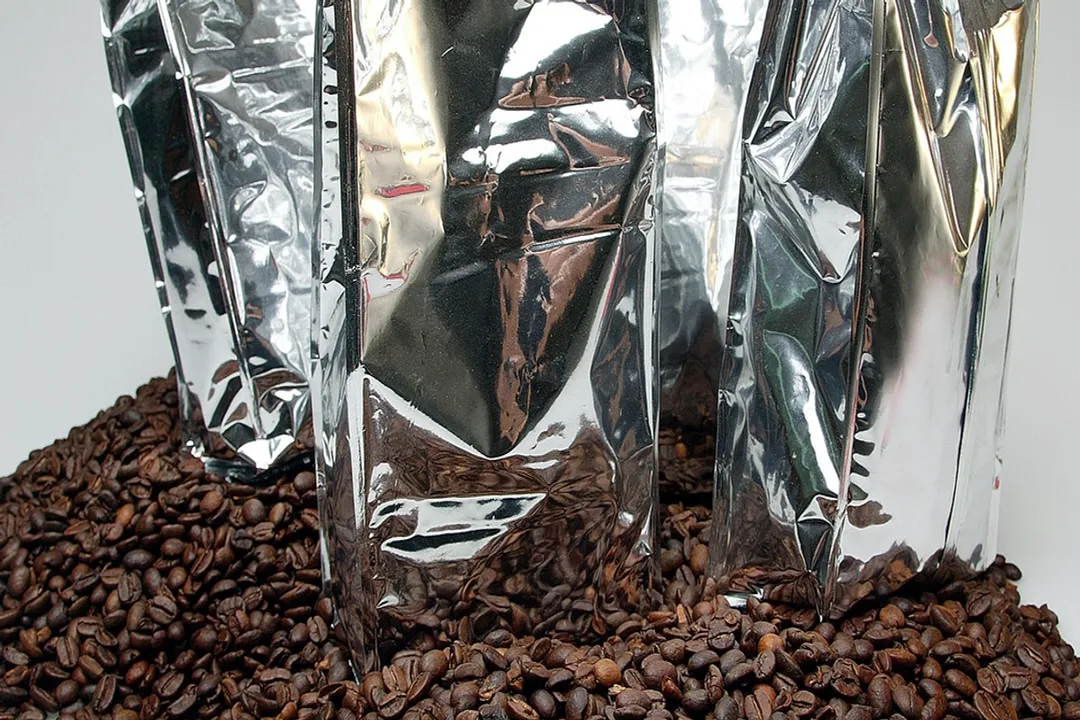
The question of who first formalized the science of shelf-life prediction is less about finding a single name in a patent office and more about tracing an evolution, a slow convergence of industrial necessity and chemical understanding. From the moment food began traveling further than the next village, a need existed to know how long a product would remain acceptable. Early attempts were rudimentary, based on observation and tradition, but the real shift toward prediction—using science to forecast this timeframe—occurred as chemistry and physics became applied to packaged goods.
The impetus was certainly present long before sophisticated models existed. As far back as 1927, the promise of extended food life was making headlines. A report detailed a plan for new refrigeration methods that promised to "revolutionize the handling of perishable food" and was expected to extend the time these goods could remain fresh. [2] While this represented an industrial push for extension, it wasn't yet scientific prediction. It was environmental control aimed at buying time, rather than mathematical modeling to define the final moment of expiry. [1] The gap between knowing something spoils eventually and accurately calculating when that will happen under varying conditions is vast, requiring a foundation in kinetics.
# Kinetic Modeling Basis
The scientific backbone for estimating how long a product will last rests heavily on understanding reaction rates, often termed kinetic modeling. This approach treats shelf life as the time required for a critical quality attribute to drop to a pre-defined minimum acceptable level. [5] It is fundamentally about measuring the speed of degradation.
Scientists focused on how chemical changes, like the breakdown of vitamins or the formation of off-flavors, followed established mathematical patterns. These patterns include zero-order, first-order, or second-order kinetics, which describe how the concentration of reactants affects the rate of the reaction. [3][6] If a process follows first-order kinetics, for instance, the rate of degradation is directly proportional to the amount of the original substance remaining. [3] Identifying the correct kinetic order is the critical first step in building a reliable predictive model. [3]
A crucial element introduced into these kinetic models was the influence of temperature. The relationship between reaction rate and temperature is quantified through the Arrhenius equation. [3][7] This equation allows researchers to understand how much faster a chemical process will proceed at a higher temperature compared to a lower one, which is the basis for many accelerated aging studies. [3][5] By testing a product under exaggerated conditions—high heat and humidity—scientists could use the Arrhenius relationship to extrapolate what the degradation rate would be under normal, long-term storage conditions. [1][5]
It is an interesting dichotomy: while the industrial need (as seen in the 1927 reports) focused on simply slowing down spoilage via better cooling, the scientific answer developed into using faster processes (heat) to model slower ones (ambient storage). [2][3] This reliance on kinetic models, derived from early 20th-century physical chemistry principles, marks the true scientific beginning of shelf-life prediction, even if the term wasn't popularized until decades later. [1][6]
# Defining Acceptance
A significant practical challenge in applying these kinetic models is defining the finish line. A product's "shelf life" is not an absolute scientific constant but rather a function of consumer expectation and regulatory standards. [1] The prediction method is only as good as the definition of end-point criterion. [5]
For a pharmaceutical product, this might be a loss of 10% of the active ingredient's potency. [5] For a food item, it might be the point at which consumer sensory panels reject the product due to off-taste, or when microbiological counts cross a safety threshold. [1] Without a clear, measurable, and agreed-upon criterion, the mathematical output of a kinetic model remains abstract. This is an area where expertise, specifically in sensory science or microbiology related to the specific product class, becomes inseparable from the chemical prediction itself. [5] If one lab defines "unacceptable" as 50% moisture content and another defines it as 60%, their resulting shelf-life predictions will naturally diverge, even when using identical kinetic data.

# Advanced Monitoring Tools
As the complexity of packaged goods grew, so did the inadequacy of simply testing a few samples removed from the line at set intervals. Many products, particularly suspensions, emulsions, and complex biopharmaceuticals, degrade through physical changes as much as chemical ones. For instance, a cream or suspension might separate or settle long before the active ingredients chemically decompose. [10]
This led to the development of methods that monitor stability in-situ—that is, inside the container without opening it. One notable example involves advanced optical techniques. Technologies like Turbiscan, for instance, use backscattering and transmission measurements to track physical stability issues such as creaming, sedimentation, and flocculation over time. [10] By measuring changes in the internal structure of a liquid product non-invasively, researchers can track physical degradation rates alongside chemical ones. [10]
This capability adds a vital layer that the classic Arrhenius extrapolation often misses for complex systems. A traditional chemical model might predict a three-year life based on potency loss, but if the physical structure breaks down (like an emulsion splitting) after one year, the effective shelf life is one year. [1] The evolution of shelf-life prediction, therefore, involved moving from extrapolation based on external stresses to direct measurement of internal changes. [5][10]
# Prediction Evolution
While the scientific principles—kinetics and temperature dependence—were established by mid-20th-century chemical engineering, the ability to process the massive amounts of data required for high-accuracy, multi-variable prediction is a modern phenomenon. This is where Artificial Intelligence (AI) and Machine Learning (ML) enter the picture. [4]
Modern predictive systems move past the single-variable kinetic models. They can simultaneously process inputs like:
- Raw material variability.
- Specific storage temperature logs (not just average storage).
- Packaging permeability data.
- The complex interplay between chemical and physical stability indicators. [4][7]
AI algorithms excel at identifying subtle, non-linear relationships in large datasets that traditional linear kinetic modeling would miss. [4] They learn from historical batch failures and successes, essentially building a dynamic, data-driven model of product behavior that refines itself with every new batch tested or sold. [4]
If we consider the progression, we can see a distinct path:
| Era | Primary Focus | Methodology | Key Limitation |
|---|---|---|---|
| Early 1900s | Preservation & Extension | Environmental Control (Refrigeration) | No quantifiable time prediction [2] |
| Mid-1900s | Chemical Kinetics | Arrhenius Equation, Order of Reaction | Assumed uniform conditions; focused on single degradation paths [3][5] |
| Late 1900s | Integrated Stability | Accelerated Aging, In-situ Monitoring (e.g., Turbiscan) | High labor/equipment cost for physical monitoring [10] |
| Today | Data-Driven Forecasting | AI/ML Chemometrics | Requires substantial, high-quality historical data [4] |
It is important to note that even with AI, the foundational science remains paramount. A complex algorithm cannot create a useful prediction if the input data is flawed or if the underlying physical chemistry is unknown. [1][4] The current state of the art is best described as highly sophisticated modeling of established chemical and physical laws, rather than the invention of a new fundamental law itself. The "inventor" of shelf-life prediction, therefore, isn't a person, but rather the collective adoption of the Arrhenius equation into industrial quality control, later amplified by modern computational power. [3][4]
Related Questions
#Citations
Shelf life - Wikipedia
HECKSCHER ANNOUNCES A NEW REFRIGERATION; He Predicts ...
Shelf-life prediction: theory and application - ScienceDirect.com
Artificial Intelligence (AI) and Shelf Life Prediction. - Procuro, Inc.
Shelf-Life Prediction Methods and Applications
Shelf life prediction: status and future possibilities - PubMed
Shelf life prediction and the sizing of packaging - Fraunhofer IVV
Shelf-life prediction (1986) | Dennis J. Hine | 14 Citations - SciSpace
Innovative Technology for Shelf Life Prediction of Food and Beverages
[PDF] SHELF-LIFE PREDICTION BY TURBISCAN - Microtrac