What does Steve say is the single best invention of life?
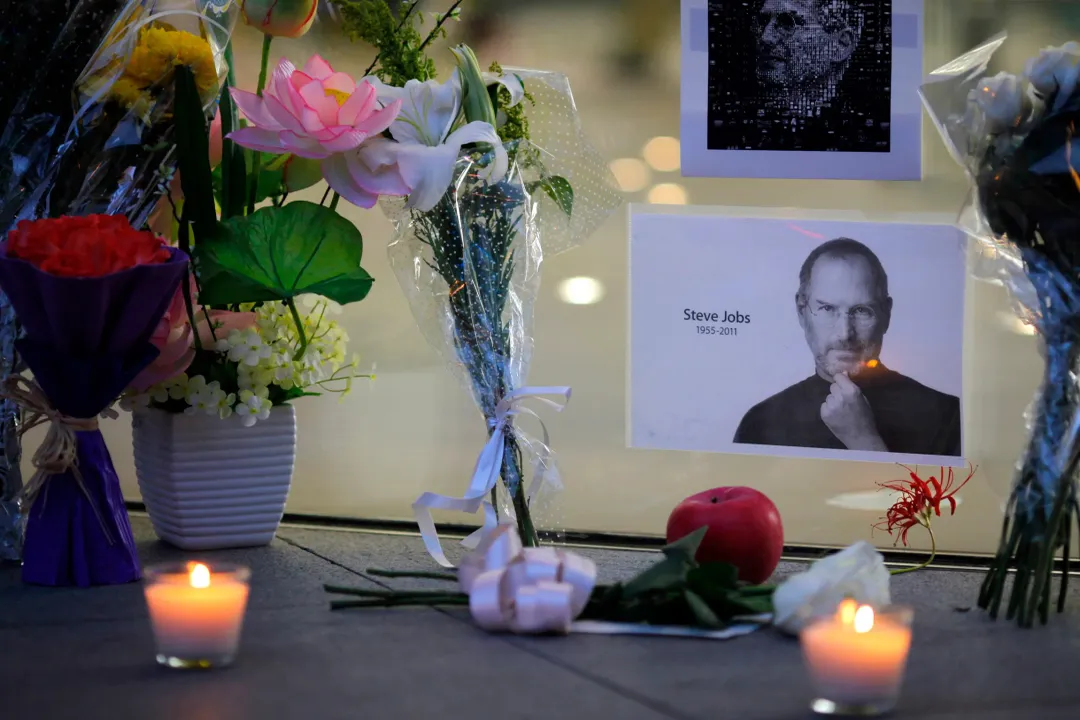
The idea that an end-point, rather than an infinite horizon, provides the greatest clarity of purpose is a profound thought, one that has been distilled into a single, powerful assertion attributed to Steve Jobs. When considering what Jobs identified as the single best invention of life, the answer is stark, unavoidable, and universally applicable: death. This is not a morbid declaration, but rather a pragmatic acknowledgment of the force that catalyzes necessary evolution, both personally and systemically. To understand why such a fundamental concept—the cessation of being—would be lauded as an invention—implying thoughtful design or supreme functionality—requires delving into the context of his famous pronouncements and the philosophical weight he placed upon mortality.
# Core Assertion
The origins of this specific phrasing trace back primarily to his widely cited 2005 commencement address at Stanford University. Jobs positioned death not as a tragedy to be resisted indefinitely, but as the very mechanism that keeps the world, and the individuals within it, dynamic. He stated clearly: "Death is very likely the single best invention of life. It is life’s change agent". The phrasing suggests an almost elegant design to the universe, where an inescapable deadline prevents complacency and stagnation. Other thinkers might point to language, mathematics, or agriculture as top inventions, but Jobs elevated the precondition for all subsequent creation and innovation—the necessity of making way for the next thing—to the supreme position.
# Best Invention
The choice of the word "invention" is as significant as the object being named. An invention implies a problem solved or a function executed perfectly. In this context, the function death serves is to clear out the established, the outdated, and the familiar to create space for the novel and necessary. If life were permanent, the inertia of maintaining the status quo would become insurmountable. Consider an organization or a field of study that never replaced its leadership or accepted new paradigms; it would eventually calcify and cease meaningful progress. Jobs saw mortality operating at this grand scale, ensuring that no single idea, person, or generation overstays its welcome to the detriment of progress. While some perspectives might analyze this through a spiritual lens concerning the soul or afterlife, Jobs presented it with the cold, hard logic of a systems designer ensuring system health through forced turnover.
# Life’s Change Agent
The notion of death as life’s change agent is central to Jobs’ view. This mechanism forces succession. For humanity, it ensures that wisdom gained is passed on, but also that tired or obsolete thinking does not dominate indefinitely. This principle is observable everywhere, from biological ecosystems, where species must give way to better-adapted ones, to the rapid cycles seen in the technology industry Jobs himself helped define. The constant cycle of obsolescence, driven by the finite nature of products and careers, is what powers forward momentum. The fact that he identified this so clearly, while facing his own significant health challenges, lends substantial authority to his perspective.
# Avoiding Traps
One of the most actionable elements stemming from this perspective relates to the fear that mortality creates. Jobs directly addressed how remembering his impending end helped him maintain focus. In his own words, often quoted regarding this time, "Remembering that I’ll be dead soon is the most important tool I’ve ever encountered to help me make the big choices in life". When one internalizes the limited nature of their time, the fear of failure or the anxiety over what others might think drastically diminishes.
This translates directly into a removal of perceived stakes. If the alternative to success is merely returning to the null state that awaits everyone regardless of today’s outcome, the immediate challenge becomes far less intimidating. The trap Jobs referred to is often that of invested commitment—the illusion that because you have spent so much time building one thing, you cannot switch course, even when that course is wrong or unfulfilling. The awareness of death acts as a great equalizer, simplifying complex emotional calculations down to the essential question: What do I most want to create or accomplish with the time I actually have left?.
Here is a simple mental sorting process inspired by this concept, designed to cut through decision paralysis:
| Decision Factor | Long-Term View (Ignoring Mortality) | Short-Term View (Jobsian Mindset) | Actionable Result |
|---|---|---|---|
| Fear of Failure | High, threatens reputation/security | Low, failure is temporary, time is finite | Pursue the ambitious path |
| Social Approval | High importance, dictates safe choices | Negligible, others' opinions fade | Prioritize internal alignment |
| Career Path | Stick to established expertise | Pivot if passion dictates a new direction | Embrace necessary reinvention |
| Time Allocation | Spread resources thinly across many areas | Concentrate energy on highest impact items | Ruthless prioritization |
# Contextual Weight
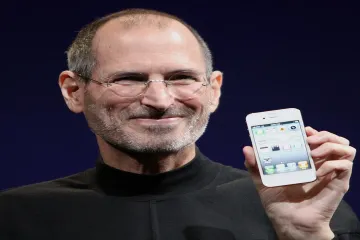
It is impossible to separate this philosophical statement from Jobs' personal context around the time he made it. By 2005, Jobs had already battled pancreatic cancer, a diagnosis that forces a radical confrontation with personal finitude. While he later underwent a liver transplant due to ongoing complications, the initial shock of a terminal diagnosis provides a stark, lived experience that underpins the abstract philosophical point. This was not merely intellectual musing; it was a summation of what extreme pressure revealed about living meaningfully. The stark reality of his own biological clock ticking much faster than the average person’s added an undeniable layer of experience to his pronouncement.
# Engineering Legacy
This perspective on death functioning as a necessary clearing mechanism can be viewed through an engineering lens, which seems fitting for Jobs’ background. In software development, we constantly refactor code, deprecate old systems, and eventually rewrite entire architectures because the old ways, while once effective, become bottlenecks or security risks. This renewal is painful but essential for survival and growth. Jobs applied this same principle to human existence. The insight here is that personal legacy isn't about clinging to the things you build, but about successfully passing the baton of vital ideas before your own system—your body and mind—becomes the obsolescent code needing replacement. True success, by this metric, is ensuring your essential contributions outlive your physical presence by enabling the next necessary change. If a scientist’s work prevents future scientists from making a breakthrough because the foundational ideas are too rigid, then that work has failed the ultimate test of being "good" in the long run, regardless of its initial success.
# Active Mortality Management
Applying this insight actively requires more than just thinking about death; it requires acting as if the deadline were immediate. One way to practice this, beyond the well-known Stanford address, is to regularly audit your commitments against your highest-value goals—the goals you would pursue if told you had only five years left to live. Many people harbor a secret, most ambitious project that is perpetually relegated to "when I have more time" or "when I retire." The Jobsian mindset collapses that timeframe. If a current obligation—a meeting, a project, a relationship dynamic—does not align with what you would prioritize in that final, highly focused period, it must be pruned. This pruning is the necessary clearing out of the "old" so the "new" (your true purpose) can take root. It demands a fierce, almost ruthless self-honesty about what truly matters versus what merely feels comfortable or expected.
This mindset transforms time from an infinite resource to a highly specific budget item. Consider the difference between saying, "I’ll get to that someday," and the internal declaration, "I must address this this month because my opportunity window is closing." The latter imbues the task with an urgency that no internal motivation alone can sustain. It is the ultimate tool for conquering procrastination rooted in perfectionism or fear, as perfection becomes irrelevant when compared to completion within the available temporal budget.
# Philosophical Counterpoint
While Jobs positioned death as the best invention, it is interesting to contrast this with philosophies that focus on immortality or legacy extension as the highest good—for example, through religious belief or massive cultural monuments. Jobs’ take offers a distinctly secular, functionalist argument: the value of the end is its creation of space. He wasn't championing oblivion; he was championing succession. The quality of life, in his view, is directly proportional to how well one manages the time they have, driven by the clear knowledge that the management period is strictly finite. The best invention isn't the ending itself, but the function the ending provides: perpetual renewal.
# Focus Through Constraint
The power of constraint in creation cannot be overstated, and Jobs identified the ultimate constraint: mortality. When resources—time, energy, focus—are perceived as unlimited, we tend to dilute them across trivialities. When the ultimate resource, time, is known to be strictly limited, an extraordinary level of focus emerges. This enforced constraint acts as a powerful filter. Every decision becomes an immediate evaluation of whether it deserves inclusion in the final, finite ledger of one's life. This is why many artists, writers, and innovators produce their most vital work under pressure or near the end of their lives; the stakes—as defined by their remaining time—become perfectly aligned with their highest creative potential. Jobs provided a way for everyone, not just the terminally ill, to access that same state of high-stakes focus every day.
The concept that the single greatest invention is the one that ensures everything else can continue to happen—that clears the decks so new ideas can emerge—is a potent, if somber, piece of wisdom delivered by a titan of industry. It shifts the focus from how long we have to how well we use the inevitable curve of our existence.
Related Questions
#Citations
Steve Jobs – “Death is very likely the single best invention ...
Steve Jobs: "Death Is Very Likely The Single Best Invention ...
Quote by Steve Jobs: “Remembering that I'll be dead soon ...
steve jobs (aka The pro-death trance) : r/longevity
Why Steve Jobs called death 'the single best invention of life'
Steve Jobs: Death as the single best invention of Life.
Steve Jobs: 'Death is very likely the single best invention of ...
Steve Jobs, 1955-2011