How did Alexander Graham Bell improve American life?
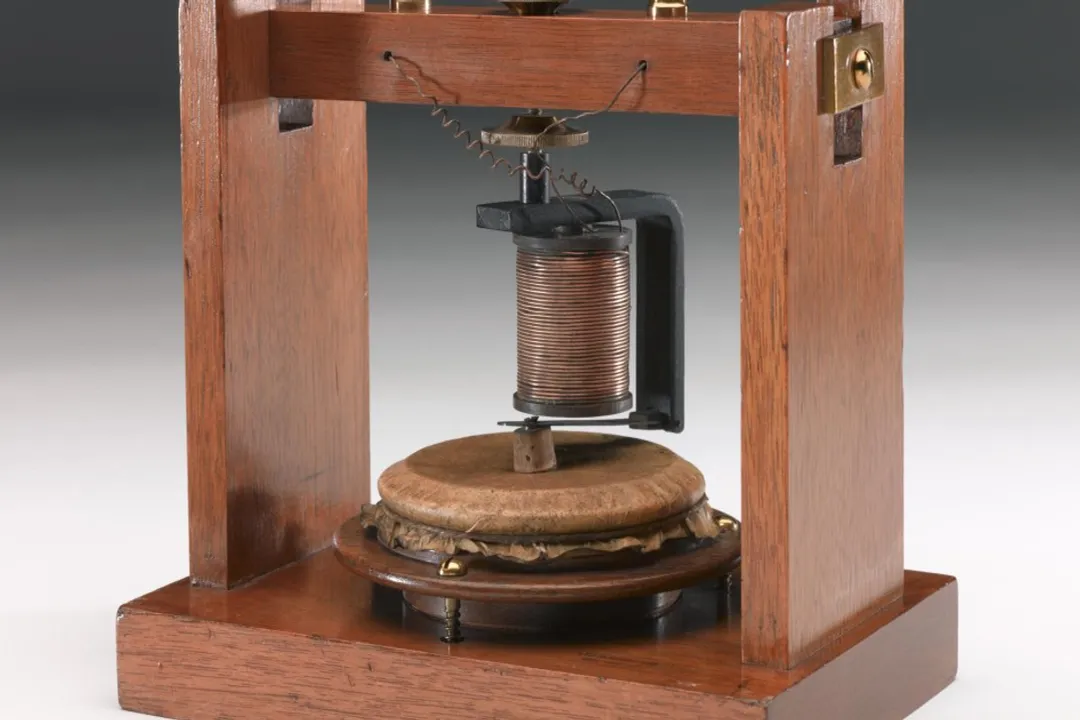
Alexander Graham Bell’s presence in American history is inextricably linked to the sound of the human voice traveling across wires, but his influence stretched far beyond the immediate utility of the telephone, touching education, science, and the very structure of societal connection. His work didn't just introduce a new gadget; it fundamentally rewired daily interactions and established expectations for immediate communication that Americans now take for granted. [4][5]
# Wire Speaking
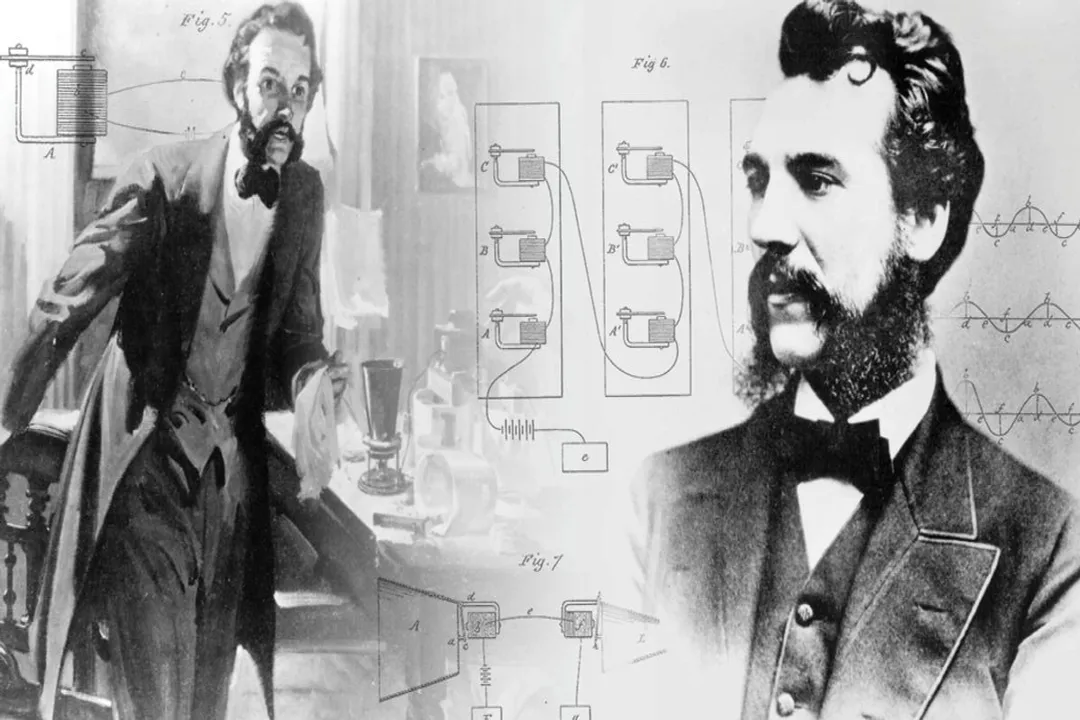
The moment Bell transmitted the words, "Mr. Watson, come here, I want to see you," on March 10, 1876, marked a definitive shift in human capability. [7] This successful experiment, stemming from his extensive work with acoustics and the deaf, quickly led to the granting of his patent. [2] While the telegraph had already conquered distance with coded pulses, Bell’s invention carried the nuanced, immediate quality of the human voice. [4] This wasn't just a faster way to send messages; it was an intimate way to communicate remotely. [5]
The ensuing rush to establish infrastructure transformed the landscape. The Bell Telephone Company was formed, quickly moving the device from a scientific curiosity to a commercial necessity. [1] This rapid deployment meant that within a relatively short span, the device was migrating from major business centers into homes, shrinking the perceived distance between communities and families across the nation. [4]
# Reordering Society
The introduction of the telephone created an entirely new sector of American industry, but its most profound effect might be the subtle alteration of pace in daily life. Before Bell, long-distance communication relied on the deliberate pace of the telegraph operator or the slow certainty of the postal service. [4] The telephone demanded immediacy, training users to expect near-instantaneous responses from business partners, doctors, or distant relatives. [5] This acceleration arguably set a new, faster baseline for American technological expectation—a pattern that would repeat with every subsequent communication breakthrough, from radio to the internet. The ability to coordinate complex business dealings across states in real-time fundamentally changed how commerce operated, fostering expansion and integration across geographical boundaries that were previously much harder to bridge. [4]
# Deaf Influence
Bell’s connection to the world of sound extended deeply into his personal life and professional motivations. Both his mother and his wife, Mabel Hubbard, were deaf. [3][6] This personal connection fueled his lifelong commitment to helping the hearing impaired. [4] Bell was a dedicated teacher and an influential voice in the Deaf community during the late 19th and early 20th centuries. [6] He passionately advocated for what was known as the "oral method," believing that teaching deaf individuals to speak and lip-read—known as elocution—was the best path forward for their integration into mainstream society. [6]
His efforts led to significant educational advancements and the establishment of schools focusing on these methods. [6] However, this emphasis on oralism presents a complex legacy. While his intent was rooted in assisting those with hearing loss, this approach often came at the expense of formal recognition and propagation of American Sign Language (ASL). [6][4] For many in the Deaf community today, Bell’s influence represents a historical tension between the desire to assist and the imposition of one communication modality over another. [4] He held a firm conviction that speech education was paramount for deaf individuals, even founding the Volta Bureau for the Increase and Diffusion of Knowledge Relating to the Deaf. [1][6]
# Diverse Interests
Bell was far from a one-invention man. His curiosity drove him into several other areas of scientific inquiry, often leveraging the acoustic principles he mastered for the telephone. [3] One of his most interesting side pursuits was the photophone, a device that transmitted sound on a beam of light—an early, non-wired form of wireless communication predating widespread radio use. [1][3] While never achieving the commercial success of the telephone, it demonstrated his forward-thinking approach to transmitting information.
His experiments didn't stop at sound waves. He also dedicated time to aeronautics and the design of hydrofoils, even setting a world water-speed record in 1919 with his HD-4 craft. [3] Furthermore, his early work included investigations into sound reproduction, and he made contributions to the development of rudimentary hearing aids. [3] It is worth noting the institutional difference in how Bell managed his success compared to contemporaries like Edison. While Edison focused heavily on patenting and productizing nearly everything, Bell invested heavily in organizations dedicated to pure research and public education, such as the Volta Laboratory and his involvement with the founding of the National Geographic Society. [1][2][3] This highlights a split path for inventors: the commercial magnate versus the scientific philanthropist.
# Institutional Marks
The structures Bell helped create continue to influence American life long after his death in 1922. [2][3] The Volta Bureau, established to advance knowledge related to deafness, remains a key resource, illustrating his commitment to applying his knowledge practically, even if his philosophy on how to apply it remains subject to historical evaluation. [1][6]
Perhaps his most visible, indirect contribution to American culture is his role as a co-founder of the National Geographic Society. [2][3] While seemingly unrelated to telephony, this organization grew from a shared interest in scientific exploration and the dissemination of knowledge—a belief that understanding the world, whether acoustically or geographically, was essential for progress. [3] The enduring success of this society, which has shaped how generations of Americans view geography, science, and the world, shows that Bell’s legacy is built not just on singular inventions, but on creating platforms for continued learning and discovery. [2]
Bell’s primary improvement to American life was condensing time and space via the telephone. [5] Yet, a deeper examination reveals that he also improved life by dedicating his later years to scientific inquiry outside of commercial gain and by profoundly (though controversially) shaping the discourse around communication access for the Deaf community. [1][6] His life demonstrates that the improvement of society often comes not just from the initial spark of genius, but from the lasting institutional scaffolding built around that idea. [3]
Related Questions
#Citations
Alexander Graham Bell: The Inventor Who Transformed ...
Alexander Graham Bell: Telephone & Inventions - History.com
Alexander Graham Bell - Wikipedia
The Influence of Alexander Graham Bell - Gallaudet University
Alexander Graham Bell and the Evolution of Communications - QAD
[PDF] Introduction - Alexander Graham Bell Association
Ahoy! Alexander Graham Bell and the first telephone call
Inventors | American Experience | Official Site - PBS
Alexander Graham Bell: Spirit of Innovation 100 Years Later