Who invented edible packaging?
The concept of wrapping food in something consumable is far from new; it predates modern industrial packaging by millennia. Long before cellophane and plastic films dominated grocery aisles, people wrapped sustenance in materials that were inherently part of the meal or easily discarded into the environment, such as leaves or bread dough itself. [4][8] This historical context is important when assessing modern attempts to reinvent the food wrapper, as contemporary efforts are less about basic containment and more about engineering materials that actively replace petroleum-based plastics while maintaining shelf life. [7][9] The real question today centers on who pioneered the scientific methods to make edible packaging structurally sound, safe, and appealing for mass-market items like snacks.
# Ancient Wrappers
Long before scientists started exploring biopolymers, the function of edible packaging was achieved through simple, practical means. In many historical contexts, food was contained within other edible materials—think of pastry shells used as containers for meats or jams, or even simple techniques of wrapping fruits in their own skins or natural casings. [2][4] These early methods often served a dual purpose: protection during transport or storage, and providing an extra layer of flavor or texture to the meal. [8] It is difficult, if not impossible, to assign a single inventor to this practice, as it evolved organically across cultures wherever people needed to carry food. [2] The critical difference between these historical examples and today’s development is the intent and scientific rigor. Ancient methods relied on the robustness of existing food structures, whereas modern edible packaging aims to mimic the protective barrier properties of synthetic polymers using organic chemistry. [7]
# Harvard Innovation
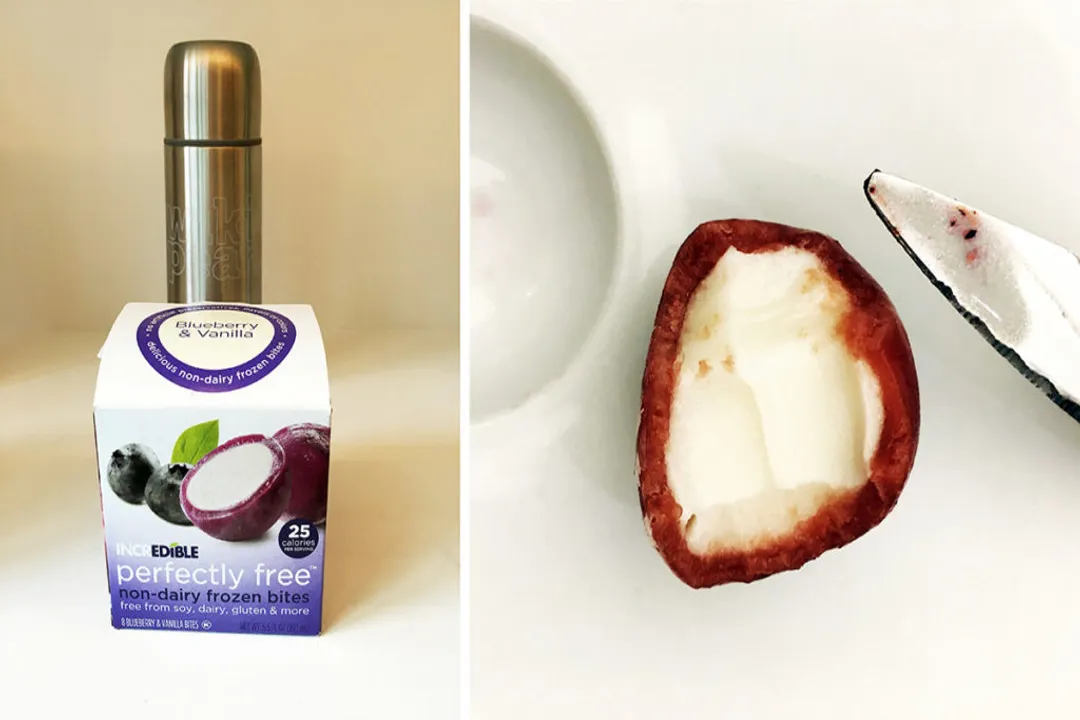
In the realm of modern, scientifically engineered edible packaging, one prominent name repeatedly surfaces: David Edwards, a professor at Harvard University. [1][3] Edwards and his team are credited with developing the WikiCell, a concept designed specifically to address the waste generated by conventional packaging for items like ice cream, cheese, and other foods. [1] The WikiCell is engineered using natural components—materials that are also found in the peels of fruits and vegetables—to create a protective, edible coating or membrane. [1][3]
The approach taken by Edwards’ group represented a significant intellectual leap. Rather than simply coating food in a basic gel, they sought to create a skin that provided structural integrity while remaining entirely safe to ingest. [3] This moves the concept past mere confectionary decoration and into the territory of functional, food-grade encapsulation. [2] While the idea of eating the bag might sound like a whimsical notion meant for a bag of chips, [6] the WikiCell technology aimed for a material science solution that could replace common plastic wraps used for everyday groceries. [1]
# Material Basis
The scientific foundation for modern edible packaging rests heavily on the use of biopolymers—macromolecules derived from natural sources. [2][7] These are generally categorized into three main groups: proteins, lipids, and polysaccharides (starches and fibers). [2]
For instance, whey protein isolate, a byproduct of the dairy industry, has been studied for its ability to form strong, flexible films. [2] Similarly, polysaccharides derived from seaweed or cellulose are often explored due to their availability and film-forming capabilities. [2][7] A key challenge that researchers like Edwards faced, and which continues to define the field, is engineering these natural polymers to perform like plastic. Conventional packaging evolved over decades to resist moisture migration, prevent oxygen ingress, and withstand mechanical stress. [5][9] Edible alternatives must achieve similar feats without introducing off-flavors or compromising texture, a tall order when the final product must also be palatable. [3]
When considering the specific structural approach of the WikiCell, its makeup is derived from the very natural compounds found in fruit peels, which are designed by nature to protect the contents. [1] This contrasts sharply with many other experimental edible films that might use simpler coatings like gelatin or starch—materials excellent for sealing or lightly coating produce, but perhaps less suited for containing free-flowing or messy snacks. [2] The level of material customization required to develop a package that tastes good while performing its barrier function illustrates the specialized expertise required in this area. [3] It’s not enough for it to be edible; it has to work in a competitive, demanding market environment. [7]
# Waste Reduction Focus
The driving force behind the modern invention and reinvention of edible packaging is undeniably environmental concern. [7] The history of packaging shows a clear trend toward lighter, more durable, and cheaper materials, which in the 20th century meant plastics and foils. [5][9] This efficiency has led to massive waste issues, making the search for sustainable alternatives an economic and ecological necessity. [7]
Edible packaging offers a theoretically perfect solution to landfill overflow associated with packaging waste: if you cannot recycle it, you can eat it. [6] However, for this to be a genuine win, the production footprint of the edible material must also be cleaner than the plastic it replaces. If creating a biodegradable polysaccharide wrap requires vast amounts of fresh water or intensive chemical processing, the environmental benefit is diminished. [7] Therefore, the true success of an inventor like Edwards isn't just the invention of the material, but the invention of a sustainable process around that material. [1][4]
Thinking about consumer acceptance highlights another layer of complexity Edwards’ work had to navigate. While eating a potato chip bag sounds amusing, [6] consumers are accustomed to certain tactile expectations. A soggy wrapper is generally a sign of spoilage, not a feature. [4] Therefore, the material science must not only protect the food but also maintain the perception of freshness and quality until the moment of consumption, allowing the consumer to comfortably transition from opening the package to eating it, whether in one go or by disposing of the residue in a compost bin or their stomach. [3] The market viability hinges on whether the novelty of eating the packaging outweighs the established convenience of simply tossing a wrapper away.
Related Questions
#Citations
Harvard Professor Invents the WikiCell, Food Packaging You Can Eat
Edible packaging - Wikipedia
This edible wrapping tastes as good as the food it's protecting - CNN
Outside the Box: The Story of Food Packaging - Edible Geography
Packaging History 101: The evolution of snack packaging
Edible Packaging: Eat the Chips and the Bag - ABC News
How Edible Food Packaging Could Reduce Plastic Waste
Outside the Box: The Story of Food Packaging - Gastropod
The History of Food Packaging: A Timeline | NextDayFlyers