Why could Whitney's ideas about production be considered a revolution in manufacturing?
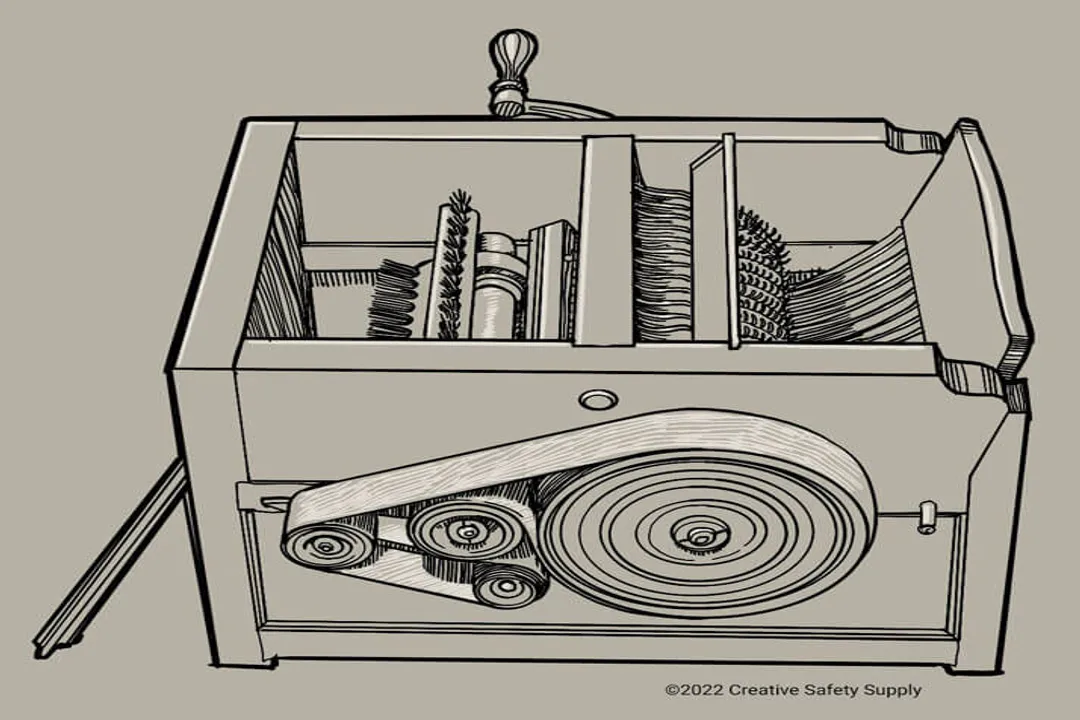
Eli Whitney’s legacy in the story of American manufacturing is often presented through the lens of the cotton gin, an invention that irrevocably altered Southern agriculture in the late 18th century. However, the true manufacturing revolution sparked by Whitney stemmed not from a machine that separated fibers, but from a systematic approach to making things: the concept of interchangeable parts. This idea represented a fundamental break from centuries of artisanal production, shifting the focus from crafting unique, bespoke items to building standardized, repeatable units on a massive scale.
# Gin's Effect

The cotton gin, patented in 1794, quickly became famous for its efficiency, allowing a single worker to clean fifty pounds of cotton per day, a massive increase from previous methods. While this invention dramatically increased cotton production, leading to significant economic and, tragically, social consequences regarding slavery, it was the process Whitney sought to implement in other areas that marked his true industrial contribution. His early success and subsequent notoriety provided the platform, and often the funding, to pursue larger, more complex government contracts.
# Parts Concept
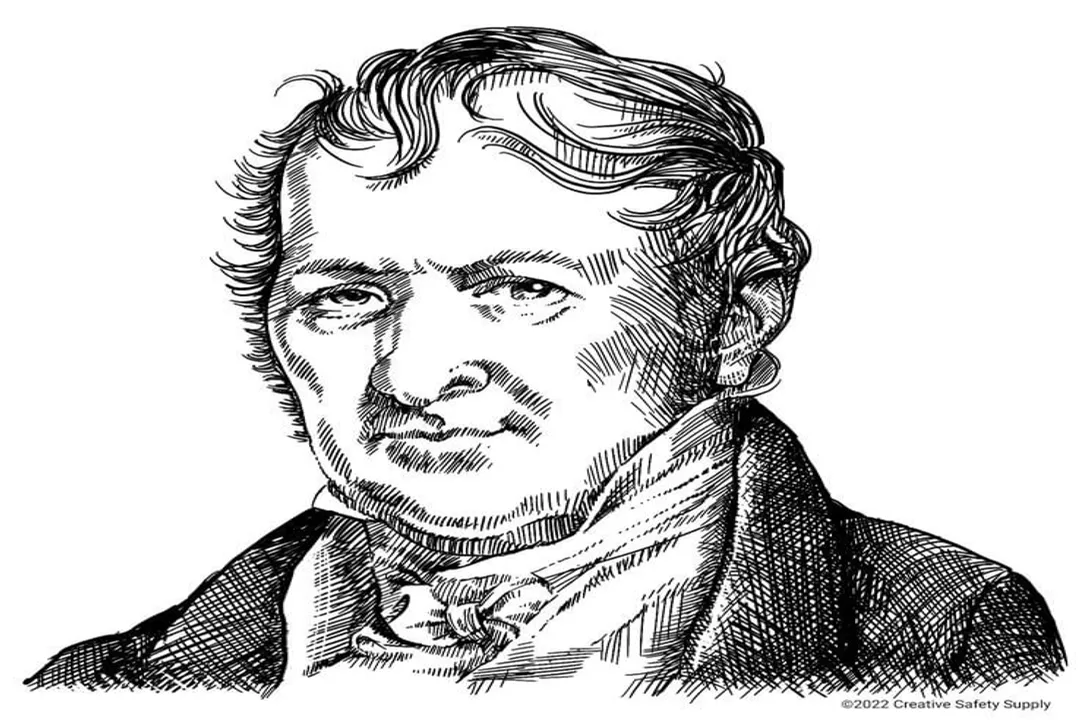
Before the widespread adoption of interchangeability, every manufactured item, especially complex ones like guns or clocks, was made individually by craftsmen. If one component broke, a skilled worker had to custom-fit a replacement, a time-consuming and expensive process. Whitney championed the idea that components should be manufactured to exact specifications so that any part made for a specific model would fit perfectly into any other unit of that same model without the need for filing or custom adjustment.
This was a radical notion. It implied a departure from relying on the innate skill of the assembler to making the tools that manufactured the parts perfectly consistent. The genius lay not just in the idea itself—which others had considered—but in the systematic application and enforcement of it within a production environment.
# Armory Work
The opportunity to fully test and prove this manufacturing theory arrived via U.S. government contracts, specifically for producing 10,000 muskets. Beginning around 1798, Whitney embarked on fulfilling these orders, recognizing that large-scale production under contract required speed and uniformity that custom fitting simply could not deliver.
The government's primary interest in this methodology was practical: ease of maintenance. If a soldier’s musket broke in the field, a replacement part needed to be swapped in quickly, rather than waiting for a specialized gunsmith to perform custom repairs. To achieve this uniformity, Whitney had to invent the necessary machinery, including precise jigs and gauges, to hold the workpieces in exact relation to the cutting tools. This created a system where the process itself guaranteed the quality of the product, rather than relying on the worker’s individual judgment at the final assembly stage.
Before modern standardization, if a part broke on a pre-Whitney musket, the entire unit might be useless or require the item to sit idle while a craftsman spent hours hand-fitting a replacement. The economic impact of this downtime, especially for military equipment awaiting deployment, was enormous. Whitney's system turned a repair job from a bespoke commission into a simple swap-out, drastically cutting time-to-readiness for critical equipment.
# Efficiency Leap
The adoption of precision tools and standardized components forced a major reorganization of the manufacturing floor. This foundational shift moved production away from individual master craftsmen working in isolation toward a more coordinated factory environment. While the term "lean manufacturing" wouldn't appear for over a century, the underlying principle of minimizing waste—the waste of time on filing, the waste of materials due to error, and the waste of potential output due to slow repair—was being addressed.
The requirement for precision meant that the work was broken down into smaller, repetitive tasks, each performed by specialized machinery or less-skilled operators monitoring those machines. This increased throughput tremendously.
The true revolution wasn't just making parts that fit; it was how the factory system had to be organized to achieve it. It forced a separation between the design engineer, who defined the perfect dimension through the creation of templates and gauges, and the assembly worker, who no longer needed specialized fitting skills. This division of labor inherent in precision manufacturing is what unlocked massive scale, a change far deeper than just the invention of a single fitting part. This established the template for modern mass production lines.

# Broader Scope
Whitney’s manufacturing philosophy, sometimes referred to as the "American System of Manufactures," did not remain confined to muskets for long. Once the methods were established and the specialized machinery proven effective, the technology diffused across other industries. Clockmakers adopted the techniques, followed by manufacturers of farm implements, sewing machines, and eventually, the entire automotive sector relied upon this standardized methodology.
The shift from artisanal production to standardized, machine-driven assembly created a new economic reality. It lowered the cost of finished goods dramatically, making complex items accessible to a much broader consumer base. This availability of dependable, repairable products is perhaps the clearest indication that Whitney's production concept was indeed revolutionary, paving the way for the industrial expansion of the nineteenth and twentieth centuries.
Related Questions
#Citations
Cotton Gin and Eli Whitney - History.com
Who Made America? | Innovators | Eli Whitney - PBS
Eli Whitney: A Key Player in the Development of Early Lean ...
Early Industrialization - Digital History
January 8: Eli Whitney's Best Idea Comes Home
Eli Whitney's Patent for the Cotton Gin | National Archives
Eli Whitney's Interchangeable Parts | Impact & Examples - Study.com
Eli Whitney and the Cotton Gin – A Mixed Legacy
How Interchangeable Parts Revolutionized Every Industry (Thanks ...