When were MEMS accelerometers invented?
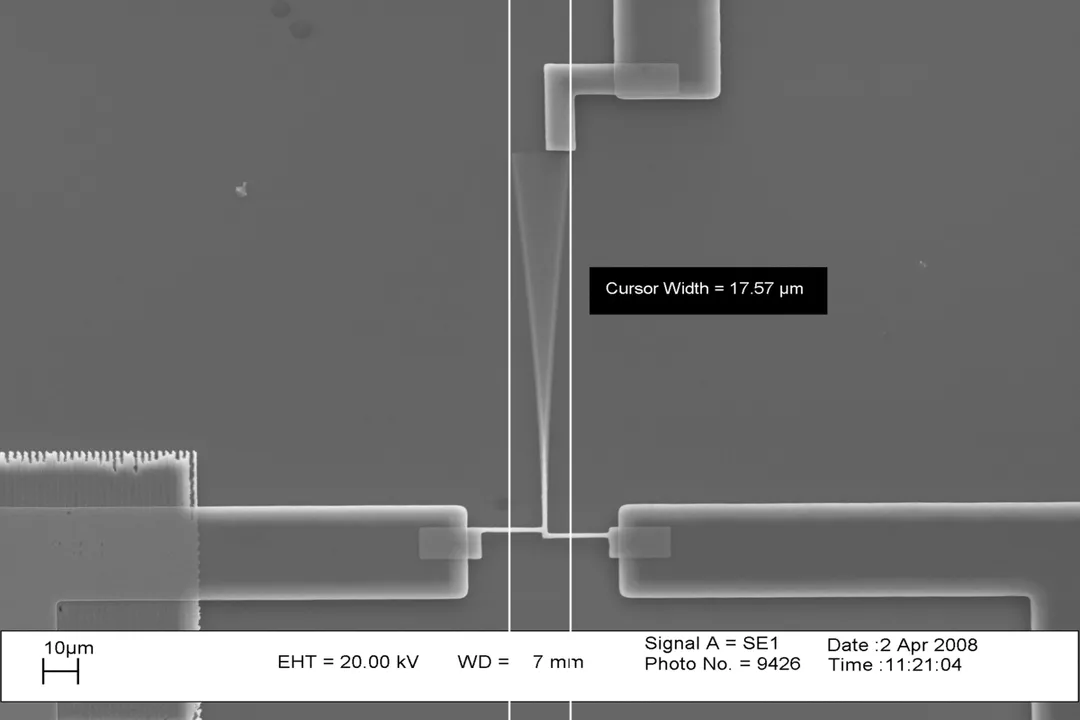
The story of when Micro-Electro-Mechanical Systems (MEMS) accelerometers were invented isn't tied to a single calendar date or lone inventor, but rather is a fascinating convergence of material science, manufacturing breakthroughs, and critical automotive safety needs emerging from decades of semiconductor progress. While the concept of measuring acceleration is ancient, the specific technology utilizing microscopic silicon structures—the MEMS accelerometer—truly took hold in the marketplace in the early 1990s, though its roots stretch back to the dawn of the integrated circuit. [3][1]
# Silicon Foundations
To understand the birth of the MEMS accelerometer, one must first look at the mid-twentieth century advancements in fabricating integrated circuits. The foundational techniques that allow engineers to etch, deposit, and dope silicon wafers at the microscopic level provided the essential manufacturing toolkit necessary for MEMS devices. [5][6] By the 1960s, researchers were already demonstrating basic micro-machined structures, including early silicon pressure sensors. [1] These early efforts proved that mechanical components could be reliably fabricated alongside electronic circuits on the same substrate using batch processing—a concept fundamentally different from machining larger, discrete mechanical parts. [6][2]
The development wasn't instantaneous; it was a gradual expansion of capability. As IC technology matured, researchers began applying these precise fabrication methods to create components that involved movement or sensing external forces, moving beyond purely electronic functions. [5] It was this environment, where high-precision, small-scale manufacturing became routine, that set the stage for the true MEMS revolution. [1]
# The 1980s Emergence
The field of MEMS itself, as a recognized discipline combining mechanical and electrical engineering at the micron scale, started gaining significant momentum throughout the 1980s. [1] During this decade, research shifted from simply proving that tiny mechanical structures could be made to designing them for specific, reliable functions. [6] This period saw increasing academic and industrial interest in creating sensors, actuators, and tiny moving parts using the mature silicon processing infrastructure. [1] The knowledge base solidified, allowing engineers to begin designing devices like cantilevers, gears, and, critically, sensing elements like accelerometers based on these micro-machined principles. [6]
However, proving a concept in a lab setting and successfully manufacturing a device ready for high-volume, reliable commercial use are two very different challenges. For accelerometers, the key hurdle was finding an application demanding that level of miniaturization and cost-efficiency that only batch processing could deliver. [2]
# Commercial Application
The answer to the question of invention, when looking at market arrival, rests squarely in the early 1990s. [3] This is when the first truly successful commercial MEMS accelerometers were introduced, primarily driven by the automotive industry's pressing need for reliable, inexpensive crash detection systems. [3]
Specifically, Robert Bosch GmbH is widely credited with launching the first successful commercial MEMS accelerometer, which was integrated into airbag deployment systems. [3] Before this, airbag sensors were often large, relatively slow mechanical or fluidic devices. [3] The transition to a MEMS device was revolutionary because it offered a smaller footprint, required less power, and, most importantly for mass production, could be fabricated in enormous quantities using existing semiconductor manufacturing lines, drastically reducing the cost per unit. [2]
This initial adoption was critical. While the underlying science had been developing for decades, the airbag application provided the necessary market force—high volume, high reliability demands—to prove the technology's viability and drive down manufacturing costs, ensuring the technology moved from the laboratory into everyday life. [3]
# Scale Versus Traditional Sensing
It is insightful to compare the nascent MEMS accelerometer with its predecessors. Traditional accelerometers often relied on larger, complex mechanical arrangements, sometimes using piezoelectric materials or fluid damping systems. [3] These older devices, while functional, suffered from issues related to size, sensitivity to temperature fluctuations, and the high cost associated with assembling individual mechanical components. [2]
The shift to MEMS fundamentally changed the physics of production. Instead of subtractive manufacturing (cutting or milling materials), MEMS relies heavily on additive and patterning techniques derived from IC fabrication. [6]
Consider this conceptual comparison, highlighting the timeline compression enabled by silicon maturity:
| Milestone | Approximate Time Period | Enabling Technology Base |
|---|---|---|
| Integrated Circuit (IC) Fabrication Established | Late 1950s – Early 1960s | Planar Silicon Processing [1][5] |
| Early Silicon Pressure Sensors Demonstrated | 1960s | Initial micro-machining proof-of-concept [1] |
| MEMS Field Recognition Grows | 1980s | Maturing fabrication techniques [1] |
| First Commercial MEMS Accelerometer | Early 1990s | High-volume automotive safety demand [3] |
This table illustrates that the actual invention of the commercial MEMS accelerometer came roughly 30 to 40 years after the foundational microfabrication methods were proven viable. [1][5] This lag highlights the challenge of integrating mechanical motion into electronic processes reliably enough for mass-market, mission-critical use like car safety systems. [2][3] The ability to print millions of identical structures onto a wafer simultaneously, as opposed to assembling them one by one, provides an enormous economic advantage that traditional sensors could not match. [6] This economic factor is perhaps the true "invention" that made MEMS accelerometers ubiquitous—the cost-effective realization of the sensor.

# Applications Beyond Safety
Once the technology was proven reliable in airbags, the floodgates opened. The inherent advantages of MEMS accelerometers—small size, low power consumption, and low cost—made them ideal for countless other applications that required measuring motion, tilt, or vibration. [2][7]
For instance, once mass-produced for airbags, the technology was quickly adopted in consumer electronics. Early adoption often saw them used for screen orientation detection in mobile devices, allowing a device to know whether it was being held in portrait or landscape mode. [7] If you think about the first popular handheld devices that automatically flipped their displays, you are looking at the direct descendant of that early 1990s automotive breakthrough. This rapid cross-industry adoption underscores that the invention wasn't just the physical sensor structure, but the validated, scalable manufacturing process itself. [3]
Furthermore, the evolution continued past simple two- or three-axis static measurement. Modern applications demand measuring faster rates of change or operating under extreme conditions, leading to continual refinements in the materials and the mechanical designs of the proof mass and beams within the chip. [2] The initial invention provided the blueprint; subsequent engineering work has focused on optimizing performance within that proven microscopic architecture. [7]
# Distinguishing Concepts
It is important to maintain the distinction between the invention of the concept of an accelerometer and the invention of the MEMS version. Mechanical instruments that measure acceleration have existed for centuries, functioning through macroscopic springs, masses, and linkages. The innovation tied to MEMS is how those elements are constructed. [2]
In a typical MEMS accelerometer, acceleration causes a small mass (the proof mass) suspended by tiny beams (springs) to deflect slightly. [2] The movement of this proof mass relative to the fixed frame of the sensor is then measured, often using capacitive sensing—the change in distance between the moving mass and fixed electrodes creates a measurable change in capacitance. [2] The genius lies in executing this entire spring-mass-damper system at the micro-scale, where the resulting physical dimensions are smaller than the width of a human hair. [1][6]
The refinement process, which transforms the initial invention into a market-ready product, involves extensive characterization of the silicon’s mechanical properties, ensuring that the manufactured springs behave predictably over the device's intended lifespan, regardless of external environmental factors. [2] This level of predictable mechanical performance at such a small scale is what required the mastery of IC processing developed over the preceding decades. [5] The acceleration of MEMS adoption in the 1990s, therefore, represents the successful marriage of mature silicon fabrication with functional, reliable mechanical design for high-volume sensing.
Related Questions
#Citations
MEMS - Wikipedia
[PDF] 26 - why is mems the preferred technology for high shock ...
The history of accelerometers - Electronics360 - GlobalSpec
Accelerometers – A Type of Micro-Electro-Mechanical System (MEMS)
Advanced Materials and Fabrication Methods (1997)
[PDF] History of MEMS - SCME-support.org
[PDF] The History of the Accelerometer - Sandv.com
[PDF] (MEMS) - Semiconductor Industry Association
MEMS Sensors are Good, but the Revolution is Just Beginning