Why do modern Earthquake Early Warning systems use specific magnitude thresholds?
Answer
To prevent alert fatigue from harmless tremors
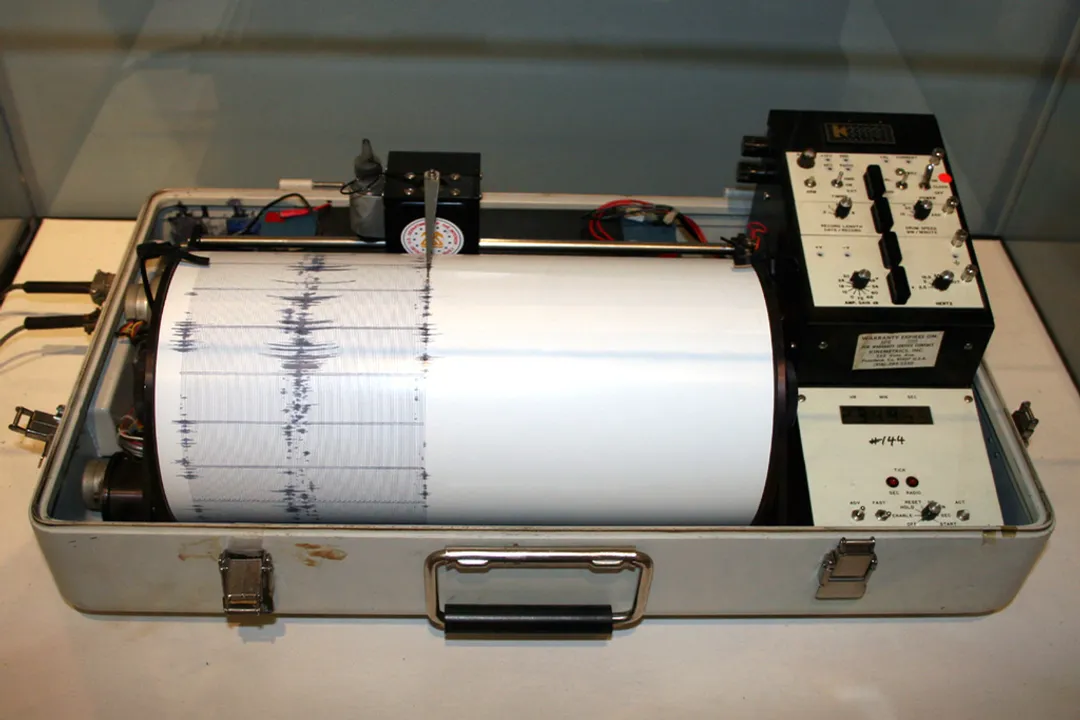
Modern seismometers are incredibly sensitive and detect countless small, harmless seismic tremors on a daily basis. If every single detection triggered a public alert, individuals would quickly become desensitized to the warnings, a phenomenon known as alert fatigue. Programming these systems with strict magnitude and acceleration thresholds, such as a minimum ground motion of 0.5% g, ensures that the public is only notified during events that are significant and potentially dangerous.
Related Questions
Who is credited with inventing the worlds first seismoscope in ancient China?What animals adorned the bronze seismoscope created by Zhang Heng?How did Zhang Heng's seismoscope indicate the direction of an earthquake?What was the primary limitation of Zhang Heng's seismoscope compared to modern seismographs?What specific waves do modern Earthquake Early Warning systems detect to issue alerts?Why do modern Earthquake Early Warning systems use specific magnitude thresholds?What is the recommended immediate action upon receiving an Earthquake Early Warning alert?Around what year was Zhang Heng's seismoscope introduced?How does the primary purpose of Zhang Heng's seismoscope differ from modern EEW systems?What makes S-waves (secondary waves) distinct from P-waves in the context of earthquake detection?