What phenomenon caused broken couplings on very long trains when applying vacuum brakes?
Answer
The delay between the front piston responding immediately and the tail piston responding later.
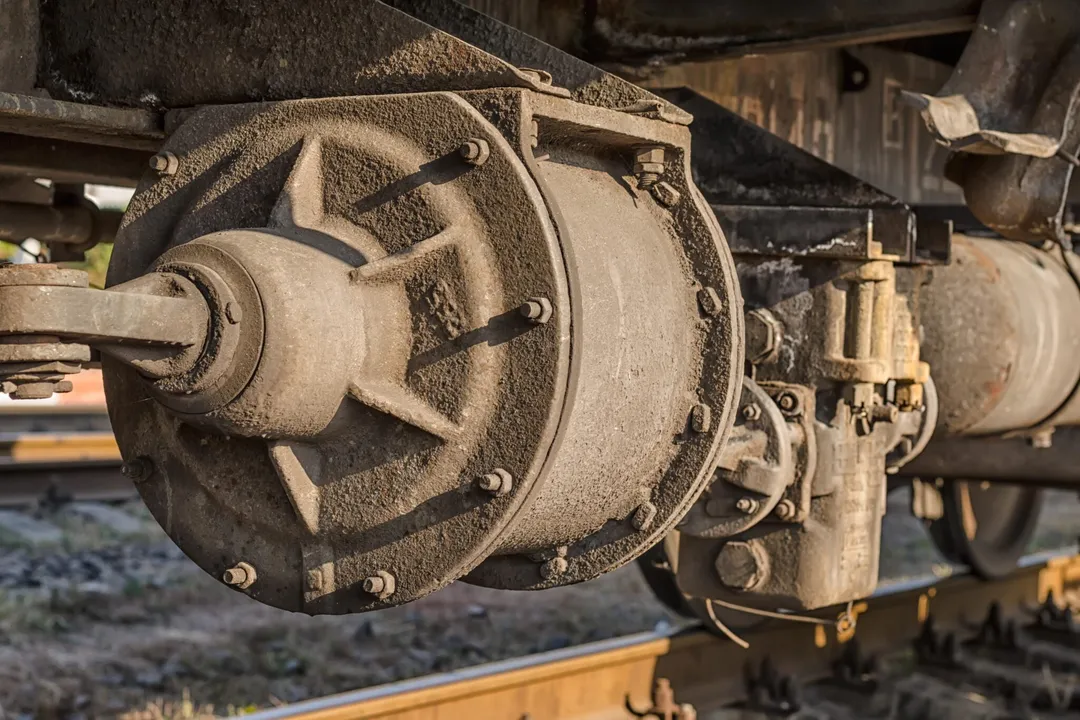
When admitting air to apply the brakes, the pressure wave traveled slowly. The front pistons responded immediately, while the tail pistons responded much later, resulting in longitudinal forces that could break couplings.
Related Questions
How did the vacuum brake system primarily apply the brakes, contrasting with traditional pressure systems?What device, naturally found on steam locomotives, was utilized to create the necessary vacuum for early brake systems?What critical safety issue defined the earliest iteration, the *simple* vacuum brake?Which engineer's name was occasionally used in continental Europe to refer to a variant of the vacuum brake system?What was the favored operating vacuum level (in inHg) established by the Great Western Railway (GWR)?What replaced the steam-driven ejectors for vacuum generation on diesel and electric locomotives?What operational advantage did the vacuum brake system possess over the standard Westinghouse compressed air system regarding brake release?Which engineer focused on refining the mechanical efficiency of the vacuum brake using piston designs via patents secured around 1872?What physical limitation ultimately caused the vacuum brake to decline in favor of high-pressure air systems for heavy, fast trains?What phenomenon caused broken couplings on very long trains when applying vacuum brakes?