Who invented the vacuum break?
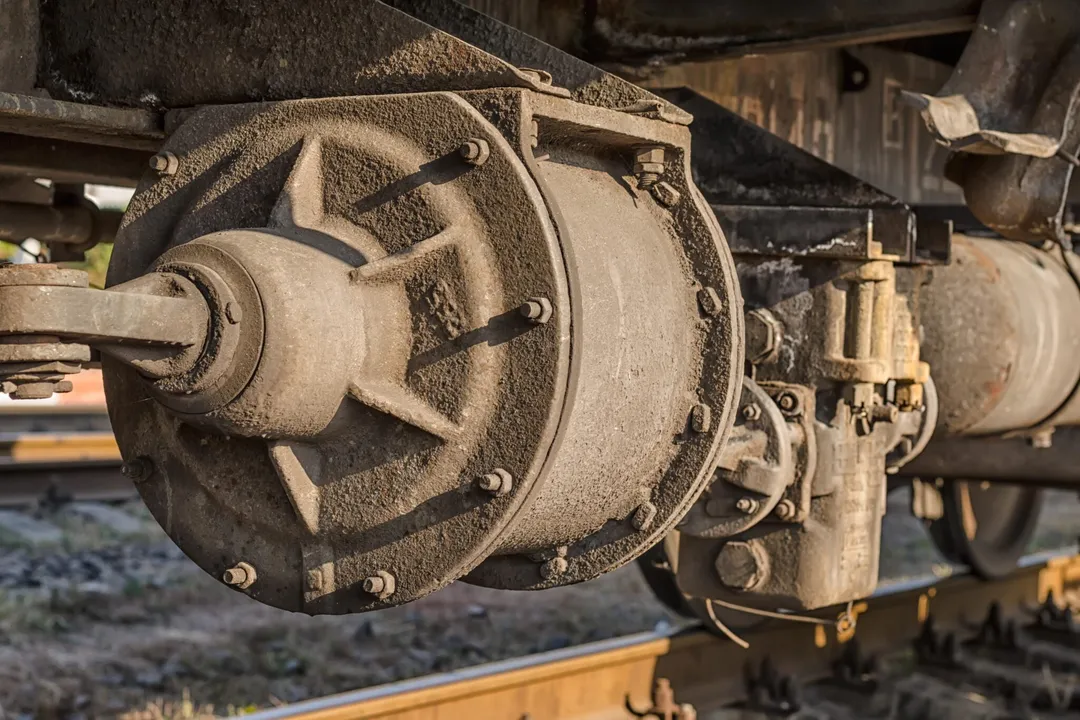
The story of the vacuum brake is less about a single "Eureka!" moment and more about a critical, multi-decade evolution of railway safety technology, driven by the necessity to stop longer, faster trains reliably. In the nascent days of rail travel, stopping a locomotive was simple enough, but coordinating brakes across a string of trailing cars was haphazard at best. Early methods relied on manual application by brakemen running atop the cars, a perilous task where communication was slow and the braking effort was entirely dependent on the strength of an individual crew member's arm on a screw handle. [1] When steam power introduced locomotive brakes, they were limited to the engine itself, as steam pressure could not be reliably transmitted over distance through pipes to the separate cars. [1]
# First Advance

A significant leap forward materialized in the mid-1860s with the introduction of the vacuum brake system. [1] This novel approach flipped the traditional pressure model on its head. Instead of pushing brakes on with air pressure, the system worked by pulling them on by creating a partial vacuum in a continuous pipe, known as the train pipe, running the length of the train. [1]
A key factor in the vacuum brake’s initial success, particularly with steam locomotion, was the ease with which the vacuum could be generated. Steam locomotives are naturally equipped with ejectors—Venturi devices that use steam to create a vacuum with no moving parts. This made them mechanically simpler and often more reliable than the air compressors required for the competing compressed air systems. [1] In operation, a driver would use a smaller ejector continuously to maintain the necessary partial vacuum, keeping the brakes released. When braking was required, the driver admitted atmospheric air into the train pipe, destroying the vacuum on one side of a piston in a cylinder on each vehicle, while vacuum was sustained on the other side. The resulting pressure differential forced the piston to move, applying the brake shoes to the wheels through a mechanical linkage. [1]
# Hardy and Simple Systems
The earliest iteration was the simple vacuum brake, where the driver controlled braking solely by operating a valve connected to the locomotive’s ejector. [1] This system had a fatal flaw: if the train parted, or if a flexible hose coupling between cars became accidentally disconnected, the vacuum would be lost across the entire length, rendering the brakes useless on all sections simultaneously. [1]
To address this, the automatic vacuum brake system was subsequently developed, designed to fail safely. This system automatically applied the brakes fully if the train divided or if the train pipe lost continuity. [1] While this added complexity and cost due to more machined parts, and incurred higher running costs because the ejector had to run continuously to maintain the vacuum, it provided a crucial layer of protection. [1]
In continental Europe, this technology sometimes became known by a different name. The vacuum brake, or at least a variant thereof, was occasionally referred to as the Hardy brake, named after John George Hardy of the Vacuum Brake Co, based in Vienna. [1] Hardy's association with the system suggests his company was instrumental in its standardization and deployment across certain regions, even as the British companies debated the merits of the simple versus automatic configurations. [1]

# Iterations and Refinements
The implementation of continuous braking was not without its regional quirks, which created operational headaches for interoperability. For instance, on British railways, companies standardized at different operating vacuums. Most settled on 21 inches of mercury (inHg), but the Great Western Railway (GWR) favored a deeper vacuum of 25 inHg. [1] This difference meant that when a GWR train encountered a locomotive from another company, the arriving engine's large ejector might be unable to fully release brakes that had been set to the GWR's deeper vacuum level. In such common scenarios, train crew sometimes had to manually pull the release valves on every car to admit air before the train could proceed, a time-consuming process often observed at major GWR hubs like Bristol Temple Meads. [1]
The move away from steam power brought a new challenge: diesel and electric locomotives could not use traditional steam-driven ejectors to create vacuum. [1] The solution involved replacing the ejector with exhausters—small, reliable rotary vane pumps driven directly by the locomotive's prime mover or an electric motor. [1] These mechanical or electric exhausters were often fitted in pairs for redundancy, mirroring the steam locomotive’s arrangement of a large ejector for rapid release and a small one for continuous maintenance. [1]
While vacuum brakes offered the simple advantage of graduable release—the ability to restore some vacuum to partially release the brakes—the standard system still required constant management by the driver to maintain speed on gradients by balancing the ejector and brake valve. [1] This contrasted with the emerging Westinghouse compressed air system, which could be "lapped," allowing the driver to set a constant braking level easily. [1]
| Feature | Automatic Vacuum Brake | Automatic Air Brake (Westinghouse) |
|---|---|---|
| Mechanism | Creates a vacuum to apply brakes | Uses compressed air pressure to apply brakes |
| Generation | Simple ejector (steam) or exhauster (mechanical/electric) | Air compressor (steam/mechanical) |
| Advantages | Ejectors are compact, no moving parts; Graduable release possible | Smaller cylinders (due to higher pressure); Lapping/constant application possible |
| Fail-Safe | Applies on loss of vacuum (pipe separation) | Applies on loss of brake pipe pressure (pipe separation) |
| Common Limitation | Requires very large cylinders due to low differential pressure | Original systems required a bulky compressor; early models lacked easy lapping |
# Diverging Paths of Invention
While the initial European and British adoption centered around figures like Hardy, the historical record shows that the quest for the perfect vacuum brake continued well into the 20th century, with different contributors focusing on specific mechanical enhancements.
One significant path involved piston-based improvements. As early as 1872, John Y. Smith secured several patents related to vacuum brake enhancements, focusing on refining the mechanical efficiency using piston designs to control braking force. [2] These innovations served as important groundwork, refining the fundamental operation. [2]
Another refinement came from Fred W. Eames, who developed a system utilizing a diaphragm-based design, differing from the traditional piston cylinder. [2] This diaphragm technology was recognized for potentially offering better flexibility and responsiveness, increasing the practicality and sensitivity of the system under varying conditions. [2]
Yet another claim suggests a later, comprehensive solution. Colonel Guruprasad Das is credited with developing and perfecting the vacuum brake system into a fully functional and practical model around 1930. [2] This implies that while the core concept and earlier versions were in use since the 1860s, Das's iteration addressed lingering issues that allowed the system to achieve widespread, reliable use immediately preceding the dominance of air brakes. [2] It is important to note that these late-stage refinements occurred even as George Westinghouse’s air brake system was beginning to revolutionize rail travel with its own fail-safe mechanisms and superior pressure differential capabilities. [2]

# Final Technical Comparison
The ultimate decline of the vacuum brake, despite its mechanical simplicity on steam locomotives, stemmed from physical limitations. Because the force generated depends on the atmospheric pressure differential—maxing out around 30 inHg at sea level—a vacuum system requires a very large brake piston and cylinder to generate the necessary stopping force compared to a high-pressure air system. [1] These large components sometimes prevented vacuum-fitted wagons from operating in sidings with tight clearances. [1]
Furthermore, the physics of pressure transmission created longitudinal forces. On a very long train, admitting air to apply the brakes meant the piston at the front responded immediately, while the piston at the tail responded much later as the pressure wave traveled. This delay could result in broken couplings. [1]
From a maintenance perspective, one aspect that made the vacuum exhauster appealing—its simplicity and lack of moving parts compared to an air compressor—was also a subtle liability. While exhausters were generally reliable, the complexity of the modern air brake systems, particularly the automatic air brake with its car-mounted reservoirs and control valves, offered superior responsiveness and the ability to maintain a fixed application level (lapping) without constant driver intervention. [1] The sheer force achievable with compressed air ultimately proved more scalable for the heavier, faster trains of the mid-20th century, leading to its adoption globally and the obsolescence of the vacuum brake on mainline systems, though its legacy lives on in many heritage railways. [1]
The vacuum brake's invention story is thus a layered history of initial conceptualization in the 1860s, regional promotion by figures like Hardy, critical mechanical innovations by engineers like Smith and Eames, and a final, late-stage perfection credited to Col. Das, all unfolding against the backdrop of railway engineers competing to achieve the safest, most effective way to manage momentum on their powerful new machines. [1][2]
Related Questions
#Citations
Vacuum brake - Wikipedia
The True Story Behind the Invention of the Vacuum Brake System
Why the Railway Air Brake Matters - Strasburg Mechanical